


Key takeaways
- Frozen fruits and vegetables often match fresh in vitamins; quick freezing preserves flavor and nutrients.
- Commercial freezing reduces many parasites; frozen or canned produce has not been linked to U.S. cyclosporiasis outbreaks.
- Frozen produce cuts waste, stretches budgets, and makes vegetables practical for single cooks and busy weeknights.
- Use frozen where texture is less crucial, check brand and lot info during recalls, and keep frozen staples on hand.
Food snobbery can surface with a quick look in someone else’s kitchen. Fresh produce in the fridge? Your everyday is en I find this particular line of judgment completely baffling
I love beautiful, fresh produce. Of course I do. Give me tomatoes still warm from the sun, strawberries at their peak, or sweet corn just picked from the field and I’m very happy. But open my freezer, and you’ll also find frozen peas, spinach, edamame, sweet corn, berries, pineapple, and plenty of other ingredients I use without the slightest culinary shame
Because “fresh” and “frozen” are not synonyms for “good” and “bad.”
That distinction feels particularly important right now. Food recalls and illness outbreaks understandably make people nervous about what’s in their kitchen, but they can also reinforce the idea that certain categories of food are inherently “good” or “bad,” “safe” or “unsafe.” Food safety simply isn’t that binary
The recent Cyclospora outbreak is a useful example. Cyclospora cayetanensis is a microscopic parasite that causes a rather unpleasant intestinal illness called cyclosporiasis. This summer, the FDA and CDC began investigating a large multistate outbreak linked to fresh iceberg lettuce
Historically, U.S. cyclosporiasis outbreaks have been associated with fresh produce, including basil, cilantro, lettuce, raspberries, and snow peas. The CDC states that, to date,no U.S. outbreaks have been linked to commercially frozen or canned produce
That doesn’t mean frozen food is magically sterile. It isn’t. Freezing is not sterilization, and frozen foods can be recalled for contamination just as fresh, refrigerated, and shelf-stable foods can. [On Aug. 18, the FDA upgraded a recall of frozen blueberries and mixed berries sold at Publix grocery stores to the highest health risk level.] But commercial freezing earns its keep: cold enough, for long enough, and it will kill off most foodborne parasites, larvae and all
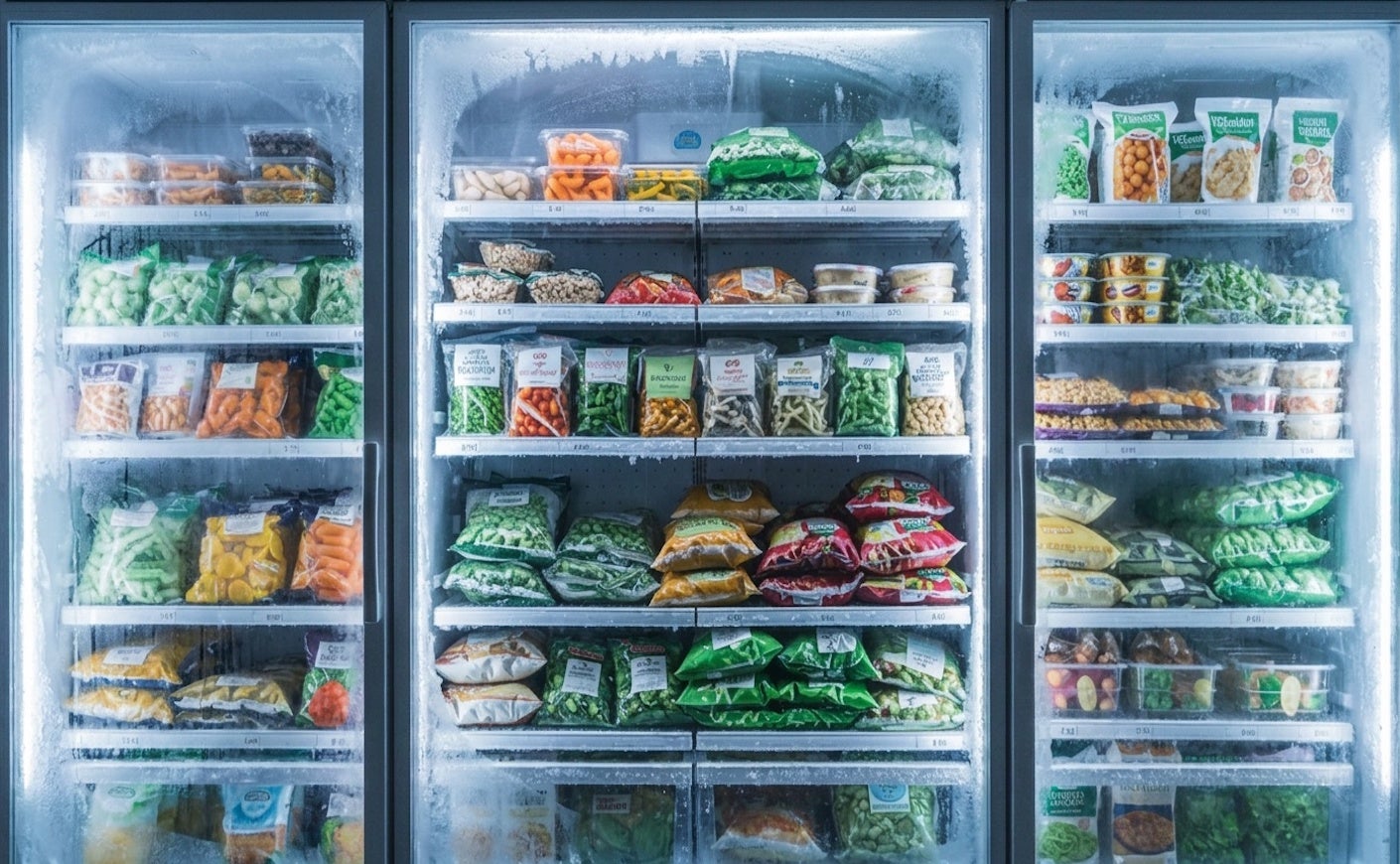
So if the latest headlines have left you wondering how you’ll get your daily servings of fruits and vegetables, don’t overlook the frozen section. Frozen fruits and vegetables have plenty going for them — and not just peace of mind
Why frozen foods are fine
One of the biggest misconceptions is that frozen fruits and vegetables are somehow nutritionally inferior to fresh ones. Science tells a much more interesting story
We tend to imagine “fresh” produce going directly from a picturesque farm into our shopping basket. In reality, unless you’re buying locally and seasonally, those strawberries or that broccoli may have spent days being transported and stored — and then a few more sitting in a refrigerator
Frozen produce takes a different journey. Fruits and vegetables destined for the freezer are often harvested when they’re mature and in season, then processed and frozen relatively soon after gathered. That matters for flavor as well as nutrition: Freezing slows many of the changes that naturally occur after produce is picked, helping preserve much of what made it good in the first place. Studies comparing fresh and frozen fruits and vegetables have found their vitamin content to be broadly comparable. In some cases, frozen produce retained more of certain vitamins than the same product after several days of refrigeration. Minerals and fiber also generally hold up remarkably well.
There are exceptions, of course. Different nutrients behave differently; the blanching many vegetables undergo before freezing can affect some vitamins. So I’m not suggesting frozen broccoli is some nutritional superhero. But the assumption that fresh automatically means more nutritious — or necessarily better tasting — simply doesn’t hold up
Perhaps part of frozen food’s image problem is that we’ve also started treating “processed” as a dirty word. A commercially frozen pea has certainly been processed — it was picked, briefly blanched, and frozen — but it hasn’t suddenly become a different food. It’s still a pea. If you look at the ingredients, you should still only see the word “pea.” (And if you don’t, put the bag back down and keep looking — it won’t be hard to find.) Unlike ultra-processing, processing can simply be a means of preserving food. The word itself tells us far less about a food than we sometimes assume.
On the topic of preservation, there’s also the issue we don’t discuss enough: waste
Fresh produce is aspirational. We buy that large bag of veggies on Sunday with very virtuous intentions. Then life happens, and Thursday arrives; we discover something in the vegetable drawer that appears to be conducting its own science experiment
The freezer, thankfully, is far more patient
That matters for our wallets, but also for how much food we throw away. Being able to take half a cup of peas, a handful of corn, or a portion of berries and leave the rest frozen makes it much easier to cook for one or two people without buying more than you need
There’s an economic argument, too. Frozen produce isn’t always cheaper than fresh — the price depends on what you’re buying — but it can make fruits and vegetables more accessible year-round, particularly when the fresh version is out of season, expensive, or simply not very good
And that matters. Not everyone lives next to a farmers’ market. Not everyone has time to shop every few days, wash and prep several vegetables, or cook entirely from scratch every night. Good food should not require unlimited time, money, and refrigerator space
As a chef, I care enormously about ingredients. But I also care about whether people actually cook
If keeping bags of fruits and vegetables in your freezer means you can make a smoothie for breakfast, throw together fried rice instead of ordering dinner, or add spinach to something that otherwise wouldn’t contain a vegetable, I consider that a win
The best frozen fruits and veggies
Peas may be the freezer’s greatest PR department
I almost always have them. They don’t need shelling, there’s no race against the clock, and I can throw exactly the amount I need into fried rice, soups, pasta, or a quick vegetable side. I put the rest back in the freezer. They’re sweet, bright, firm, and wonderfully consistent
Spinach is another freezer hero. A mountain of fresh spinach cooks down into what feels like three tablespoons — one of cooking’s more impressive disappearing acts. Frozen spinach is already compact and particularly useful when I’m making dishes where pristine raw leaves aren’t the point
Then there are frozen berries. When berries are gorgeous and in season, absolutely buy them fresh and eat them by the handful. But in the middle of winter, I don’t need to spend a small fortune on a tiny box of jet-lagged berries just to grind them up into a smoothie. Frozen fruit lets me use berries year-round without pretending that a pale, expensive strawberry is a good strawberry simply because it happens to be fresh
None of this means frozen and fresh are interchangeable. I’m not putting thawed spinach into a salad or serving a defrosted strawberry next to cream and pretending nothing happened. Texture matters. The trick is knowing where frozen produce works brilliantly — and where fresh really is worth seeking out
And when there is a recall, check the brand, product, lot information, and dates rather than assuming everything remotely similar in your freezer is affected
Perhaps what we really need to retire is the idea that “fresh” is a moral virtue. My kitchen isn’t divided into virtuous fresh ingredients and embarrassing frozen ones. It’s divided into ingredients that taste good and work for what I’m cooking — and those that don’t
Sometimes the best ingredient is spinach from the farmers market or strawberries at the height of summer. Sometimes it comes from the freezer. Sometimes I’m shelling beautiful fresh peas. More often, if we’re being honest, I’m opening a bag
And I’m perfectly happy to put my chef’s name on that
