


AI Generated by Fortune India
Scapia’s Gen Z bet: Building a travel, payments, and lifestyle ecosystem, says CEO Anil GotetiAugust 30, 2026, 09:09 IST
Loading AI Hub…
Disclaimer : Certain content on this page, including summaries, timelines, FAQs, glossaries, highlights, insights, and other supplementary informational features, maybe generated or assisted by artificial intelligence tools. While reasonable efforts are made to review and verify such content, AI generated output may occasionally contain errors, omissions or inconsistencies. Readers are advised to independently verify any information before relying upon them for professional, legal, financial, medical or other decisions. The publisher along with its affiliates and contributors do not warrant accuracy of AI-generated content and disclaim any liability, loss or damage arising from its use.
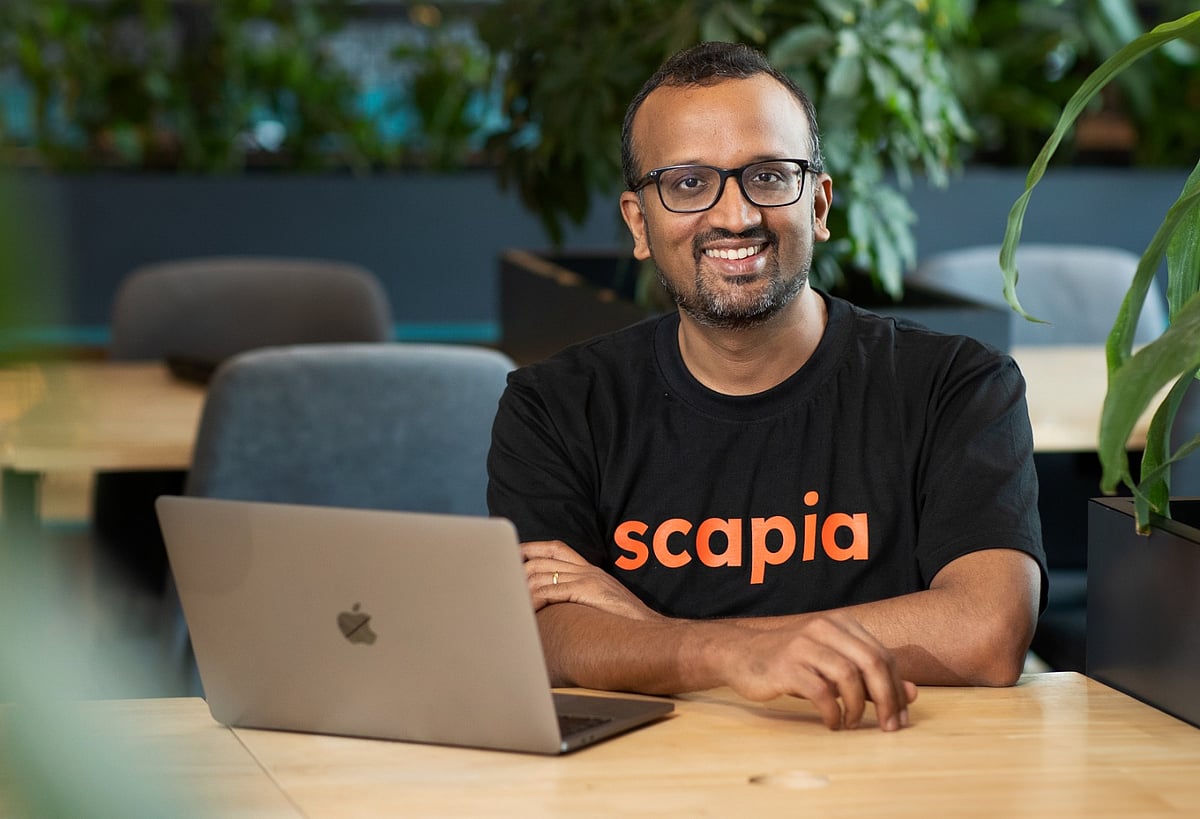
Scapia Founder and CEO Anil Goteti. Credits: Company image
Set Fortune India✓As Preferred on Google
For Scapia Founder and CEO Anil Goteti, the future of travel is not just about booking a flight or checking into a hotel. It is about creating an integrated ecosystem that brings together payments, travel, commerce, rewards, and experiences—built around the evolving expectations of a younger generation of consumers
Go Ad-Free
Sign up for Fortune India’s ad-free experience
Enjoy uninterrupted access to premium content and insights.
In an exclusive conversation with Fortune India, Goteti mentions Scapia’s ambition to become a travel, lifestyle, and payments platform for Gen Z. Scapia, which operates across payments and financial services as well as travel and commerce for Gen Z, also offers flights, hotels, trains, buses, visas, shopping, experiences, and UPI payments, all of which are part of its business
“We are serving the needs of Gen Z across their lifestyle needs,” Goteti says. “Think of us as a travel, lifestyle, and payments platform for Gen Z.”
The proposition is built around a loyalty loop. Customers earn Scapia Coins when they use their cards, make UPI payments, book travel or shop through the platform. Those coins can subsequently be redeemed across Scapia’s ecosystem
Top Videos
Watch More
Nepal floods: Should India worry?
Fortune India: 40 Under 40 2026 | Scaling Nykaa beyond its founder-led roots
Fortune India: 40 Under 40 2026 | Reinventing the media business model
Airport privileges are another part of the proposition. Customers can access lounges and other airport services while earning rewards through their engagement with the platform. Scapia is also looking to expand these offerings, including features such as pre-booked meals at airports
One card, two networks
At the centre of the ecosystem remains Scapia’s credit card. The company offers a dual-network card, giving customers both Visa and RuPay variants against a single credit line
The proposition is deliberately simple: one credit limit, one repayment, and one statement while giving customers access to both payment networks
Transparency, particularly around international transactions, is another area where Scapia wants to differentiate itself. Goteti claims the app allows customers to see the applicable foreign exchange rate before making a transaction, track spending during a trip and review expenses by country after returning
According to Goteti, this is becoming increasingly important as consumers become more conscious of how much they are paying. “Trust and transparency” are now fundamental expectations, he says. Customers want to know the exchange rate, fees, and other charges before completing a transaction rather than discovering them much later in a statement
The same philosophy extends to Scapia’s add-on cards. Primary cardholders can set spending limits for additional users while those users receive separate app access and OTPs, giving them greater independence without transferring ownership of the primary account
Building around the traveller
Since its launch in June 2023, Scapia has added categories based largely on what customers told it they needed
A traveller taking a short domestic trip, for instance, may prefer a train or bus to a flight. Someone travelling internationally may need visa assistance. And before a trip, customers may need luggage, jackets, hiking shoes or other travel-related products. The result is an ecosystem designed to serve customers before, during and after their journeys
The company’s travel offering now spans flights, hotels, trains, buses, global experiences, visas, and customised trips. Its platform is also connected to IRCTC for train bookings and offers access to global rail passes, including Swiss rail passes
Goteti says Scapia has built much of this infrastructure in-house. The company’s philosophy, he explains, is to go deeper into the value chain so it can control the customer experience and create greater value
That approach began even before the company started building its products. During its first three to four months, when Scapia was still bootstrapped, the team focused largely on speaking to customers
The process involved extensive interviews and feedback sessions to understand what consumers wanted before committing re, and products repeatedly shown to customers before launch. That research-led approach remains part of Scapia’s culture
A growth-stage business
Scapia has grown rapidly He says the company’s revenue increased nearly fivefold last year while its customers typically spend 40-50% more than the average card customer in India
Scapia users, he adds, use the product at least 15 times a month and travel with the platform around four times a year
The company claims a broad geographic footprint, with customers across the length and breadth of the country. Its platform provides access to global airlines, hotels, thousands of bus operators, rail services, and visa assistance for dozens of countries
But rapid growth has not yet translated into profitability. “We’re in the growth stage,” Goteti says. The company continues to spend on brand building, customer acquisition, technology, product development, and artificial intelligence. He does not provide a specific timeline for profitability, saying Scapia remains focused on building a sustainable, long-term business
An initial public offering, too, is not on the immediate agenda. The CEO says a listing could happen “sometime in the future”, but the company is not ready to disclose a timeline
Beyond the metros
While Scapia is strongly associated with younger consumers, its customer base is not limited to India’s largest cities. Goteti says 50-60% of Scapia’s customers come from outside major metros, highlighting the growing appetite for travel among consumers in Tier-2 cities and beyond
The customer base is predominantly salaried professionals, who account for 80-90% of users, although entrepreneurs and small-business owners also use the platform for everyday spending
For Scapia, this geographic spread reflects a larger structural change in Indian travel. More people from smaller cities are travelling while improving air and rail connectivity is making travel more accessible across the country
AI, but not everywhere
Artificial intelligence is becoming an important part of Scapia’s operations, but Goteti does not see it as a replacement for human-led product development
The company uses AI to improve coding, business analysis, and internal productivity. Employees outside engineering, he says, can increasingly perform tasks that would previously have required assistance from analysts or developers
AI is also being integrated into the customer experience, particularly around trip planning and travel assistance. But there is a line Scapia does not want to cross. Goteti believes certain aspects of product design require human judgement, creativity, and nuance. The company therefore intends to combine AI-driven efficiency with human-led product development
The same principle applies to customer service. If an AI system cannot resolve a complicated issue, Scapia wants the platform to identify the problem and move the customer to a human agent rather than making them repeatedly ask to speak to someone
Competing for the customer, not the category
Goteti does not see Scapia as competing directly with a single bank, payment platform or travel company. Instead, he argues that the company’s differentiation lies in bringing multiple services together
There are players specialising in credit cards, UPI, travel bookings or commerce. Scapia’s proposition, he says, is to connect these individual experiences and provide customers with a unified platform. “There is no company which is actually doing something similar to us, covering such a gamut of categories and serving Gen Zs in this unique fashion,” Goteti says
According to him, the same shift is underway in digital payments. UPI, in his view, has already made payments more ubiquitous and accessible. The next phase could be about building additional services—particularly digital credit, personalised experiences, and access to capital—on top of that infrastructure
The customer comes first
For Goteti, however, technology and product breadth ultimately matter only if they improve the customer experience
Scapia’s stated philosophy is straightforward: treat customers the way the company itself would want to be treated. That principle is particularly relevant when things go wrong. The company says its customer support is available around the clock, including during international travel. In urgent situations, Scapia can sometimes arrange alternatives within minutes, Goteti claims
For now, the company remains in investment mode. Its larger bet is that India’s next generation of travellers will not want separate products for payments, travel, shopping, and experiences. They will want them to work together—and Scapia wants to be the platform that connects the dots, Goteti adds
