


Medicare to Cover GLP-1 Weight Loss Drugs: What to Know
04:00
More Americans than ever are using GLP-1 drugs for weight loss, with many turning to telehealth companies to get the blockbuster medications
But is it safe to go that route?
An NBC News and KFF Health News investigation is uncovering new concerns that some patients using this option are getting sick because there’s little or no supervision to ensure they’re taking the medications properly
About 11% of U.S. adults now report taking GLP-1s to lose weight, a new high
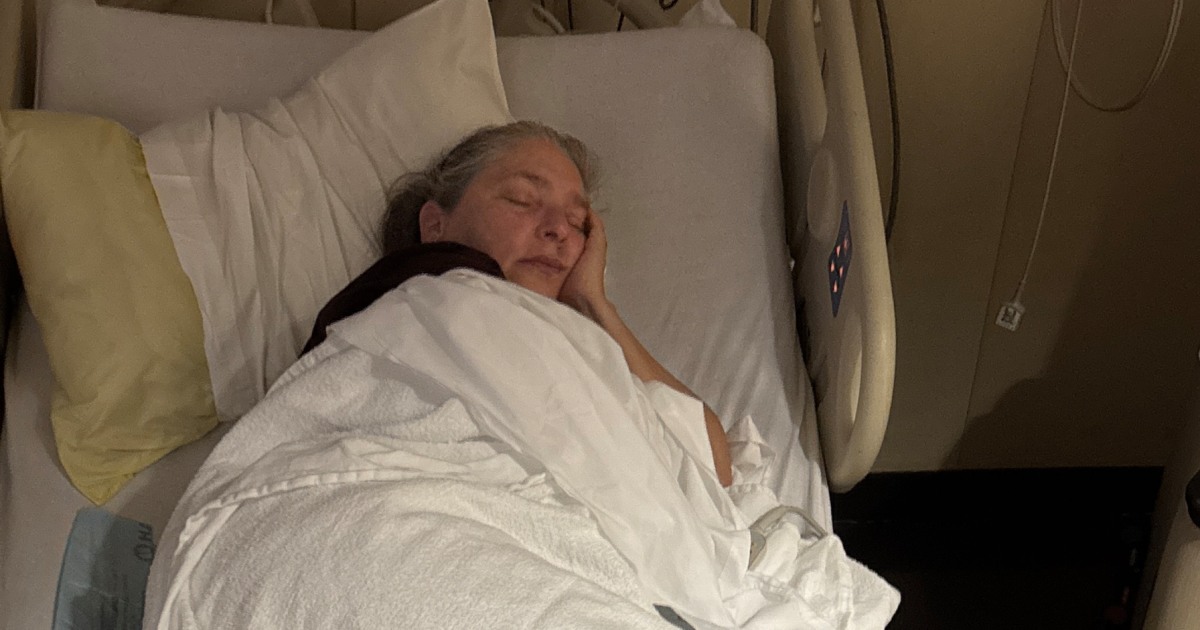
Leslie Gammon was one of them — until she endured a frightening overdose of a compounded GLP-1 drug that sent her to the hospital. The North Carolina woman said she had followed the dosing instructions from her telehealth company
“I wouldn’t stop throwing up, and it was like every 20 minutes,” Gammon, 54, told NBC’s Anne Thompson about the ordeal
“I was hurting, I mean, it hurt. I couldn’t talk like nearly a week after, my ribs felt like they were being beaten up.”
From 2019 to 2025, there was an almost 1,500% increase in calls related to an overdose or side effects of injectable GLP-1 weight-loss drugs, according to the National Poison Data System from America’s Poison Centers. There were almost 23,000 cases during that period. The data does not specify whether calls were related to a telehealth prescription versus in-person
Any medication can be overdosed, so patients need to trust there’s a system in place to protect them, said Dr. Fatima Syed, an associate professor of medicine at Duke University and a medical weight management specialist at Duke Health in Durham, North Carolina
While GLP-1 overdoses can also happen after in-person appointments, Syed said that when she prescribes a drug, there’s a framework of safety checks — whether at the doctor’s office or the pharmacy — which may not be there if the only communication or follow-up care patients get in a telehealth setting is done
“Obesity weight is a complex problem. Is a click enough oversight for your management of your high blood pressure, diabetes? The answer is no,” Syed said. “Your body and your weight deserve the same clinical oversight.”
Injection Leads to Hospitalization
Gammon had turned to two different telehealth companies to get a GLP-1 medication to help her lose weight during menopause. She chose them over her doctor’s office because she liked the easy access and convenience of not having to make in-person appointments
Both companies sent her aut and self-inject the drug once a week
The first telehealth company she tried was “phenomenal,” with phone calls and Zoom sessions with a doctor, Gammon said. She lost 18 pounds in four months
A friend then recommended Amble, another telehealth company, and Gammon signed up in October 2025. This time, the communication was all done through email, she said
She received ay, but after using it for two weeks, it didn’t seem to curb her hunger, so Gammon emailed to say it wasn’t doing anything for her. That’s when she received a secondrug than she previously had — 46 units in the syringe rather than the 8 units she was used to
“That sort of scared me,” she recalls. “I contacted the doctor, and I said this seems to be a little bit more than what I’m supposed to be taking. And then the response I got back, I think a day later, was just follow the doctor’s directions.”
Still leery, Gammon injected herself with 30 units. Two hours later, she began throwing up violently several times an hour. The vomiting lasted from Sunday night until Tuesday afternoon. Her boyfriend took her to urgent care, then the emergency room
“I asked the doctor if I could be put in a coma until it was over,” she recalled
Gammon spent three days in the hospital. Medical staff told her boyfriend she’d had a GLP-1 overdose, something she didn’t know was possible, “especially when it came from a doctor,” she said
It took a month before Gammon could keep solid food down. She hasn’t returned to a GLP-1 drug since, losing weight on her own with diet and exercise
When asked who is responsible for the ordeal, she blames both the telehealth physician and herself
“I think the doctor. I think it was a mistake. They’re human, they make mistakes. But myself, too, as well. I should have educated myself more,” Gammon said
“I’m not dumb. I mean, I have a college degree. I should have known.”
Gammon is now stuck with a $9,000 hospital bill from the ordeal. She contacted Amble, the telehealth company, about it, but hasn’t heard back
Amble told NBC that it doesn’t comment on specific individuals or confirm whether or not they use the company’s platform, but that patient safety and well-being are its highest priorities
“Our independent, third-party provider group and its licensed providers follow evidence-based clinical protocols, from initial consultation through ongoing patient monitoring and follow-up,” the company said in a statement
“Amble encourages patients to maintain open, ongoing communication with their provider throughout the course of their care, including through 24/7 messaging and regularly scheduled check-ins. Amble’s platform is designed to support providers in their delivery of responsible, high-quality telehealth care consistent with applicable clinical standards.”
Doctors Urge Caution
NBC News and KFF Health News have identified other similar cases
While GLP-1 overdoses can happen even when patients speak to a doctor, Syed urged people considering using a telehealth option for GLP-1 drugs to choose a company where it’s easy to reach a medical professional
“The first thing is to look for that it’s not a simply one-click process, but that you have a medical provider that’s talking to you,” she said
“If you have a question, who do you ask? Who’s on call for you? And that there’s clarity of communication, and really that you’re not alone at all in the journey.”
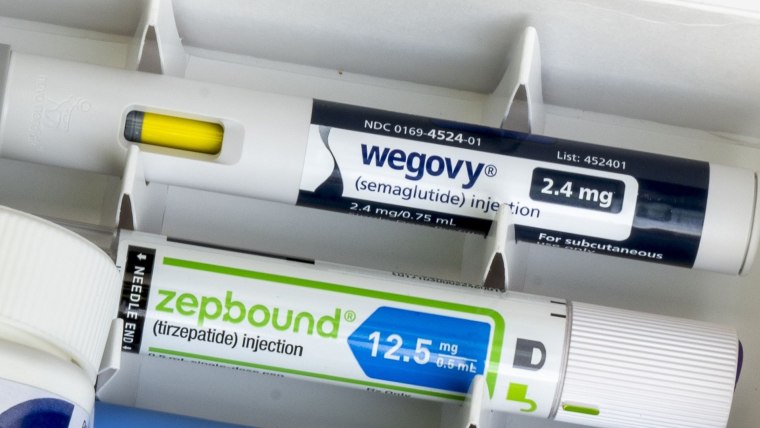
Syed also advised people to understand the difference between brand-name weight loss drugs, like Wegovy and Zepbound, which are approved by the U.S. Food and Drug Administration; and compounded GLP-1 drugs, which are cheaper and often offered by telehealth companies, but are not reviewed by the FDA for safety
“There’s much more clarity for me on what exactly is in the (brand-name) medications, and therefore what the reactions might be,” Syed said
With compounded drugs, patients have reported accidentally taking 10 times the recommended dose due to “confusing measurement units while using a syringe,” America’s Poison Centers noted on its website
Overdose symptoms may be similar to the common side effects of GLP-1 drugs, such as nausea and vomiting, but last longer or lead to dehydration in severe cases, the organization added on its website
The Alliance for Compounded Pharmacies said in an April 2026 statement in part that “the increased demand for GLP-1 medications has led to … mass-produced copies (of drugs) operating in regulatory gray areas.” It added that this trend falls outside “legitimate, regulated” compounding practices, such as customizing medications for individual patient needs and providing access in shortages
The group called for “stronger oversight where risks exist, transparency in sourcing and formulation (and) accountability for unsafe practices,” while preserving access to “legitimate compounding.”
Both Novo Nordisk, which makes semaglutide, the active ingredient in Wegovy; and Eli Lilly, the maker of tirzepatide, the active ingredient in Zepbound, warn about medications claiming to be the compounded versions of brand-name GLP-1 weight-loss drugs
Eli Lilly has “repeatedly expressed grave concerns about the safety of mass-compounded knockoffs of our tirzepatide medicines,” the company notes
Knockoff products can be “risky to take, ineffective, or worse,” Novo Nordisk warns
