


Key takeaways
- Microdosing uses GLP-1 doses below approved levels, e.g., <2.5 mg tirzepatide or <0.25 mg semaglutide; one in seven users tried it.
- Evidence is limited: most trials use standard therapeutic doses; microdose protocols lack randomized trials and outcome data in healthy adults.
- Safety concerns: gastrointestinal effects, pancreatitis risk, rebound weight gain; avoid in personal or family medullary thyroid carcinoma, MEN2, eating disorders, pregnancy.
- Practical guidance: use medical supervision and FDA formulations, combine with resistance training and adequate protein, monitor body composition, and plan an exit strategy.
Over the past few years, the conversation around GLP-1 receptor agonists has been dominated by extremes: dramatic weight loss in clinical trials, before-and-after transformations on social media, and a public discourse that has oscillated between miracle and backlash. Patients are now asking pointed and more practical questions. Do I need the full dose if I only want to lose 10 pounds? Can I quiet the food noise without losing my appetite for dinner? Could a smaller dose support metabolic health without dramatic weight loss?
These are the questions that surround microdosing, the practice of using GLP-1s at doses below those approved for diabetes or obesity. In practice, that means a dose below the lowest approved dose: under 2.5 mg of tirzepatide or 0.25 mg of semaglutide. In a survey of more than 60,000 GLP-1 users, roughly one in seven had tried microdosing, and the marketplace has moved faster than the science
What Is GLP-1 microdosing?
GLP-1, or glucagon-like peptide-1, is a hormone the body naturally produces after a meal. It helps regulate insulin, slows gastric emptying, and signals fullness to the brain. Semaglutide (Ozempic, Wegovy) and tirzepatide (Mounjaro, Zepbound) contain synthetic, longer-acting versions of the hormone designed to amplify those effects. Microdosing is where the science, and the motivations behind their use, become more complicated.
Because brand-name pens are manufactured only in standard doses, microdosing previously relied on compounded formulations: custom preparations made by specialty pharmacies, a practice that became common during shortages of GLP-1s declared by the Food and Drug Administration (FDA) in 2025. (See below for safety considerations associated with compounded medications)
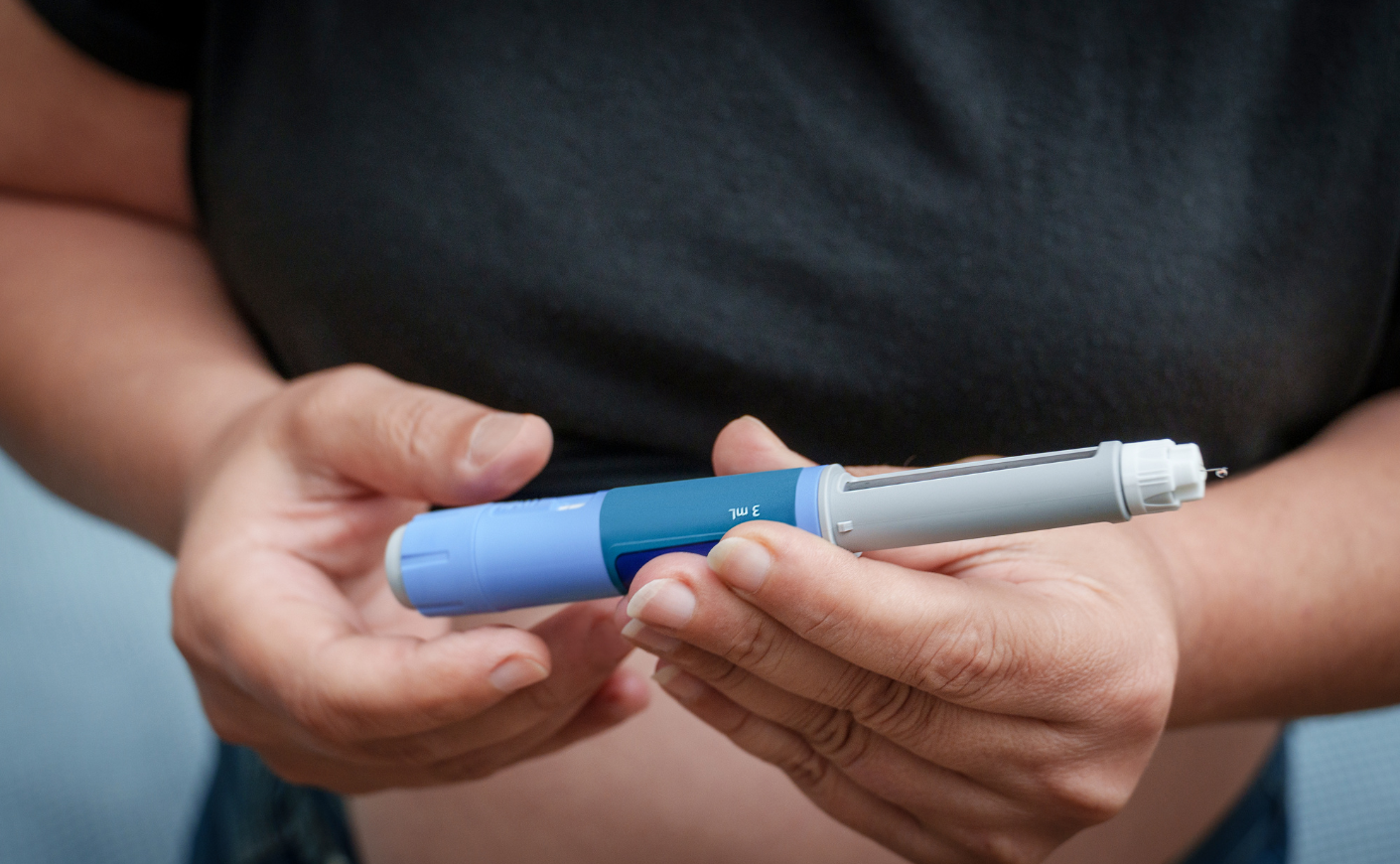
A second route uses FDA-approved single-dose vials. Although not explicitly designed for use in this way, many patients and providers are using them for microdosing. A patient or clinician can draw a fraction of a branded 2.5 mg tirzepatide vial, often starting around 0.5 mg, roughly a fifth of the lowest approved dose. Single-dose vials typically come without preservatives and are intended to be used only once. (Neither of these methods constitutes medical advice, and one should always consult a physician before altering a medication regimen.)
For some patients, the goal is tolerability or maintenance after weight loss. For others, it is subtler appetite suppression, fewer side effects, or the hope of preserving some benefit without dramatic weight loss
At the more speculative end of the spectrum are metabolically healthy adults using low-dose GLP-1s for longevity, inflammation control, cognitive performance, or broader optimization goals. These applications remain off-label and are largely unstudied. What unites them is the idea that smaller doses might preserve some of the behavioral or metabolic effects of GLP-1 therapy while reducing tradeoffs such as nausea, muscle loss, or excessive appetite suppression
What the research says about low-dose GLP-1s
Most of what we know about GLP-1s comes from studies using standard therapeutic doses, not microdoses. In the STEP 1 trial, semaglutide at 2.4 mg weekly produced nearly 15 percent average weight loss over 68 weeks. In SURMOUNT-1, tirzepatide at 5 mg and 10 mg produced 16 percent to 21 percent respectively. Large outcome trials such as SELECT and FLOW have shown 20 percent reductions in cardiovascular and kidney complications in high-risk adults.
Of note, in the STEP 1 extension trial, participants regained roughly two-thirds of their lost weight within a year of stopping semaglutide, and improvements in blood pressure, cholesterol, and glucose largely reversed. In the SURMOUNT-1 trial, a body composition substudy found that roughly one-quarter of that weight loss came from lean mass (muscle). These two limitations have been extensively covered in discussions about GLP-1s
The science on microdosing is much less clear. Most microdose protocols circulating online have not been studied in randomized trials, and broader claims around inflammation, cognition, longevity, or optimization are largely extrapolated from studies about full doses. They also assume that the effects from the trials — which were on adults with obesity, type 2 diabetes, or established cardiovascular or kidney disease — also apply to healthier adults
A 2025 letter in Diabetes Care noted that microdose strategies may suit individual circumstances but cannot yet be generalized, and the American Diabetes Association has declined to endorse compounded formulations
That does not mean lower doses can’t work. Response to GLP-1s varies substantially, and some physicians prescribing lower doses describe improvements in appetite regulation, metabolic markers, and body composition in selected patients. A 2025 trial in JAMA Psychiatry found that low-dose semaglutide reduced alcohol craving and consumption in adults with alcohol use disorder
One recent trial speaks directly to dose reduction. SURMOUNT-MAINTAIN randomized patients who had lost weight on the maximum dose of tirzepatide to either continue at full dose of 10 or 15 mg, reduce to 5 mg, or switch to placebo for an additional year. Patients on the full dose preserved 96.5 percent of their initial weight loss; those on 5 mg preserved 67.9 percent; and those on placebo preserved 42.8 percent. Improvements in blood pressure, lipids, and blood sugar control followed the same pattern. It’s worth noting that 5 mg is an approved maintenance dose, not a microdose, so the trial speaks to reduced therapeutic dosing rather than to microdosing. It does, however, establish that less than maximum dosing can preserve some of the benefit, while also demonstrating a dose-response — more efficacy with higher dose.
The question is not whether microdosing has physiologic effects; it almost certainly does. The question is whether those effects are clinically meaningful, sustainable, and appropriate for a given patient
Potential benefits of microdosing GLP-1s
For Dr. Daniel Angerbauer, a preventive medicine physician at the Atria Health Institute, seeking a small reduction in weight is rarely enough reason to prescribe. Learning to lose (and maintain) 5 to 10 pounds without medication can itself be beneficial, helping build awareness of appetite cues and more sustainable habits that protect health over the long term.
But his view changes when excess weight coexists with conditions such as sleep apnea, kidney disease, or cardiovascular disease, where the metabolic benefits may extend beyond weight loss.
A different question is being asked by patients who are not seeking weight loss at all: adults with good labs and no diagnosed disease, looking at the trial data and asking whether a lower dose might lower their long-term risk of conditions that run in their family. The bottom line is that the outcome data are not yet there. Most trials that produced the headline numbers enrolled patients who already had the disease being studied; whether a micro dose meaningfully reduces incidence of a chronic disease in healthy adults is a question the evidence base does not currently answer.
Dr. Angerbauer argues that preventive treatments for healthy adults should be held to a higher standard because healthy people have less to gain and more to lose from potential side effects, making it essential to demonstrate a clear and substantial net benefit. For now, he counsels waiting for the data before using these drugs long-term for prevention
Is microdosing GLP-1s safe? Risks and who should avoid it
Because GLP-1 microdosing exists entirely outside of FDA-approved guidelines, there is currently no clinical trial data establishing its safety or efficacy. Experts warn that a lack of data does not mean a lack of risk. “If a microdose is potent enough to alter your appetite, it is potent enough to alter your biology,” says Dr. David Dodick, Atria’s Chief Science & Medical Officer. “Gastrointestinal side effects can still occur, and more severe, dose-independent risks like pancreatitis remain a possibility. Furthermore, because the drug still manipulates your metabolic baseline, the risk of rebound weight gain after stopping remains just as real.”
Several groups should avoid GLP-1s entirely:
- Those with a personal or family history of medullary thyroid carcinoma or MEN2
- Anyone with an active eating disorder
- Anyone pregnant, breastfeeding, or planning to become pregnant within the next two months (per FDA guidance)
Despite how easy it’s become to get GLP-1s online via telehealth, a standard prescription model bypasses critical clinical safety guardrails. All patients should consult a physician before starting, but this is especially vital for older adults and perimenopausal or postmenopausal women. While rapid weight loss causes muscle loss in almost everyone, these populations already face age and hormone-related muscle decline. For them, losing even a small amount of lean mass carries much steeper consequences, significantly increasing the risk of clinical sarcopenia, frailty, and mobility issues. Interestingly, while microdosing is often used to slow down weight loss and protect muscle, unsupervised dosing without proper nutritional and resistance-training guidance still leaves these high-risk groups in uncharted territory.
Patients with a history of pancreatitis, symptomatic gallbladder disease, or severe gastroparesis warrant careful discussion as well, since GLP-1s slow gastric emptying and can exacerbate these conditions
Compounded GLP-1s come with their own risks. The FDA has warned consumers about dosing errors, questionable ingredients, and adverse events tied to some of these products.
What to know before trying a low-dose GLP-1
For patients considering a lower dose, the overall strategy matters as much as the dose itself. That starts with a clear clinical goal and objective baseline measurements, including body composition and metabolic markers
Lifestyle adjustments matter a lot here. Resistance training, adequate protein intake, sleep, and nutrition are not optional additions to GLP-1 therapy; they determine whether weight loss translates into preserved muscle and better long-term health
The quality of the medication also matters. An FDA-approved formulation under medical supervision differs from a compounded protocol obtained through a brief telehealth questionnaire. Patients considering microdosing should also monitor side effects, body composition changes, and whether the original treatment goal is being achieved. An exit strategy matters as well: indefinite maintenance differs from a course structured around tapering or short-term metabolic support
In practice, Dr. Angerbauer prefers that patients establish a consistent strength training routine, at least two to three 45-minute sessions per week, sustained for at least three months, before starting a GLP-1. He also emphasizes adequate protein intake of around 1.2 – 1.8g/kg (roughly 0.5 – 0.8 grams per pound), or about 80 – 130 grams per day for a 165-pound person. Rather than focusing on weight alone, he also tracks visceral fat, muscle mass, and overall body composition using DEXA scans where available and body composition scales for ongoing home monitoring. The goal, he says, is not simply weight loss, but preserving muscle, reducing visceral fat and improving long-term metabolic health.
The bottom line on microdosing GLP-1s
Microdosing GLP-1s is not yet a proven strategy. Lower doses may be reasonable for some patients, but microdosing is still off-label, and the strongest evidence still comes from standard therapeutic dosing in populations with clinical obesity or metabolic disease, and many of the broader claims around low-dose use exceed what the evidence supports.
New oral formulations, including Wegovy in pill form and Eli Lilly’s Foundayo, may broaden access and accelerate research into lower-dose and weight-maintenance strategies. Whether microdosing emerges as a meaningful addition to the metabolic toolkit remains to be seen
