



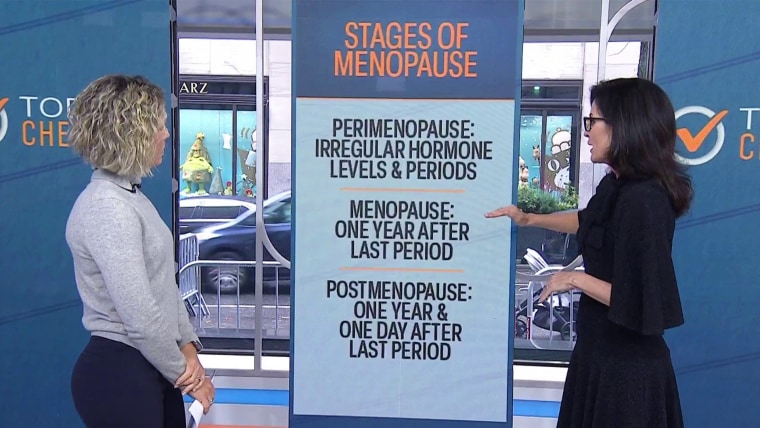
What are the stages, symptoms, treatments for menopause?
04:40
Sometimes less is more, especially when it comes to exercise in menopause
About 60-70% of women experience menopausal weight gain because of muscle mass reduction and hormonal changes, TODAY.com previously reported, and for someone women, their workouts may be making things worse
Expert Tip of the Day: Scale Back High Intensity Workouts If You’re Struggling to Lose Weigh in Menopause
If you’re struggling to lose weight in menopause and regularly doing high-intensity workouts, Start TODAY trainer Stephanie Mansour suggests laying off them for a little bit to see if it affects your results
That’s because this type of exercise can increase the stress hormone, cortisol, which can make your body more likely to hold on to weight in menopause, when your estrogen levels are lower
Cortisol can be elevated by HIIT workouts, spin classes or even hot sculpt yoga, said Mansour
Why It Matters
During perimenopause and menopause, metabolic disruptions change the way the body manages cortisol changes
Typically, estrogen would act as a “buffer” for our stress levels, Dr. Rekha Kumar, endocrinologist and <a href="https://healthylife7.com/obesity-can-disturb-hormones-to-womens-fertility/” title=”Obesity Can Disturb Hormones to Women's Fertility”>obesity medicine expert at Weill Cornell Medicine, tells TODAY.com. But when estrogen levels decline during menopause, cortisol levels are able to run high and remain elevated much longer after a stressor
“Chronically high cortisol pushes the body to hold onto fat, especially around the abdomen, and can also disrupt sleep and increase cravings for high-sugar, high-fat foods, all of which make weight control harder,” Kumar says
How to Get Started
Instead of HIIT and running long distances and cycling at the highest possible speed, opt for workouts that keep your stress levels low, such as walking, low-impact strength training, Pilates, deep stretching and yoga, says Mansour
Kumar calls it “restorative movement” and encourages her patients to adopt the habit of regular exercise before they turn 35 so that it’s already baked into their routines by the time perimenopause begins
Also essential to your routine are rest and recovery in between workouts, says Kumar. “If you don’t give your body adequate recovery between sessions, especially with high-intensity workouts, cortisol can stay chronically elevated instead of returning to baseline,” she explains
Without proper recovery, she adds, you’ll have a more difficult time achieving the weight loss goals you’re working toward. In fact, Kumar says rest days and adequate sleep “aren’t a break from progress but rather they’re part of how the progress actually happens.”
Outside of the gym, you can also keep your stress levels down by prioritize restorative and consistent sleep, says Kumar, and making time for 10 minutes of breath work or a daily walk
TODAY’s Expert Tip of the Dayseries is all about simple strategies to make life a little easier. Every Monday through Friday, different qualified experts share their best advice on diet, fitness, heart health, mental wellness and more
