


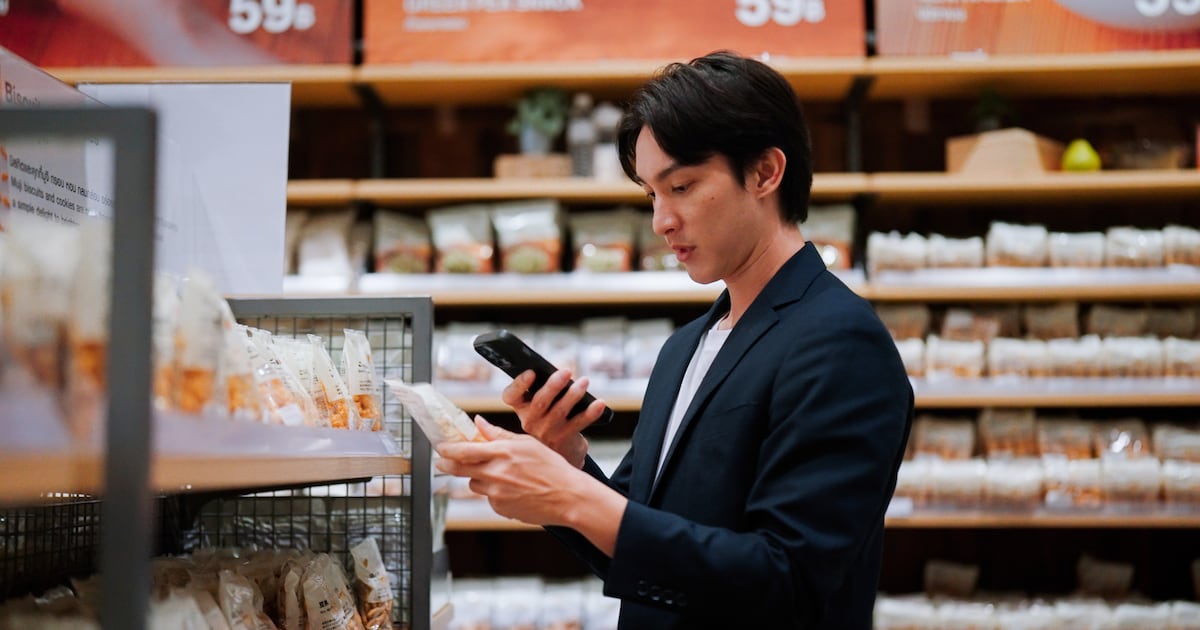
At the forefront of this shift has been the rise of QR codes for food labelling, through which food and drink manufacturers can provide a wealth of information about their products from ingredients, nutritional value, allergens, storing instructions, and cooking details directly on the label
At present, there is a move globally to use QR codes to provide that all <a href="https://healthylife7.com/womans-doctor-physical-activity-important-to-avoid-osteoarthritis/” title=”Woman's Doctor: Physical activity important to avoid osteoarthritis”>important information including nutritional details, but adoption has a mixed picture across the globe influenced by a variety of influences from culture to legislative knowledge to territory
In this area, APAC is leading the way with many countries in the region introducing regulations to support the use on food packaging
One of those spearheading this use is South Korea. In 2025 its Ministry of Food and Drug Safety published a notification to improve the readability of food labels by allowing more information to be provided electronically through QR codes
The move builds on the country’s earlier ‘Smart Food QR’ pilot programme, launched in 2022
Global standards body GS1 has been closely contributing to this transition, working globally on the introduction on QR smartcodes
Kerry Morrison, head of retail at GS1 UK, believes the industry is at a pivotal moment where QR codes are set to start providing more nutritional information. She says that South Korea’s early adoption reflects a broader cultural readiness and high smartphone adoption
“We think the use of QR codes in South Korea is a lot more embedded,” Morrison says. “It’s not just supermarkets and food manufacturers. It is a mature market in QR adoption.”
China is also pushing the boundaries of digital labelling
Its mandatory national food safety standard GB 7718-2025, which governs the labelling of pre-packaged foods, allows information such as ingredients, product traceability, food safety, and nutrition, to be displayed through digital labels, due to space limitations of physical labels, in text, audio, video, or other formats
The new standard comes into force in March 2027
Content must comply with Article 67 of the Food Safety Law of the People’s Republic of China while advertising, marketing, and other information are not considered digital labels
China is not imposing uniform requirements but allowing food manufacturers to build their own digital label platforms or use third-party platforms to display information
Meanwhile, Japan’s Consumer Affairs Agency is also looking into the use of QR Codes for food labelling and nutritional information. (4)
The focus is on preventing text overcrowding on processed food labels with QR codes linking directly to a standardised product information webpage. After drawing up guidelines the agency aims to launch the system in late fiscal 2027 at the earliest
Australia is moving towards the adoption of QR codes with The Australian Food and Grocery Council and the New Zealand Food & Grocery Council rolling out SmartFacts, an initiative to harmonise digital labelling
The system though is considered more of an add-on, with rules still requiring on pack information
Concerns have also been raised about whether QR codes could limit access to essential information
A study published in Health Promotion International found that, when unprompted, fewer than a quarter of shoppers scanned QR codes on food products. Among 483 breakfast cereals analysed in Australia, only 16% featured QR codes and none provided full nutritional information
The researchers concluded the need for monitoring and regulation to ensure consumers can access the information needed for informed decisions
While many countries in APAC are embracing the use of QR codes for nutritional information there is a complex and mixed picture globally. The UK, US and Europe have been more cautious about the move from packaging to digital
“Lots of people making decisions that have never heard about the QR codes. There is a lack of awareness amongst legislative decision makers. From a policy perspective there are so many things to go after, to have to go through with process and its very challenging,” Morrison says
The European Commission is investigating the use of QR Codes for food nutrition. Currently, QR codes are allowed on food labels to supplement mandatory written information but cannot replace the information on packaging
It has already made some inroads into using QR codes. Since December 2023 EU regulations allow wine and aromatised wine labels, due to space constraints, to use a hybrid approach linking ingredients and nutrition to a digital e-label
The result is that French grocer Carrefour has adopted QR codes across its own private label wine products providing product information such as nutritional values, ingredients along with recycling information
The UK operates with mandatory nutritional information appearing on physical packaging, although retailers are beginning to experiment with QR codes for a variety of uses
Tesco became the first UK supermarket to switch an entire product range exclusively to QR codes. This is to focus on issues such as additional product information, waste reduction and product management
However, Morrison highlights several hurdles that needs to be overcome for the UK to focus on QR codes as a replacement for on packaged nutrition details, including the implementation of the UK National Food Strategy
She also highlighted the complexity of the UK landscape, where multiple stakeholders and regulatory frameworks can slow progress
The US has a similar challenge. While the Food and Drug Administration is pushing ahead with proposals for a clearer front-of-pack nutrition labelling box, differing state-level regulations are adding another layer of complexity
While the FDA oversees food labelling other states are increasingly passing their own laws, meaning the situation is increasingly complicated
However, Morrison says she thinks there is more potential for QR codes with them having the potential not only inform but to further educate
“I think there’s a huge opportunity for fresh food producers providing items like milk and cheese, fruit and vegetables and any sort of meat as well to be educating consumers on the nutrition,” she says
Ultimately, she argues, digital labelling could transform how consumers engage with food altogether
“This is going to be a really good way to help consumers make much more informed choice beyond calories and beyond fat,” she says
“Imagine if your food could talk to you about different lifestyle factors which you may want to consider over time.”
As QR smartcodes continue to gain ground, the question is no longer if they will reshape food labelling but how quickly consumers, regulators and the industry can adapt to unlock their full potential
