


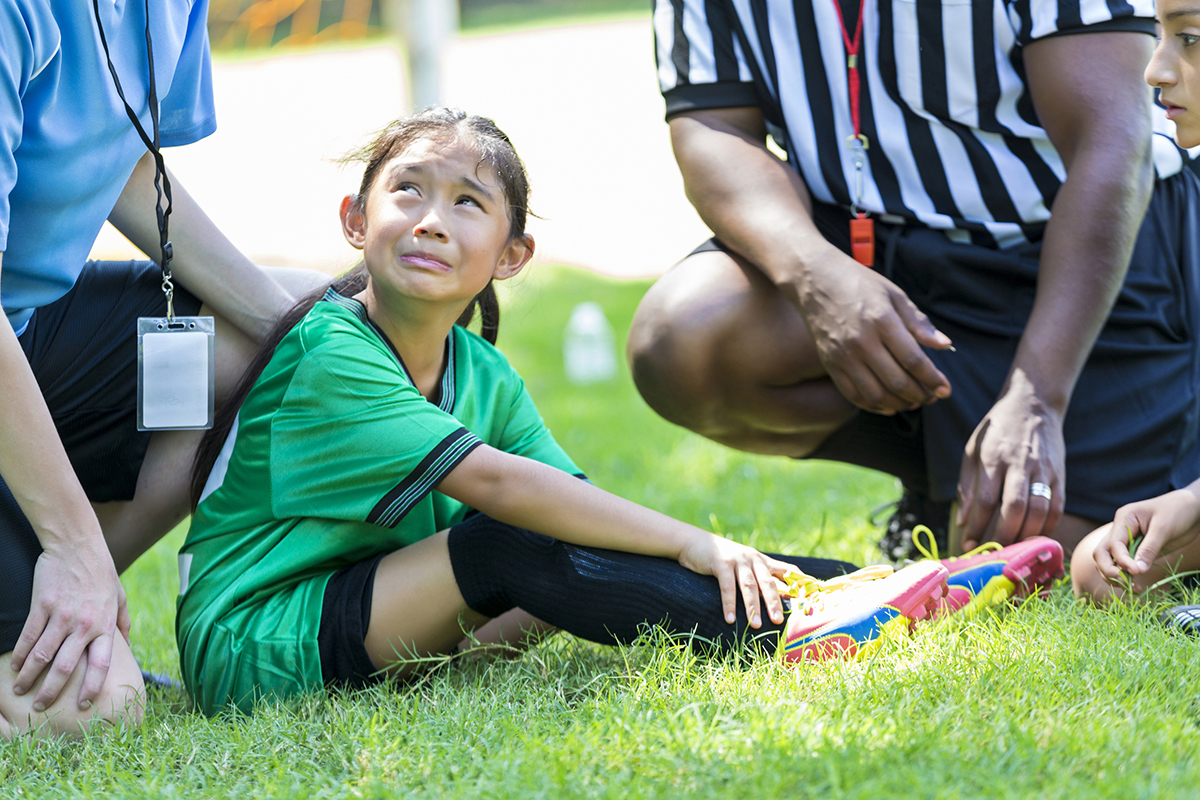
The Medical Minute: Back-to-sports season: Injury prevention tips for young athletes
When you’re sitting in the stands watching your kids play sports, the last thing you want to see is an injury that sidelines them for the season
July 29, 2026Penn State Health News
About 2.7 million people under age 24 visited U.S. emergency departments for sports and recreation injuries in 2024, according to the National Safety Council. Countless more develop chronic injuries
“We’re seeing a lot of overuse injuries, such as ankle sprains, stress fractures and tendonitis,” said Dr. Morgan Gochnauer, a sports medicine physician at Penn State Health Lime Spring Outpatient Center and the team physician for athletes at Central Dauphin High School in Harrisburg. “The injuries can happen when an athlete’s body isn’t properly equipped for training or they’re playing multiple sports and getting little or no rest throughout the year.”
To help your kid stay safe this back-to-sports season, follow these youth sports injury prevention tips
Find a Penn State Health sports medicine expert near you
Injury Prevention for Young Athletes
- Complete a pre-season physical.This quick exam is an important part of sports medicine for young athletes. A doctor can pick up on lingering injuries or risk factors and address them before they worsen.“Often when I ask a high school student whether they’ve had any injuries in the past, they only answer ‘yes’ if it required surgery,” Gochnauer said. “But if they’ve had something like recurrent ankle sprains, we need to have that on our radar because we can prevent further injury during upcoming season with simple ankle-strengthening exercises in the training room.”
- Start gradually increasing activity levels now.“Some athletes don’t do enough prep, such as training, lifting and flexibility work, over the summer,” Gochnauer said. “They show up to preseason and go from zero to 100, but the ramp-up is way too quick for their bodies, and they can get into trouble.” Stephanie Wells, a certified athletic trainer who serves the Elizabethtown Area School District, recommends working out at least two days a week between seasons and incorporating outdoor movement into social events.“Go for walks or bike rides with your friends, or get a group together to go running or do workouts,” Wells said. “Make it fun so it doesn’t feel like a job to prepare for the sports season.”Weight training can also help prevent sports injuries because it builds muscle strength around joints. Your school’s athletic trainer can recommend safe training techniques.
- Don’t skip warmups and cooldowns. “It’s important to warm up your muscles before putting them under a lot of tension throughout hard practices and competitive games,” Gochnauer said. “Then, after activity, make sure your muscles have chance to cool down in a controlled setting.” Wells often recommends active recovery, such as swimming or a gentle ride on a stationary bike.
“Athletes often think that if they work out in the morning, sit around all day and then come back for the second session, they’ll feel so much better,” Wells said. “It’s actually the opposite. We want to keep moving our bodies, even if it’s light.”
- Prioritize sleep, hydration and nutrition.They’re the foundational building blocks for any athlete, Gochnauer said.
- Sleep: Adolescents need eight to 10 hours per night, according to the American Academy of Sleep Medicine.
- Hydration: During the blistering heat of late summer and early fall, Wells constantly reminds athletes to hydrate. “Drink plenty of water or electrolyte beverages for two days before a really hot day,” Wells recommends.
- Nutrition:Lately, Gochnauer has noticed an increasing number of kids with concerns about their weight and diet. “I think it’s appropriate to make sure they’re not restricting themselves in a dangerous way, but if they do want to optimize their nutrition, we can give them proper channels and avenues to do that safely,” Gochnauer said.
Learn more about orthopedics care at Penn State Health Golisano Children’s Hospital
When to See a Doctor for a Sports Injury
Some sports injuries, such as large open wounds or concussions, require immediate medical care. For common muscle and joint injuries, Gochnauer’s advice is straightforward: Don’t ignore pain. Post-workout soreness should improve with ice and three to four days of rest and gentle exercise. Pain that doesn’t get better – or gets worse – needs evaluation
“Oftentimes, if we catch it right when the pain starts, it’s a simple rehab versus later down the road, when it can turn more complicated problems like stress fractures and growth plate injuries,” Gochnauer said
Many injured athletes can also benefit from mental health support, especially if they aren’t recovering smoothly or just aren’t acting like themselves
“Injuries aren’t simply physical,” Gochnauer said. “For many athletes, depending on their background and social situation, this sport could be like their full identity, so anything that affects that can be detrimental.”
Explore sports medicine clinical trials at Penn State College of Medicine
- The Medical Minute: Is it a sports injury or growing pains?
- Video: Should Kids Play Only One Sport? What the Research Says
- The Medical Minute: Return to play after injury — What athletes and families should know
The Medical Minute is a weekly health news feature produced by Penn State Health. Articles feature the expertise of faculty, physicians and staff, and are designed to offer timely, relevant health information of interest to a broad audience
If you’re having trouble accessing this content, or would like it in another format, please email Penn State Health Marketing & Communications
