


Women’s Health
Three Types Of Training May Protect Bones After Menopause, Research Finds
 Author:Zhané SlambeeAugust 15, 2026
mindbodygreen editor
By Zhané Slambee
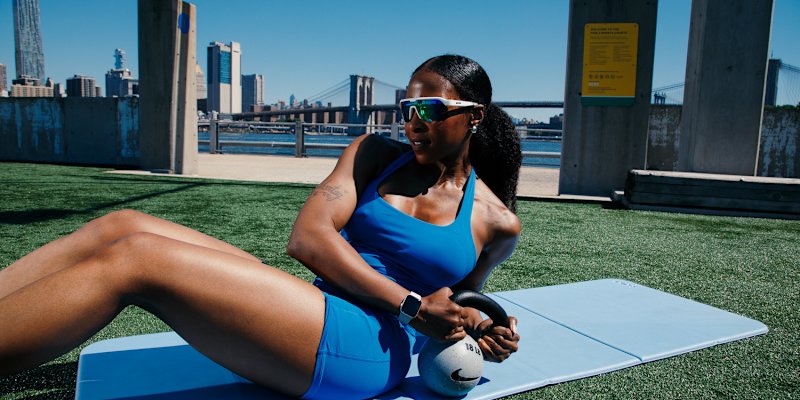
Image by Eli Ritter / Mindbodygreen
August 15, 2026
Bone loss doesn’t wait for a warning label. Menopausal estrogen decline is the leading cause of osteoporosis, and as bone density drops, bones are left more vulnerable to fractures
Exercise is one of the most accessible tools available for preserving that density, but the ideal type, intensity, and age to start all remain under debate
New research took on that debate, pooling recent trial evidence on high-intensity, impact, and strength training in postmenopausal women and weighing it against equivalent data in younger women
The results didn’t look the same for both groups
About the study
The review set out to summarize recent evidence on how high-intensity, impact, and strength training affect bone mineral density in postmenopausal women, and to compare that evidence with data in premenopausal women
To do it, the team searched two major research databases for randomized controlled trials
Trials qualified if they included premenopausal or postmenopausal women, at least one group doing high-intensity, impact, or strength training, a control group, and bone mineral density as an outcome
Each study was rated for quality and risk of bias before the results were combined in a meta-analysis, a method that pools data across studies to spot overall patterns
Bone density rose at the hip & lower spine after menopause
Eight trials involving 379 women met the criteria: six in women who had already been through menopause, and two in women who hadn’t yet
In the postmenopausal group, bone density went up in two spots. The first was the femoral neck, the top of the thighbone where it meets the hip. The second was the lumbar spine, or lower back. The increases were small, but they held up across the trials rather than looking like chance
Women who hadn’t reached menopause showed no increase at either spot. What the review can’t tell you is which of the three types of training earned that result. Each trial tested high-intensity, impact, or strength work on its own, and the researchers combined those results into one pooled figure instead of comparing the three against each other
beauty & gut collagen+
★ ★ ★ ★ ★
★ ★ ★ ★ ★
The authors also flagged design problems in the trials they reviewed, and they gave two possible explanations for the flat result in younger women
Either those exercise programs weren’t demanding enough to produce a change, or bones simply respond to exercise differently before and after menopause
With only two trials in that group, there isn’t enough evidence yet to say which
RELATED READ:These 3 Nutrients Improve Bone Health & Lower Fracture Risk
Putting this into practice
The improvements here were modest, but they add to the evidence that exercise supports bone health during this stage of life. How that translates to your week:
- Strength training is the foundation. Squats, deadlifts, and resistance-band work, done consistently.
- Layer in impact where your joints allow.Impact exercise like jumping, hopping, or brisk stair climbing.
- Add higher-intensity intervals if you’re already active. Keep them alongside your strength sessions, not in place of them.
- Scale to your current fitness. The review didn’t report a specific weekly dose. If you’re newer to exercise or managing joint issues, build a base with lower-impact strength work before adding jumps or sprints.
Where you start matters less than whether you stay with it, since the density changes here came out of structured programs rather than the occasional hard session
The takeaway
The open question this review leaves is one of timing, since the same training registered in women past menopause but not in women before it
Larger studies with more demanding protocols will have to explain that gap, and only two trials covered younger women. What these results did share was structure. Months of scheduled sessions meant more than occasional hard efforts
