


Health and medicine
Trouble losing weight? It might be your gut microbes, not your genes
Gut microbiomes may be an overlooked puzzle piece in the ‘thrifty gene hypothesis,’ ASU researcher says
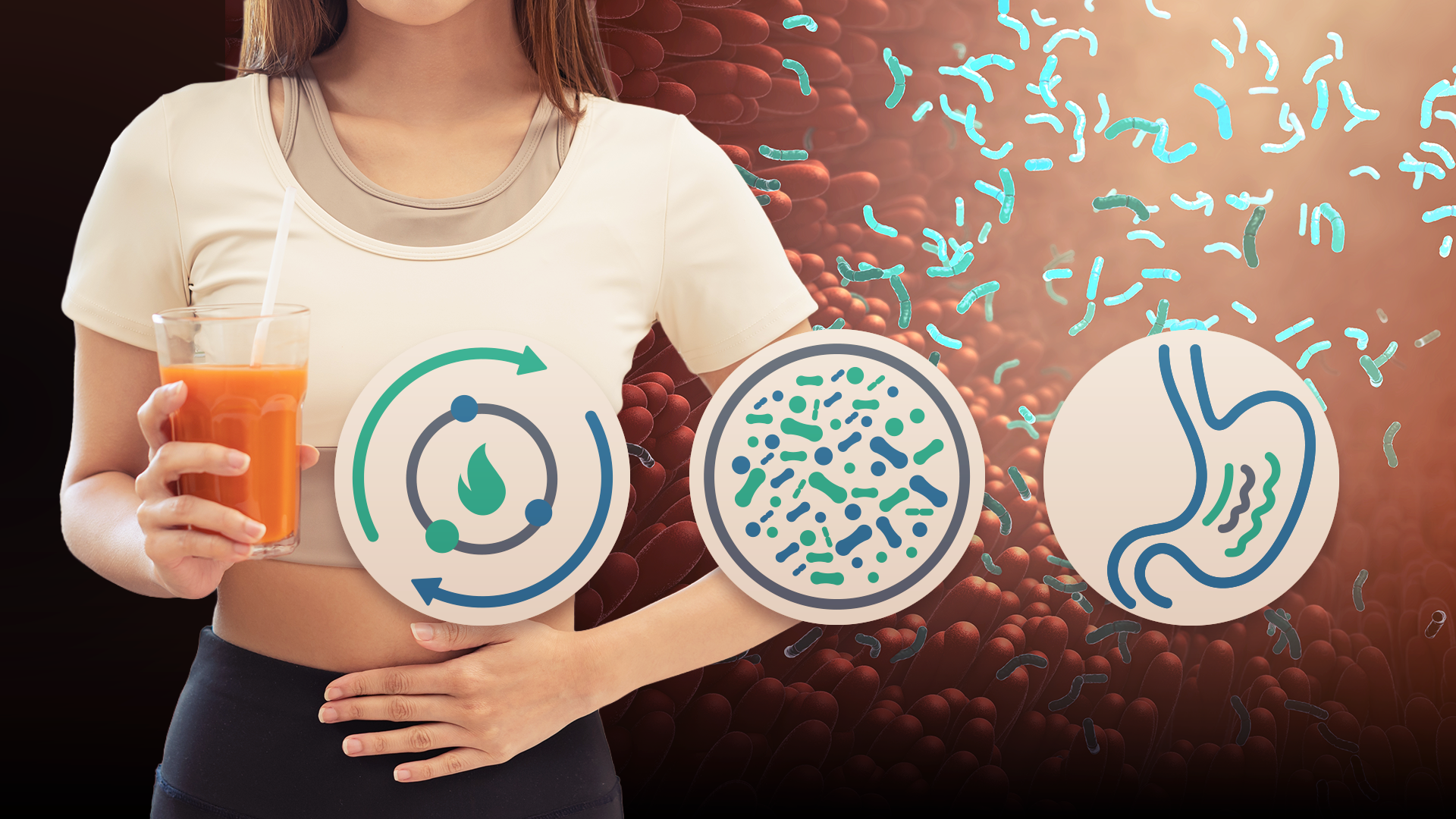
<img src="https://healthylife7.com/wp-content/uploads/2026/08/microbiome-metabolism-ASU-news.png” alt=”illustration of woman holding her stomach while drinking orange juice with microbes in the background and icons representing the stomach, metabolism and microbiome”>
The human gut microbiome may help explain why certain people are more inclined to have metabolic disease — and may also provide a key to new treatments and diagnostics for various conditions. Photo illustration by Jason Drees/ASU
What if your ancestors’ specialized gut microbes are the key to understanding your own metabolic health?
That’s the idea posed by Arizona State University researcher Taichi Suzuki in a recent essay in Science. The essay was a finalist for the NOSTER & Science Microbiome Prize
Metabolic diseases like obesity and diabetes are a growing public health burden around the world. In the 1960s, scientists proposed that this could be due to genes that favored the ability to extract more calories from food, calling it the “thrifty gene hypothesis.” But in the decades since then, scientists haven’t been able to support this idea looking at our DNA

Suzuki believes our gut microbiome is an overlooked puzzle piece that helps fill those gaps. He calls it the “missing thriftiness.”
The gut microbiome is the ecosystem of bacteria, fungi and other microbes that live in the digestive tract. It has a long history with humans, and Suzuki explores how it may have optimized for our ancestors’ different environments
“The gut microbiome affects almost everything in the body. There’s some evidence that it either affects or is associated with immunity, metabolism, physiology, digestion, even behavior and mood,” says Suzuki, an assistant professor in the Biodesign Center for Health Through Microbiomes and the College of Health Solutions
Below, Suzuki explains his research into how the gut microbiome has adapted to humans, and vice versa — and what this connection means for improving our health
Note: Answers have been edited for length and clarity
Question: What is the thrifty gene hypothesis, and what’s missing from it?
Answer: The thrifty gene hypothesis was an idea proposed in 1962 to explain the rise in metabolic diseases. For most of human history, we had times of food scarcity, and during those times, individuals with genes that helped them extract more energy and store fat had an advantage. But in our modern environment, where there’s plenty of food, those genes may have a disadvantage, predisposing people to metabolic diseases.
So where does the missing part come from? Scientists looked for these thrifty genes using different approaches and got very complex results. The genes cannot really explain the variation in metabolic traits. That’s where the microbiome comes in — potentially, the gut microbiome may help explain these metabolic differences
Q: In your essay, you called the gut microbiome our “second genome.” Why?
A: The human genome has about 20,000 genes. But if we combine all the genetic material from microorganisms in our gut microbiome, it’s a hundred times more. There’s a common saying that we are made up of 1% human DNA and 99% microbial DNA. The genes from our microbiome can code for functions and produce enzymes that our own genes cannot
Q: You did an analysis and found more obesity-associated microbiomes in humans from colder regions versus warmer. Then you studied wild house mice, also from colder and warmer places, and found the same pattern. What does that tell us about the connection between our ancestral environment and our microbiome?
A: That was from my PhD work in a population genetics lab. I was studying how the genes in mice will allow them to live in different climates. I also did a rotation with a professor looking at obesity and the human microbiome. By linking these two ideas, I thought that if gut microbes can help the host extract energy from the diet efficiently, it may have benefited wild animals and our ancestors living in certain climates
I looked at data from human microbiome studies. We saw this pattern that an obesity-associated microbiome was more common in people from colder places than warmer places. In humans, it’s hard to attribute that difference just to the climate. It could also be explained by differences in diet or culture between people from these regions
If we observed this pattern in humans, would we also find it in wild house mice? We did.
Together, these studies suggest that our genomes and microbiomes are shaped by our ancestral environments, potentially contributing to differences in metabolism and susceptibility to obesity
Q: What have you learned about how humans and our gut microbes evolved alongside each other?
A: Co-evolution is when two or more species affect each other’s evolution. One common criteria for co-evolution is a shared history. During my postdoc, I joined a lab that had collected human genomes and microbial genomes from mother-infant pairs from six different countries. I had this idea to study the origin of human microbiome
We know that some microbes come from our parents, but where did our parents get their microbiomes? Maybe from their parents. If there really are gut microbes that have been passed down across generations, perhaps we can trace them from the out-of-Africa migration all the way to today
We made a human phylogenetic tree that showed the genetic relatedness of the participants. Then we made the same tree for each gut bacteria and looked at which ones most closely matched our evolutionary history. Some seemed to closely follow our migration history — for example, African populations carried African bacterial strains, whereas Asian populations carried Asian strains
It’s interesting — the bacteria that evolved closely with humans seemed to have lost the ability to live outside the gut, suggesting that they are specialized to live in the gut. About half or more of the bacteria we looked at showed a significant pattern of parallel history compared to what you would expect to see by random chance.
Q: What are the next steps for your research into human and microbiome co-evolution?
A: My lab is investigating mismatches between human ancestry and microbial ancestry, and whether these mismatches can help us predict any metabolic and immune markers in the blood. We’re recruiting Arizona residentsand will ask about their ancestry, sequence their microbiomes and measure biomarkers in their blood
For example, if I have an Asian genome but have lived in the U.S. for a long time, do I still carry my Japanese-associated microbes with me, or do immigrants lose some of their ancestral microbes? Which ones are retained, and which are lost? Can these patterns predict any of the health-related markers?
One side of my lab is focused on these mismatches in humans, while the other is exploring the same idea in wild rodents
Q: What diseases or conditions might benefit from the research?
A: A PhD student conducted a meta-analysis to explore the link between the evolutionary histories of microbes and different human diseases, including autism, neurodegenerative diseases, diabetes, inflammatory bowel disease and obesity. We found some consistent trends across diseases: Gut microbes with small genomes that parallel human evolutionary history were depleted in most disease groups compared with healthy controls. We suspect that systemic inflammation favors microbes with large genomes and the ability to live both inside and outside the gut, while reducing ancestral microbes specialized for life in the healthy gut.
These patterns could potentially be used as biomarkers. One of the strongest signals was in autism spectrum disorder, and we are collaborating with Rosa Krajmalnik-Brown (director of the Biodesign Center for Health Through Microbiomes) on a clinical trial to determine whether the abundance of these ancestral microbes can predict autism-related behavioral symptoms.
The application is in the realm of personalized medicine. Can we incorporate the evolutionary history of microbes into strategies to treat symptoms or prevent disease?
Q: Are personalized probiotics based on someone’s ancestry a possibility in the future?
A: Yes. If doctors begin prescribing medicine based on our genomes, it would makes sense to also consider our microbiomes when selecting treatment.
A prominent microbiome research group has already provided evidence supporting this idea. They showed that locallytion than commerciallyes of bacteria. This approach is not yet ready for clinical application, but it represents a promising direction for future research
Biodesign Center for Health Through MicrobiomesFacultyHealthy LivingSDG 03 Good Health and Well-BeingBiologyBioscienceTempe campusHealth and medicineExpert Q-and-ABiodesign InstituteCollege of Health SolutionsKnowledge Enterprise
Biodesign Center for Health Through Microbiomes, Faculty, Healthy Living, SDG 03 Good Health and Well-Being, Biology, Bioscience, Tempe campus, Health and medicine, Expert Q-and-A, Biodesign Institute, College of Health Solutions, Knowledge Enterprise
More Health and medicine
The family members came in first, taking their seats inside the Katzin Concert Hall on Friday as they clutched bouquets of flowers and awaited a moment they will forever hold tightly.Their sons and…
Read this story
Health careNew American UniversityUniversity
Adria Laborin has appreciated everything she’s learned in the classroom in her first year as a student in Arizona State University’s Master of Public Health program.But as a young woman who wants to…
Read this story
Health careCommunity partnerships
Aflatoxin is one of the world’s most dangerous food toxins, having been linked to liver cancer, impaired immune function and chronic inflammation.As climate change creates warmer and more humid…
Read this story
Healthy LivingBioscienceLatino / ChicanoFood and DiningResearch
