


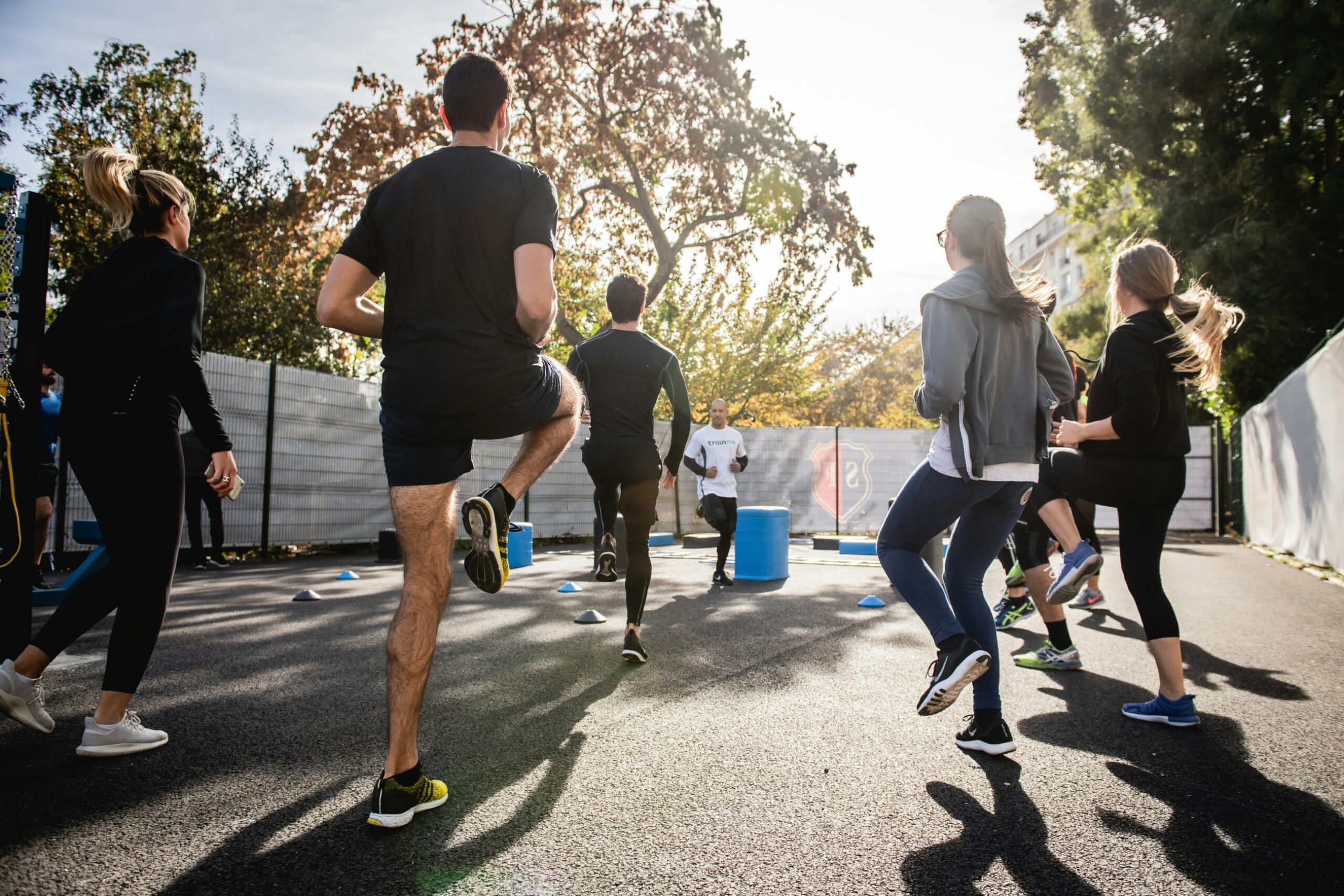
A major wearable-device study of nearly 60,000 British adults has confirmed what most exercise guidelines have yet to acknowledge: vigorous physical activity reduces cancer risk through biological mechanisms that moderate activity cannot replicate at equivalent doses — and losing as few as three minutes of hard daily effort is associated with a measurably higher cancer hazard. The research was published in BMC Medicine and led by Dr. John J. Mitchell of UCL’s Division of Surgery and Interventional Science.
The study analyzed wrist accelerometer data from 59,218 UK Biobank participants across a median follow-up of eight years — 464,640 person-years of observation in total — capturing 2,385 incident cancers at 13 sites linked to physical inactivity. The research used a novel dual-compositional approach that simultaneously modeled both how people held their bodies (posture) and how hard they moved (intensity) across every hour of the day, a method applied here to cancer risk for the first time
The most actionable headline: replacing 15 minutes of sitting or sleep with 15 minutes of any movement reduced cancer risk by 2%. But the steeper finding — and the one most current physical activity guidelines miss — is that three minutes of vigorous activity per day produced the same cancer hazard reduction as more than 90 minutes of light activity. The implication is that vigorous and moderate exercise are not interchangeable for cancer prevention
The study arrives as a companion piece to a separate PLOS Medicine investigation, published July 2, 2026, which analyzed more than 91,000 UK Biobank participants and found that each additional hour of uninterrupted sedentary time was associated with a 10% higher cancer death hazard — while each additional hour of interrupted sedentary time (sitting broken up by brief movement) was associated with a 19% lower cancer death hazard. Together, the two studies establish a consistent picture: not only the quantity of movement but its structure — how intense it is and whether sedentary time is broken up — determines its cancer-protective value.
Dual-Composition Method: Why Modeling Both Posture and Intensity Changes Everything
The study’s primary methodological contribution is its simultaneous modeling of two independent frameworks of daily movement. Previous wearable-device research on cancer risk had treated activity either as a posture question (sitting vs. standing vs. moving at any intensity) or as an intensity question (light vs. moderate vs. vigorous). Mitchell and colleagues ran both analyses in parallel — using separate statistical compositions — which let them isolate the independent contribution of standing, on the one hand, and the specific cancer-protective power of vigorous effort relative to moderate effort, on the other.
The device used was the Axivity AX3 wrist accelerometer, worn on the dominant wrist for seven days at a 100Hz sampling rate. Activity was classified by a Random Forest machine-learning algorithm — achieving balanced accuracy of 88% for sedentary behavior detection and 80% for standing in free-living conditions — and analyzed using isometric log-ratio compositional statistics that modeled all behaviors simultaneously rather than one at a time
The key statistical innovation is that compositional analysis treats time as a zero-sum resource: the full 24-hour day is divided across sleep, sedentary behavior, standing, and movement at varying intensities, and any change to one category necessarily changes others. This is the mathematical foundation that makes isotemporal substitution possible — estimating what would theoretically happen to cancer risk if a person shifted three, five, or fifteen minutes from one behavior to another, while holding the rest of the composition constant at the sample average. These estimates represent differences between people (one who exercises more vs. one who exercises less), not predictions of what would happen to a single individual who changed their habits.
Why 3 Minutes of Hard Effort Outperforms 90 Minutes of Light Activity
The intensity comparison is the study’s most striking finding, and it demands specific unpacking
When the researchers modeled Composition 2 — the intensity-based framework — they found that greater time in vigorous physical activity (VPA), relative to all other behaviors, was the single most powerful predictor of lower cancer hazard. Just three additional minutes of vigorous effort per day — replacing sleep, sedentary time, light activity, or moderate activity — was associated with a 4% lower cancer hazard (hazard ratio 0.96, 95% confidence interval 0.93–0.99)
To achieve an equivalent risk reduction through light physical activity required more than 90 additional minutes per day in place of sleep or sedentary time
The study also found that when moderate and vigorous activity were combined (as the standard “MVPA” metric used in most guidelines), cancer risk declined specifically as the proportion of vigorous effort within that combined category increased. In other words, a person meeting their weekly MVPA minutes almost entirely through brisk walking gets a different cancer risk profile than one who mixes in a substantial portion of vigorous effort
Dr. Mitchell described the kinds of activities that count as vigorous, per his Canberra Times interview: “anything which elevates your heart rate and makes you sweat — running for a bus, rushing up the stairs, carrying home heavy grocery bags, sport.”
The biological explanation lies in the different physiological cascades that vigorous effort triggers. At higher intensities, the body releases myokines — proteins secreted by contracting muscle — at concentrations that moderate effort does not reach; these act directly to suppress chronic inflammation linked to cancer across multiple sites. Vigorous exercise also produces greater acute perturbations in insulin sensitivity and insulin-like growth factor (IGF) signaling than moderate exercise, disrupting the hyperinsulinemia that promotes cell proliferation in obesity-related cancers. The study authors note that their finding that adjusting for BMI fully attenuated the association between sedentary behavior and cancer suggests adiposity is a major mediating pathway — further supporting the metabolic mechanism.
Does Sitting Still Kill You? What the Posture Data Show
The posture-based analysis (Composition 1) produced findings with clear practical implications for desk workers and others with limited capacity for vigorous exercise
When sitting was theoretically substituted with any movement — regardless of intensity — cancer risk fell measurably. Specifically, replacing 30 minutes of sitting with movement was associated with an 8% lower cancer hazard; replacing 30 minutes of sitting with standing was associated with a 2–3% lower hazard. Conversely, replacing 30 minutes of movement with sitting raised cancer hazard by 8%, and replacing 30 minutes of movement with sleep raised it by 7%
The standing finding deserves particular attention because standing has rarely been modeled as an independent variable in cancer research. This study suggests it has a real, if smaller, protective effect — likely because standing breaks up extended sedentary bouts rather than through direct physiological mechanisms. The authors describe standing as “a plausible behavioral adjunct or alternative” that warrants further investigation, particularly for people who cannot meet current intensity thresholds.
The PLOS Medicine companion study (Zhou et al.) sharpens this picture: the pattern of sedentary time matters, not just its total. Sitting for 30 or more minutes at a stretch without moving — regardless of whether you hit your daily step goal — was the driver of elevated cancer mortality risk in that study, not total sedentary time alone. Together, the two studies converge on a recommendation that goes beyond “sit less”: break up your sitting continuously, and make at least some of your daily movement vigorous.
Does Sitting Still Kill You? The Adiposity Mediation Question
One of the study’s more technically significant findings is that the cancer risk associated with sedentary behavior was fully attenuated when BMI was added to the statistical models. This does not mean sitting is harmless — it means that much of the harm from prolonged sitting may operate through excess body fat accumulation over time, rather than through a direct mechanism independent of weight
This has a meaningful practical implication: strategies targeting sedentary time may reduce cancer risk partly by preventing the gradual accumulation of excess adiposity over years or decades — not only through immediate metabolic or inflammatory effects. For vigorous activity, the biological mechanisms appear to be more direct and not fully mediated by BMI, which may explain why the vigorous-activity associations remained robust in sensitivity analyses while the sedentary-behavior association did not.
What the Study Does Not Prove
The researchers, and the study design itself, carry important caveats that any responsible reader should hold in mind
These are between-individual comparisons, not predictions of what will happen to a specific person who changes their habits. The isotemporal substitution estimates say: people at the sample average who differ by three minutes of vigorous activity per day show a 4% difference in cancer hazard. This does not mean an individual who adds three minutes of hard effort today will see their personal cancer risk drop by 4%. Cancer develops over years or decades, and behavioral interventions require similarly extended periods before measurable risk differences emerge.
The UK Biobank cohort also carries a well-documented healthy-volunteer bias: its participants are, on average, wealthier, better educated, less likely to smoke, and at lower cancer risk than the UK general population — with cancer incidence roughly 10–20% lower than the comparable general population at the same ages. The study’s 96% white British sample further limits generalizability across racial and ethnic groups that may have different cancer site distributions and lifestyle patterns, as documented in research on ethnic cancer incidence.
Breast cancer was notably null across all analyses in this study, despite being the most prevalent site in the cohort — a finding the authors say warrants further investigation. This site-specific variation suggests the overall composite cancer risk finding does not apply uniformly across all cancer types
The study also found that the vigorous-activity associations were no longer statistically significant when cancer events in the first two years of follow-up were removed — raising the possibility of some reverse causation (people who developed undetected cancer may have already been moving less). The authors addressed this through sensitivity analyses, and note that the combined MVPA associations remained robust in all samples
What This Means for Exercise Guidelines — and for How You Plan Your Day
Current WHO physical activity guidelines recommend 150–300 minutes of moderate-intensity or 75–150 minutes of vigorous-intensity physical activity per week. The Mitchell et al. study’s authors argue that these guidelines — designed around threshold quantities of a single dimension of movement — may miss the full behavioral menu that science now supports
The emerging “24-hour movement” framework, already adopted by Canada and Australia in official guidelines, integrates sleep, sedentary time, and activity of all intensities into a single daily composition. Mitchell and colleagues are explicitly building toward this model — their dual-composition approach is designed to generate the evidence base for guidance that offers a “menu of possible options” adaptable to different lifestyles, rather than a one-size-fits-all intensity threshold
For the 1.8 billion adults globally who remain insufficiently active, the practical message from this research stack is layered:
Any movement beats sitting. Standing beats prolonged sitting. And three minutes of genuinely hard effort — the kind that elevates your heart rate and makes you breathe hard — offers cancer-protective biology that an hour and a half of light activity cannot replicate
The takeaway for people who already exercise: the marginal cost of losing vigorous effort specifically, as you age or face scheduling constraints, appears larger than most people assume. Maintaining intensity — not just maintaining a step count — matters
Frequently Asked Questions
Does just standing up reduce cancer risk?
Yes, according to this study, though the effect is smaller than for movement. Replacing 30 minutes of sedentary time with 30 minutes of standing was associated with approximately a 2–3% lower cancer hazard in the UCL study. The researchers hypothesize that standing’s benefit operates primarily by breaking up prolonged sedentary bouts rather than through direct physiological mechanisms — making it a useful adjunct, especially for those who cannot exercise vigorously, but not a substitute for actual movement. The PLOS Medicine companion study reinforces this: even light movement that interrupts sitting is protective; the pattern of sedentary accumulation matters, not just the total.
Why can’t I just do more moderate exercise instead of vigorous exercise to get the same cancer protection?
You can partially compensate, but not fully, according to this research. The study found that achieving the same cancer hazard reduction as three minutes of vigorous activity required more than 90 minutes of additional light activity per day. The biological reason is that vigorous effort triggers anti-inflammatory myokines and metabolic perturbations at concentrations and magnitudes that moderate activity does not reach at equivalent dose — different physiological pathways, not just a volume difference. That said, moderate activity does provide meaningful cancer protection, and any movement is better than sitting. The problem arises when people assume that reaching a step count or a minute total of moderate activity provides equivalent cancer protection to an equivalent duration of vigorous effort. It does not.
How is this study different from previous research on exercise and cancer?
Previous wearable-device studies examined either posture (sitting vs. standing vs. moving) or intensity (light vs. moderate vs. vigorous) — but not both simultaneously in a single cancer study. This is the first to apply a dual-composition approach, running both frameworks in parallel on the same dataset of 59,218 people followed for a median of eight years. That design revealed things single-dimension studies miss: that standing has an independent protective signal not previously quantified, and that vigorous effort is specifically the driver of the cancer-risk reduction within combined moderate-to-vigorous physical activity. The isotemporal substitution approach also allows specific, minute-by-minute estimates of behavior swaps — producing clinically specific guidance rather than general conclusions.
What exactly counts as “vigorous” physical activity in this study?
Vigorous physical activity in the Axivity AX3 wrist accelerometer data was classified as acceleration above 400 milligravities — the machine-learning threshold for activities that substantially elevate heart rate and breathing. In plain terms, Dr. Mitchell described it as heart-rate-elevating, sweat-inducing effort: running for a bus, rushing up stairs, carrying heavy grocery bags, competitive sport, or any activity that makes it difficult to hold a conversation. This is importantly different from brisk walking, which falls in the moderate or light category depending on pace. The study’s finding that vigorous effort, specifically, is the “critical intensity” within combined MVPA suggests that activities in this sweat-inducing range are the ones that most directly activate the cancer-protective biological pathways.
ⓒ 2026 TECHTIMES.com All rights reserved. Do not reproduce without permission
Tags:Cancer PreventionPhysical ActivityCancer risk
