


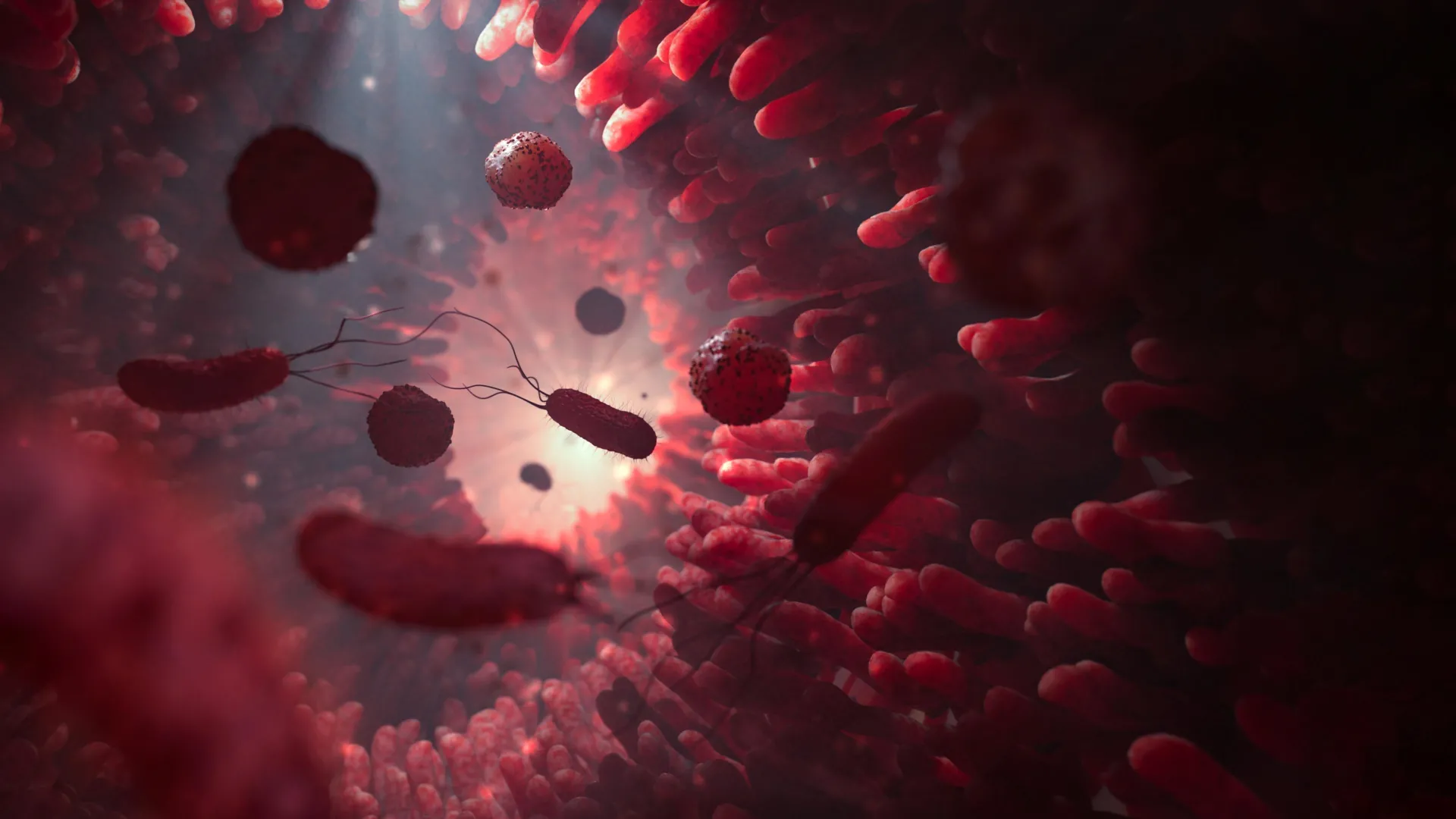
When gut microbes run low on fiber, they may start eating you
When fiber runs low, gut microbes may start feeding on your protective gut lining instead
Date:
August 15, 2026
Source:
Ludwig Institute for Cancer Research
Summary:
Gut microbes need something to eat, and when fiber is limited, they may begin consuming proteins from the mucus lining that protects the gut. Researchers found that fiber can suppress this process, while indigestible plant proteins help microbes produce more beneficial compounds.
Share:
FULL STORY
Plant based diets support health in several ways, including benefits for the gut, immune system, metabolism, and cardiovascular system. Part of that effect comes from encouraging a diverse population of bacteria in the intestines. Scientists have long known that dietary fiber contributes to these benefits because gut microbes help break it down. Plants also contain colorful “phytochemicals” that help protect them from environmental threats and may influence human health. Even so, researchers are still working to understand exactly how gut bacteria process the many components of plant foods and how those interactions produce beneficial effects.
Two studies led by Ludwig Princeton’s Jenna AbuSalim and Director Joshua Rabinowitz offer new insight into that process. One appears in the current issue of the Proceedings of the National Academy of Sciences, while the other was published in Nature Metabolism in June. The first study found that plant fiber and certain plant proteins can change microbial metabolism in ways that increase beneficial metabolites while reducing harmful ones. The second showed that several biologically important metabolites usually credited to gut microbes can also be produced in substantial amounts by mammalian metabolism.
“There’s growing interest across medical disciplines in manipulating the human microbiome or using its metabolic products themselves for therapy,” said Rabinowitz. “Diet holds great promise for controlling the microbiome and its outputs. But to devise effective therapeutic interventions, we need to understand what aspects of the diet control which microbial outputs.”
How Plant Foods Shift Gut Metabolites
In the PNAS study, Rabinowitz, AbuSalim and their colleagues examined how plant based foods influence phenol metabolites. Gut bacteria create these compounds when they digest the amino acids tyrosine and phenylalanine, but the resulting metabolites can have very different effects on health
Phenylpropionate and hippuric acid are produced when bacteria process phenylalanine, and they are associated with gut health and healthy body weight. By contrast, p-cresol sulfate and phenol sulfate come from tyrosine and have been linked to worse outcomes in cancer patients as well as systemic toxicity in people with kidney disease
“Our studies showed that both the fiber and indigestible proteins from plants — which we call ‘proteins imitating fiber,’ or Prif — shift the balance of phenol metabolites from the harmful kind made from tyrosine to the healthful variety derived from phenylalanine,” said AbuSalim
Fiber has long been recognized as an important part of a healthy diet, but indigestible plant proteins have received far less attention. AbuSalim, Rabinowitz and their colleagues found that these proteins are processed by gut microbes and can alter both the makeup of the microbiome and the host’s metabolism. Working together with indigestible plant fiber, they can also change the metabolic activity of gut bacteria in ways that favor the production of beneficial phenols
When Gut Bacteria Turn to the Gut Lining
To trace where these compounds came from, the researchers labeled proteins with stable (non-radioactive) isotopes and followed their digestion in the mouse gut. They found that the “bad” phenols were produced when bacteria consumed proteins from the host, including proteins found in the mucus lining of the gut. The good phenols, in contrast, came almost entirely from indigestible proteins in the diet (Prif)
Fiber reduced the bacterial breakdown of the gut’s mucus lining, which in turn lowered production of the harmful phenols. Prif increased the amount of dietary protein that reached gut microbes, giving them more material to produce the beneficial phenols
“We think Prifs represent an emerging class of dietary nutrients that shape the composition of the gut microbiome and could have a far-reaching influence on metabolic health,” said AbuSalim
“Food packaging may eventually list Prif right below fiber,” said Rabinowitz
Rethinking Where Gut Metabolites Come From
The Nature Metabolism study focused on the origins of phenol metabolites as well as indole metabolites, which are produced from the amino acid tryptophan. Like phenols, indoles are being studied for their possible therapeutic value
Indole metabolites have been connected to a wide range of diseases, including inflammatory bowel disease, neurodegenerative disorders, and cancer. In cancer research, they have been found to affect processes that include cancer metastasis and anti-tumor immune responses
Scientists had generally assumed that phenols and indoles were produced only by gut bacteria. AbuSalim, Rabinowitz and their colleagues decided to test that assumption. Researchers have been especially interested in dietary and probiotic approaches that might increase beneficial indole metabolites. But those strategies may need to be reconsidered if mammalian metabolism, rather than microbes, is responsible for much of what circulates in the body
Using isotope tracing in mice, rats and human cells, the researchers found that mammalian metabolism can produce many indole and phenol metabolites on its own. These included important compounds such as indole-3-lactate and indole-3-acetate
In mice, circulating levels of these metabolites remained high even after antibiotic treatment disrupted the microbiome. A similar pattern appeared in samples from patients taking antibiotics, including cancer patients. At the same time, metabolites made exclusively by microbes, including indole-3-propionate and p-cresol sulfate, declined after antibiotic treatment
New Clues for Diet and Microbiome Therapies
Together, the two studies provide a clearer picture of where phenol and indole metabolites come from and how they are produced. The findings could influence the development of therapies designed to raise or lower specific metabolites
They also add important detail to scientists’ understanding of how diet interacts with the microbiome. Knowing which foods influence particular microbial products could eventually help researchers design more precise dietary, probiotic, or metabolic interventions
“Beyond that,” said Rabinowitz, “a clearer picture of how different foods interact with the microbiome to modulate the production of bacterial metabolites will help sharpen the guidance nutritionists and doctors can give to people for disease prevention and therapy.”
These studies were funded by the Ludwig Institute for Cancer Research, the National Institutes of Health, the National Institute of Diabetes and Digestive and Kidney Diseases, the Princeton Alliance for Collaborative Research and Innovation, Princeton University
Aside from his post as Director of the Princeton Branch of the Ludwig Institute for Cancer Research, Joshua Rabinowitz is Professor in the Department of Chemistry & Lewis-Sigler Institute for Integrative Genomics and a member of the Rutgers Cancer Institute
Materials provided by Ludwig Institute for Cancer Research. Note: Content may be edited for style and length
Journal References:
- Jenna E. AbuSalim, Michael M. MacArthur, Meera Gupta, Asael Roichman, Craig J. Hunter, Felix C. Keber, Seema Chatterjee, Mahta Moussavi, Javad Barouei, Martin Wühr, Dinanath Sulakhe, Christopher J. Lehmann, Mohamed S. Donia, Joshua D. Rabinowitz. Digestion-resistant proteins support the healthy metabolite profiles associated with plant-based diets. Proceedings of the National Academy of Sciences, 2026; 123 (32) DOI: 10.1073/pnas.2605226123
- Jenna E. AbuSalim, Kellen Olszewski, Salma Youssef, Sarah J. Mitchell, Craig J. Hunter, Jessica Little, Ashley Sidebottom, Jacob A. Boyer, Steve D. Knutson, Laith Z. Samarah, Michael R. MacArthur, Alessa L. Henneberg, Rolf-Peter Ryseck, Christiane A. Opitz, David W. C. MacMillan, Mohamed S. Donia, Eric G. Pamer, Sabrina Imam, Christopher J. Lehmann, Olatoyosi Odenike, Joshua D. Rabinowitz. Host metabolism can produce many indoles and phenols independently of the microbiome. Nature Metabolism, 2026; 8 (7): 1528 DOI: 10.1038/s42255-026-01550-8
Cite This Page:
Ludwig Institute for Cancer Research. “When gut microbes run low on fiber, they may start eating you.” ScienceDaily. ScienceDaily, 15 August 2026. <www.sciencedaily.com/releases/2026/08/260814235842.htm>.
Ludwig Institute for Cancer Research. (2026, August 15). When gut microbes run low on fiber, they may start eating you. ScienceDaily. Retrieved August 15, 2026 from www.sciencedaily.com/releases/2026/08/260814235842.htm
Ludwig Institute for Cancer Research. “When gut microbes run low on fiber, they may start eating you.” ScienceDaily. www.sciencedaily.com/releases/2026/08/260814235842.htm (accessed August 15, 2026).
RELATED STORIES
