


Listen to this article in summarized format
Loading…
×
×
Subscribe to

Unlock AI Briefing and Premium Content
New Year Offer 24 Hours Left
Already a member? Sign In
What’s Included
- Exclusive Stories
- Daily ePaper Access
- Smart Market Tools
- Curated Investment Ideas
- Ad-lite Experience

Subscription


TIL Creatives
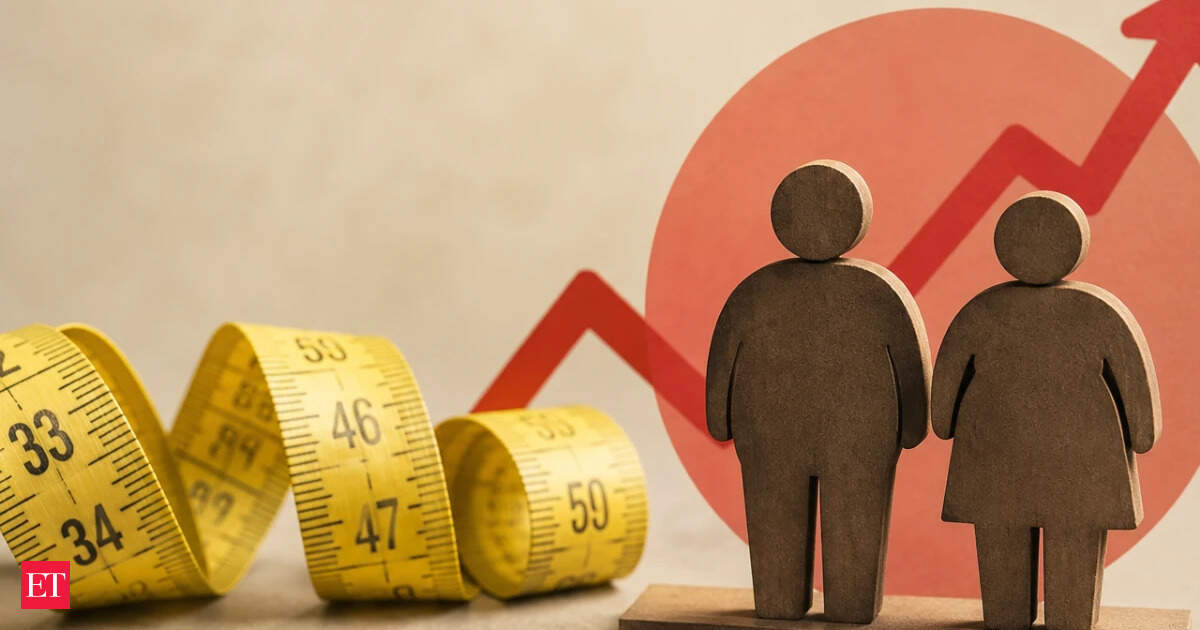
India has witnessed a sharp rise in the share of the population that is overweight or obese between 2019-21 and 2023-24, with rates increasing among both men and women in rural and urban areas, according to the National Family Health Survey (NFHS-6, 2023-24) released by the Ministry of Health and Family Welfare.Doctors and researchers say the shift is not simply a consequence of rising incomes. It reflects a food environment that has changed faster than the country’s health system and public awareness have adapted to.
Numbers that matter
NFHS-6, released on May 29, shows 30.7% of Indian women and 27.3% of men aged 15-49 are now overweight or obese, up from 24% and 22.9% respectively in NFHS-5 (2019-21), a rise of nearly 7 percentage points among women and over 4 points among men in less than five yearsAlso read: India’s anti-obesity drug market sees slower growth after initial surge in generic semaglutide salesThe urban-rural divide is still wide, but rural rates have risen sharply. Urban women are 42.8% overweight or obese against 25.5% of rural women; the figures for men are 36.3% and 23%, respectively. But it is the rural trajectory that stands out. The share of rural women who were overweight or obese was just 7.2% in NFHS-3 (2005-06), while urban women stood at 23.5% back then. The rural figure has since more than tripled.Blood sugar data follow a similar arc, but with a twist. High or very high blood sugar readings now affect 20.9% of men and 17.8% of women nationally, up from 15.6% and 13.5% in NFHS-5. Crucially, the rural-urban gap in high or very high blood sugar (19.7% rural men versus 23.9% urban men; 16.2% rural women versus 21.9% urban women) is considerably narrower than the gap in overweight or obesity.
Not a discipline problem
India’s rising rates of overweight and obesity reflect a changing food environment as well as broader shifts in lifestyle, doctors say.Dr Ambrish Mithal, Padma Bhushan awardee and Chairman and Head of Endocrinology and Diabetes at Max Healthcare, said the epidemic reflects “the transformation of India’s food environment,” where energy-dense, ultra-processed food has become cheap, ubiquitous and heavily marketed “even in small towns and villages,” while physical activity has fallen sharply, particularly in cities.Sleep deprivation, stress and screen time compound the problem, he said, describing the result as an “obesogenic environment.”
The marketing gap
The pattern Mithal describes shows up in market data too. Rural India’s fast-moving consumer goods volumes have been growing several times faster than urban volumes through 2025, according to industry tracker NielsenIQ, with rural FMCG volume growth estimated at 8.4% against 2.6% in urban markets earlier in the year.It is a rough proxy for the expanding reach of packaged food and drinks in small towns and villages.Dr Seema Gulati, who heads the Nutrition Research Group at the Center for Nutrition & Metabolic Research (C-NET) and the National Diabetes, Obesity and Cholesterol Foundation (N-DOC), said India’s nutrition literacy has not kept pace with that expansion. Advertising, including celebrity and sportsperson endorsements, has made processed food “appear desirable and aspirational, particularly among children and young adults,” she said.

TIL Creatives
The visual drivers of India’s rural obesity rise
In one C-NET survey of Delhi schoolchildren, she noted, nearly 60% believed packaged food was more hygienic than freshly prepared meals, a perception she said could extend beyond the capital.Purnima Menon, Director, Strategy & Partnerships at the International Food Policy Research Institute (IFPRI), describes the dietary shift as one “affected by commercial determinants that are shaping India’s food environment,” underpinned by policy choices rather than personal ones.
Why rural India?
Rural India’s overweight and obesity trajectory is rising for reasons distinct from the urban story of sedentary jobs and rising incomes, experts said. Gulati attributed it to rising incomes, better road connectivity, and the spread of food retail and e-commerce networks into small towns, which have increased access to refined carbohydrates and packaged snacks in diets that were until recently built around whole grains and pulses.Suman Chakrabarti, a research fellow at IFPRI, traced the numbers to converging trends. Physical inactivity among Indian adults has risen from just over 22% in 2000 to nearly 50% in 2022, according to a study by WHO researchers published in The Lancet Global Health, even as inexpensive processed snacks have become more widely available in rural markets and healthier diets remain comparatively costly.Rural markets now have “nearly ubiquitous” access to cheap ultra-processed snacks, he said, while fruits, vegetables and animal-source foods remain relatively expensive — essentially replaying the dietary transition Indian cities experienced earlier.Mechanisation of farm work and greater use of motorised transport have also cut into rural physical activity, several experts said.Oommen C. Kurian, Senior Fellow and Head of the Health Initiative at the Observer Research Foundation (ORF), cautioned against reading rural India as “catching up” to urban India, arguing instead that urban rates are rising too, so rural India is chasing “a moving urban rate rather than closing the gap.”Also read: Urban India faces metabolic health crisis as 73 million are overweight or obeseHe described urban and rural as increasingly “spatial categories rather than sharply distinct consumption categories,” now that packaged foods, sweetened beverages and sedentary lifestyles have spread across the country, even as access to preventive healthcare and diagnosis has not caught up equally.
The diabetes clue in the data
Why is the rural-urban gap so much narrower for high or very high blood sugar than for overweight or obesity?Multiple experts pointed to the same underlying biology: Indians, and South Asians more broadly, tend to develop insulin resistance and diabetes at lower BMI levels than Western populations, because they carry more visceral fat relative to body weight. This pattern, sometimes called the thin-fat phenotype, is well documented across India, Pakistan, Bangladesh, and Sri Lanka, and has been recognised in WHO guidelines recommending lower BMI cut-offs for Asian populations.Mithal made a similar point, noting that BMI alone under-detects metabolic risk in Indians, which is why professional bodies such as the Endocrine Society of India have called for BMI cut-offs of 23 for Indians (against the global 25), and greater reliance on waist circumference or waist-hip ratio rather than BMI alone.
The guideline gap and the policy question
India is moving towards its first government-endorsed national obesity guidelines, with the Indian Council of Medical Research understood to be developing the framework.Currently, clinicians largely rely on the Asian Indian consensus guidelines published by endocrinologist Dr Anoop Misra and colleagues, Gulati said, which already recommend lower BMI and waist-circumference cut-offs for Indian patients.TIL Creatives
A comprehensive approach for healthier lives (AI representative image)
On what should come next, the experts converged on one message: awareness campaigns alone, such as FSSAI’s Eat Right India, are unlikely to be enough, and India needs to move toward the regulatory tools already used by Japan (mandatory waist-measurement checks under its Metabo Law), the UK (a sugar tax that cut added sugar in soft drinks) and Brazil (front-of-pack warning labels).Menon called for using “subsidies, labeling, taxes” as feasible entry points, while Kurian urged that BMI and waist circumference screening be built routinely into primary healthcare visits at Ayushman Arogya Mandirs, rather than waiting for diabetes or heart disease to surface first.On whether India has adequate national guidelines to address childhood obesity, Professor HPS Sachdev, former WHO guideline development group member, said some norms are being developed, particularly in paediatric and adolescent health, but many gaps remain. Existing programmes acknowledge obesity, yet they lack clear operational guidance on how healthcare workers should identify and manage obesity in young children. At present, diagnosis continues to rely largely on anthropometric measurements.Also read: India is facing a data obesity epidemic—as storage in phones fails to keep up with people’s voracious appetite for visualsOne of the most significant findings he discussed came from a Comprehensive National Nutrition Survey (CNNS), in which he was involved. He said his team published a paper examining what they describe as the “double burden” or paradox of metabolic obesity. The study found that nearly half of Indian adolescents had metabolic abnormalities such as abnormal lipid profiles, elevated HbA1c or raised fasting blood glucose, regardless of whether they appeared undernourished or overweight according to anthropometric measurements.Chakrabarti was the most specific: If forced to prioritise one intervention, he said, it would be schools, arguing that nutrition standards for food sold on campus and nutrition education in the curriculum reach “almost every child, regardless of background,” at an age when eating habits are still being formed.Add 
as a Reliable and Trusted News Source

Add Now!
(You can now subscribe to our Economic Times WhatsApp channel)
Read More News on
India obesity epidemicNational Family Health Survey 2023rural obesity rates Indiahealth impacts of obesityprocessed food marketing Indiahigh sugar levels Indiapublic health obesity guidelineschildhood obesity awarenessnutritional education in schoolslifestyle changes India obesity
(You can now subscribe to our Economic Times WhatsApp channel)
Read More News on
India obesity epidemicNational Family Health Survey 2023rural obesity rates Indiahealth impacts of obesityprocessed food marketing Indiahigh sugar levels Indiapublic health obesity guidelineschildhood obesity awarenessnutritional education in schoolslifestyle changes India obesity
