


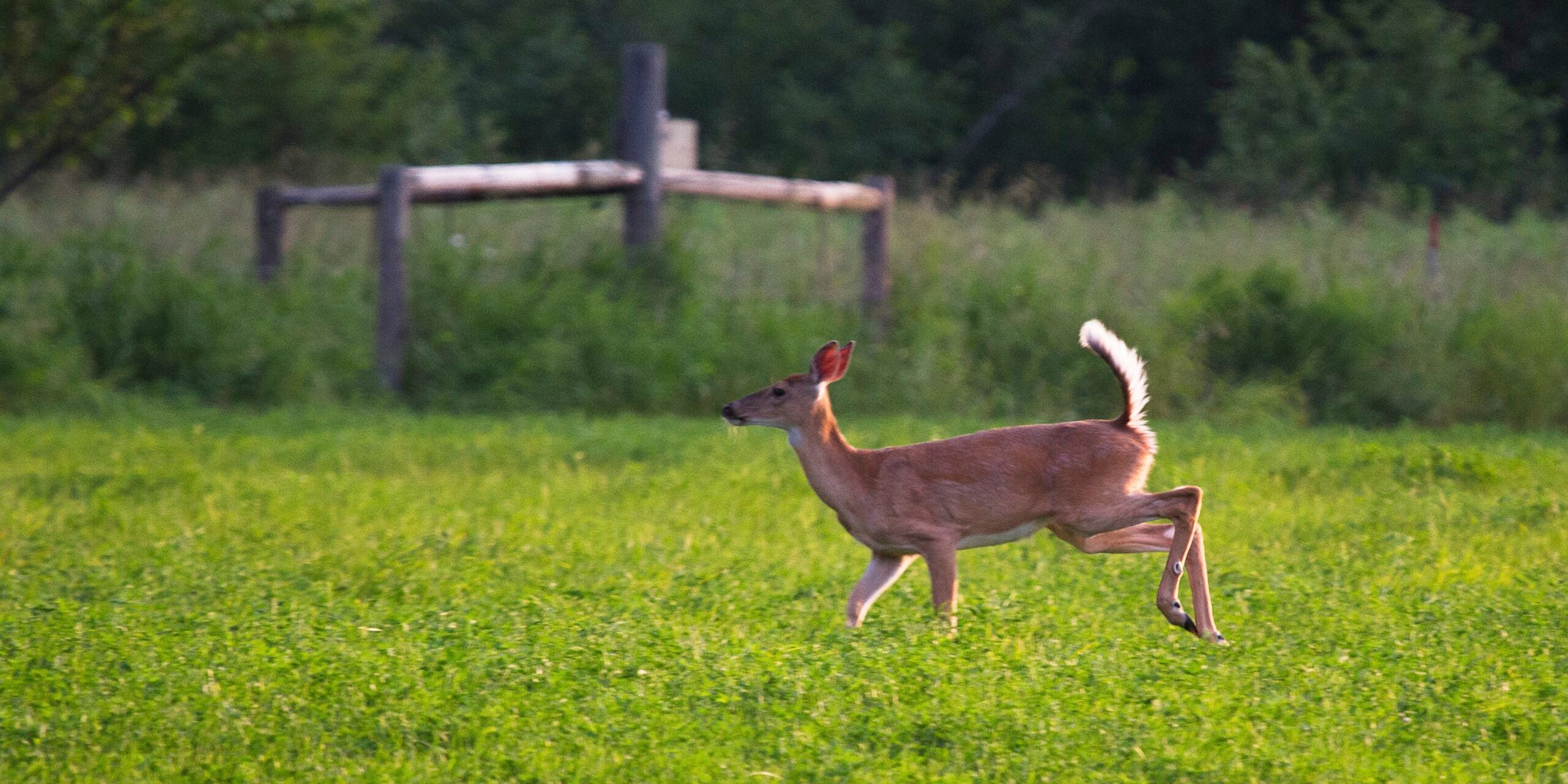
An outbreak of an infectious and often fatal disease has been confirmed in deer in southeastern Wisconsin, with state wildlife regulators saying it could affect larger numbers of the animals than in past seasons
The Wisconsin Department of Natural Rey tested positive for Epizootic Hemorrhagic Disease or EHD. The two deer were found dead near the village of Richfield and the city of West Bend. Testing at the Wisconsin Veterinary Diagnostic Lab in Madison confirmed the disease in samples taken from the animals.
The viral disease is spread by biting flies, or midges. But people aren’t at risk of contracting the virus even if they get bitten by infected midges or eat venison from infected deer
Understanding Wisconsin, Together
WPR’s “Wisconsin Today” newsletter keeps you connected to the state you love without feeling overwhelmed. No paywall. No agenda. No corporate filter
Wisconsin first detected the disease in 2002 when about 14 deer died suddenly in Iowa County. Since then, the state has seen sporadic outbreaks.The largest past outbreak came in 2019 in Crawford County when 226 deer died, said Erin Larson, the DNR’s deer herd health specialist.“I would expect that we’re going to be close to that or even past the number that was seen in Crawford County in 2019,” Larson said
Larson said the DNR has received more than 100 reports of dead deer with signs of the disease in Washington, Waukesha and Ozaukee counties. The agency received its first reports in late July, which is earlier than past outbreaks.Outbreaks typically occur from August to October when insects are most abundant, and they subside after midges die from the first hard frost. But researchers note that global warming is likely influencing factors tied to the incubation period and spread of insects carrying the virus.Larson said much remains unknown about the disease, but she said they sometimes see an uptick of cases in the Midwest during hot and wet weather.“There could be other changing environmental factors with potential climate change, or even just human populations increasing, or changing of land use patterns,” Larson said. “All that could have an impact on the midge life-cycle and where we may see outbreaks.”
Larson said infected deer in Wisconsin often don’t show a lot of signs of EHD. Symptoms may include foaming around the nose and mouth. Infected deer may appear weak, allow people to approach them or lay down in waterways to cool down as they become feverish.In Wisconsin, death rates can be higher among some herds. Larson said the reason is that deer don’t have the antibodies built up to survive the infection. Deer can succumb to the disease within a week of contracting EHD. Death rates are typically lower than 25 percent of the total herd population where the virus usually occurs.“Often there’s really no long-term impacts to the deer herd. Certainly, there can be those short-term impacts, and it’s rather startling for people to see so many dead deer. But the deer herds are usually able to bounce back,” Larson said.The DNR will catalog reports of additional dead deer in a 10-mile radius of the two detections as suspected of having the disease. The agency doesn’t plan to pursue additional testing due to collection and resource constraints unless the DNR receives reports more than 20 miles away.“Just because we’re having an outbreak in (Washington County) doesn’t mean that it may be occurring in other parts of the state, but we’ll be monitoring for that,” Larson said.Outbreaks of the disease have occurred in five of the last seven years, including 2026.Prior to this year, Wisconsin saw the most deer affected in 2019 and 2012. In 2012, the agency received up to 132 reports of dead deer with the highest numbers in Dane and Columbia counties. The last outbreak previously occurred in 2024 when three to 30 dead deer were reported with signs of the virus in Chippewa, Jackson, Monroe and Waukesha counties. The DNR doesn’t remove dead deer that are believed to have contracted the disease. The agency advises against handling dead wildlife, but officials urge the use of gloves or other protective gear when necessary.People can report a sick or dead deer by filling out an online reporting form on the DNR’s website or calling the agency at 608-267-0866.
Wisconsin Public Radio, © Copyright 2026, Board of Regents of the University of Wisconsin System and Wisconsin Educational Communications Board
