


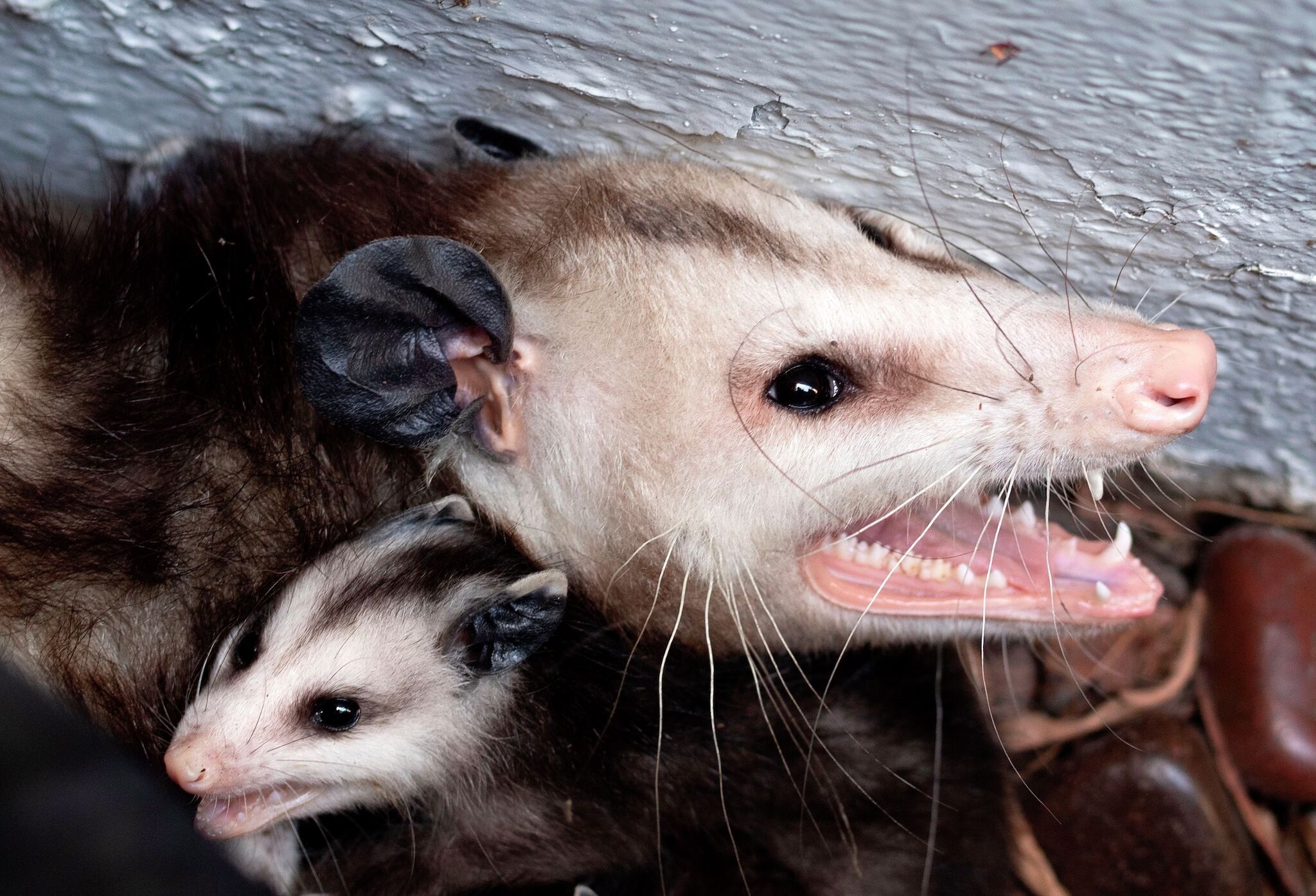
A debilitating form of typhus spread by fleas and thought to be mostly gone from the Gulf Coast until a few years ago has, in fact, established a foothold in Galveston County, according to a recent study by researchers at the University of Texas Medical Branch in Galveston
Publishing their findings in the June 2026 edition of the Centers for Disease Control’s Emerging Infectious Disease journal, the UTMB team identified 149 adults with symptoms of murine typhus between April 2019 and October 2023. Nearly 80 percent required hospitalization, and nearly 30 percent of those (33 patients) were admitted to intensive care. Two deaths were reported, one from septic shock and the other from multiple organ failure
Article continues below this ad
Animal-borne
Murine typhus is caused by the rickettsiae bacteria, which in Galveston County have been found primarily in fleas infesting opossums and feral cats—animals common to suburbia and the liminal zone between cities and rural areas. Its symptoms include fever, malaise, weakness, nausea, vomiting, abdominal pain, diarrhea, or any combination thereof. Galveston County health officials have been dealing with murine typhus since a sharp increase of 40 cases was reported in 2018
The disease can be readily treated with certain antibiotics, especially doxycycline. But because its symptoms are common to a host of other febrile ailments, the disease is not necessarily easy for physicians to diagnose—”leading to misdiagnosis and a delay in the administration of effective antimicrobial therapy,” the study reported
Article continues below this ad
Furthermore, the study said that any delay in treatment can have severe consequences for elderly and immunocompromised patients. UTMB’s researchers also noted that, due to a lack of real-time testing for murine typhus, the cost of assessing the disease can be significantly higher than for similarly presenting diseases such as influenza
Etymology
The word murine, by the way, refers to a subfamily of rodents that includes more than 500 species of mice and rats. This resurgent strain is much more likely to be transmitted by fleas that infest opossums or feral cats. Murine typhus was nearly eradicated in the 1940s, when the pesticide DDT was widely used to control oriental rat fleas. However, the CDC now lists the disease as endemic to Southeast Texas, Hawaii, and Southern California
Chron reached out to the Galveston County Health District for data on more recent murine typhus cases; their figures show 33 cases in 2024, 41 last year, and 16 so far in 2026. Those numbers were supported anecdotally by several members of the Galveston Island Crime Watch Facebook group, who reported enough fresh examples (in themselves or someone they knew) to suggest that the disease has hardly disappeared
Article continues below this ad
Smart, funny and sometimes unhinged look at the week that was.
One member said that murine typhus had hospitalized her son for four days. Another reported that he had just recovered, adding that his “headaches were horrible with the fever.” Still another reported the disease had sent her daughter to “her death bed.” Echoing the study, another member said her daughter had been hospitalized for several days with suspected meningitis before doctors could confirm murine typhus
Make us a Preferred Source on Google to see more of us when you search.
Add Preferred Source
“My buddy just did eight days in UTMB with this crap,” reported yet another. “He said it kicked his ass.”
Article continues below this ad
More Gulf Coast
Real Estate | Texas skyscraper listed in auction with $700K opening bidMansions | Texas Gulf Coast city’s priciest home can be yours for $5MExpansion | ‘Major cruise line’ eyeing white-hot Texas port cityControversy | Galveston approves massive 350-acre mixed-use development
For more Gulf Coast news and features from Chron, sign up for The Third Coast newsletter here
