

Close Menu
healthylife7.comhealthylife7.com

    Subscribe to Updates

    Get the latest creative news from FooBar about art, design and business.

    What's Hot

    Wyndham Rewards’ lifestyle evolution brings greater business advantage

    July 23, 2026

    How Investors May Respond To BioCryst (BCRX) Hiring Its First CSO To Drive Rare

    July 23, 2026

    Pete Hegseth’s Tough

    July 23, 2026
    Facebook X (Twitter) Instagram
    Trending
    • Wyndham Rewards’ lifestyle evolution brings greater business advantage
    • How Investors May Respond To BioCryst (BCRX) Hiring Its First CSO To Drive Rare
    • Pete Hegseth’s Tough
    • The White House pushes healthy eating. It cut a landmark nutrition education program
    • Genomas Brasil program: building precision public health within Brazil’s Unified Health System
    • US$1,100 Yunnan mushrooms, Hong Kong legend Bowie Woo: 7 Lifestyle highlights
    • Loss of a metabolic gene protects against fatty liver disease
    • The Importance of Understanding Regret
    Facebook X (Twitter) Instagram
    healthylife7.comhealthylife7.com
    • Home
    • Fitness
    • Health
    • Nutrition
    • Lifestyle
    • Conditions
    • Mental Health
    • Weight Loss
    • Wellness Tips
    Thursday, July 23
    healthylife7.comhealthylife7.com
    Home»Wellness Tips»Semaglutide, a Diabetes and Obesity Treatment, Found to Potentially Lower Risk of Adult
    Wellness Tips

    Semaglutide, a Diabetes and Obesity Treatment, Found to Potentially Lower Risk of Adult

    healthylife7By healthylife7July 23, 2026No Comments4 Mins Read
    Facebook Twitter Pinterest LinkedIn Tumblr Reddit WhatsApp Email
    Semaglutide, a Diabetes and Obesity Treatment, Found to Potentially Lower Risk of Adult
    Share
    Facebook Twitter LinkedIn Pinterest WhatsApp Email
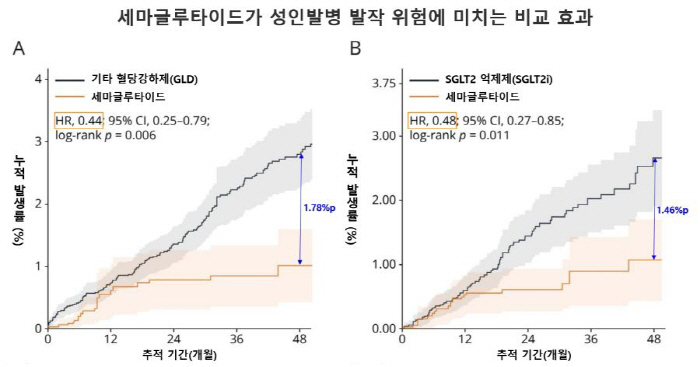
    The risk of adult-onset seizures remained low when semaglutide was administered. Over four years, the cumulative risk difference was 1.78 percentage points compared with other glucose-lowering drugs and 1.46 percentage

    [Sportschosun Reporter Jang Jong-ho] A large population-based study has found that semaglutide, widely used to treat diabetes and obesity, may significantly reduce the risk of adult-onset seizures

    Adult-onset seizures refer to seizures that first occur after age 18. New-onset seizures in middle-aged and older adults are drawing attention as an important indicator of brain health, as they may be linked to acquired brain injury such as stroke, neurodegenerative disease, or traumatic brain injury

    Once a seizure begins, it can lead to loss of consciousness or falls, and it may restrict driving and social activities, greatly affecting a patient’s functional prognosis and quality of life. However, current treatment is limited to suppressing recurrence with anti-seizure medication after seizures occur, and there is no fundamental strategy to prevent seizures themselves

    Against this backdrop, a joint research team led by Professor Jang Yoon-hyuk of the Seoul National University Hospital National Strategic Technology Specialized Research Institute and the Department of Neurology, Professor Lee Soon-tae, Professor Eun Yong of Columbia University’s Department of Internal Medicine, and Ph.D. candidate Bong Soo-hwan of Harvard University’s T.H. Chan School of Public Health announced on the 23rd a study analyzing the association between semaglutide use and the occurrence of adult-onset seizures.

    The target of the study, semaglutide, is a treatment that has demonstrated protective effects across multiple diseases. The American Diabetes Association recommends it as a first-line treatment for patients with type 2 diabetes (T2D) at high risk of cardiovascular disease, and it is already widely used not only for blood sugar and obesity management but also for chronic kidney disease and metabolic dysfunction-associated steatohepatitis

    The research team used electronic medical record (EMR) data from the All of Us program, a large health care cohort of the National Institutes of Health (NIH). From about 390,000 people with available data, they selected 69,228 patients with T2D and then analyzed the risk of adult-onset seizures among 18,243 adult patients aged 18 or older, with an average age of about 60 to 64, who had newly been prescribed semaglutide, other glucose-lowering drugs, or SGLT2 inhibitors

    To ensure a precise comparison, the team applied a target trial emulation method that closely mirrors randomized clinical trials using observational data. They divided the patients into a semaglutide-versus-other-glucose-lowering-drugs group (10,213 patients) and a semaglutide-versus-SGLT2 inhibitors group (8,605 patients), then carefully adjusted for clinical differences such as age, comorbidities, and body mass index (BMI) to assess the drug’s effect

    The analysis showed that the newly treated semaglutide group had about a 56% lower risk of adult-onset seizures than the group receiving other glucose-lowering drugs, with a hazard ratio of 0.44. The four-year cumulative risk difference, which reflects the actual difference in seizure incidence, was 1.78 percentage points. In the comparison with SGLT2 inhibitors, the semaglutide group also showed about a 52% lower seizure risk, with a hazard ratio of 0.48, and a four-year cumulative risk difference of 1.46 percentage points.

    Converted into the clinically used measure of number needed to treat (NNT), this means that treating 70 patients with semaglutide instead of other glucose-lowering drugs, or 131 patients instead of SGLT2 inhibitors, could prevent one additional case of adult-onset seizure

    In particular, the reduction in seizure risk could not be explained solely by improvements in blood sugar or weight. Mediation analysis showed that changes in glycated hemoglobin accounted for only 2.4% to 6.5% of the effect, depending on the comparison group, while changes in body mass index (BMI) accounted for just 0% to 0.7%. The preventive effect was also not clearly observed with other GLP-1 class drugs. The research team suggested that semaglutide’s unique pharmacological properties, including its long residence time in the body and partial penetration into the brain, may explain the finding.

    This study is significant in that it used large-scale population-based data to suggest that a metabolic disease treatment may contribute to brain health and the prevention of neurological disorders in the field of adult-onset seizures, where preventive strategies are limited

    Professor Jang Yoon-hyuk of the National Strategic Technology Specialized Research Institute and the Department of Neurology said, “This study offers a new perspective on adult-onset seizures as an issue of brain health in middle age.” He added, “However, since this is an observational study, long-term follow-up studies and randomized clinical trials will be needed in the future to verify the actual preventive effect and its clinical applicability.”

    The findings were published in a recent issue of Neurology, the official journal of the American Academy of Neurology

    Jang Jong-ho, bellho@sportschosun.com

    Professor Jang Yoon-hyuk
    원문보기(View Original Korean Article)

    Diabetes found obesity semaglutide Treatment
    healthylife7
    • Website

    Related Posts

    Beyond the scales: the waist circumference that signals a real risk of a heart attack

    July 23, 2026

    MRI reveals muscle loss related to weight fluctuations

    July 23, 2026

    Amgen stock trades steady as oncology and obesity pipeline shapes long term growth

    July 23, 2026
    Leave A Reply Cancel Reply

    Health
    Lifestyle

    Wyndham Rewards’ lifestyle evolution brings greater business advantage

    By healthylife7July 23, 20260

    Wyndham Hotels & Resorts is evolving its Wyndham Rewards loyalty programme with lifestyle partnerships and exclusive experiences designed to strengthen customer engagement before, during and after a hotel stay

    How Investors May Respond To BioCryst (BCRX) Hiring Its First CSO To Drive Rare

    July 23, 2026

    Pete Hegseth’s Tough

    July 23, 2026

    The White House pushes healthy eating. It cut a landmark nutrition education program

    July 23, 2026
    Stay In Touch
    • Facebook
    • Twitter
    • Pinterest
    • Instagram
    • YouTube
    • Vimeo
    Fitness

    Opinion: The FDA must put biotech at its center or continue to cede early research to China

    July 6, 2026

    Inside Elevance’s digital chronic disease management strategy

    July 6, 2026

    Best, Worst States For Well

    July 6, 2026

    What do the Middle Ages tell us about mental health then and now? VCU historian Leigh Ann Craig has answers

    July 6, 2026

    Subscribe to Updates

    Get the latest creative news from SmartMag about art & design.

    About Us

    Welcome to HealthyLife7.com, your trusted source for reliable health, wellness, fitness, and lifestyle information. Our mission is to help people make informed decisions about their health by providing clear, practical, and easy-to-understand content.

    At HealthyLife7.com, we believe that good health starts with the right knowledge. Whether you're looking for healthy eating tips, fitness advice, mental wellness strategies, weight management guidance, or information about common health conditions, our goal is to deliver valuable content that supports a healthier lifestyle.

    Fitness

    Wyndham Rewards’ lifestyle evolution brings greater business advantage

    July 23, 2026

    How Investors May Respond To BioCryst (BCRX) Hiring Its First CSO To Drive Rare

    July 23, 2026

    Pete Hegseth’s Tough

    July 23, 2026
    Health

    Opinion: The FDA must put biotech at its center or continue to cede early research to China

    July 6, 2026

    Inside Elevance’s digital chronic disease management strategy

    July 6, 2026

    Best, Worst States For Well

    July 6, 2026
    Facebook X (Twitter) Instagram Pinterest
    • About Us
    • Contact us
    • Disclaimer
    • Privacy Policy
    • Terms and Conditions
    © 2026 healthylife7.com. Designed by Pro.

    Type above and press Enter to search. Press Esc to cancel.