


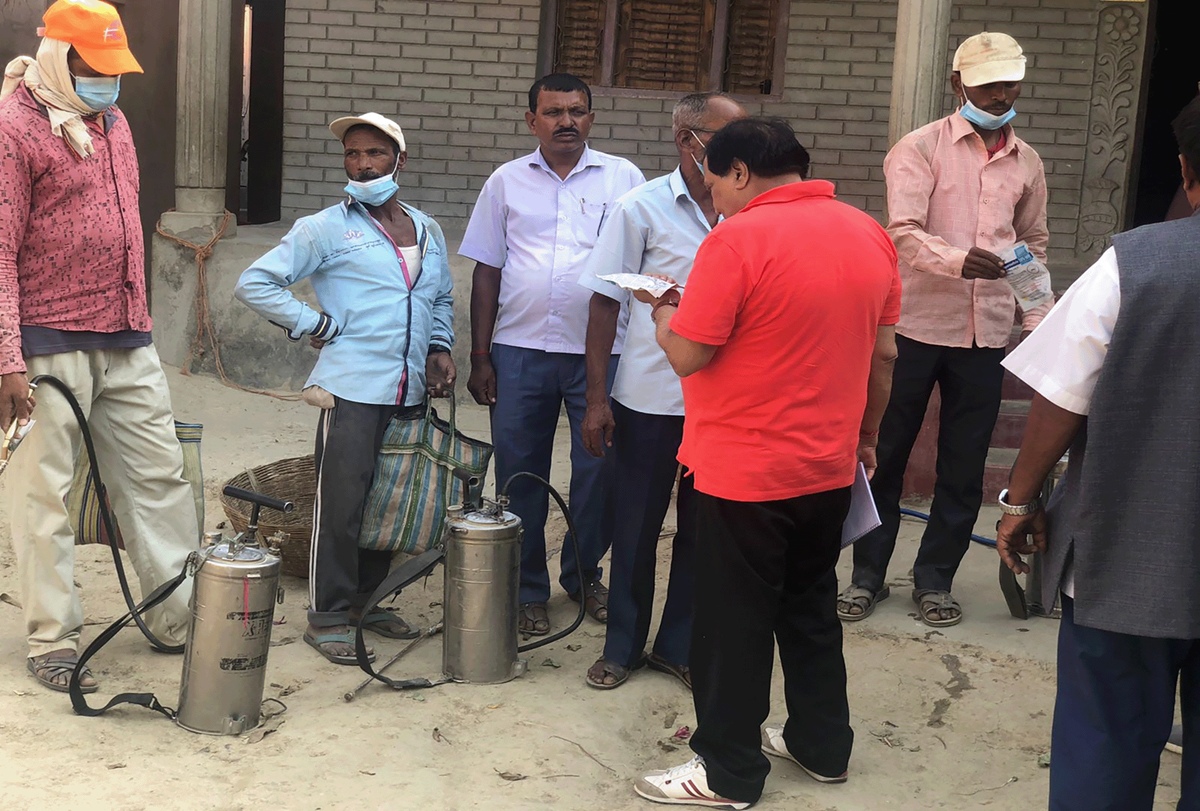
The World Health Organization (WHO) has issued major updates to its leishmaniasis treatment guidelines for eastern Africa and South-East Asia, recommending new regimens that significantly improve patient care. The new WHO guidelines, released today, are applicable for visceral leishmaniasis (VL, also called kala-azar), a deadly disease, and for post-kala-azar dermal leishmaniasis (PKDL)
Kala-azar (‘black fever’ in Hindi) is transmitted by the bite of an infected sandfly and is one of the world’s deadliest parasitic killers after malaria. It causes high fever, weight loss, anaemia, spleen and liver enlargement, and, if not treated, death. The disease is endemic in 80 countries, with around 50 000 to 90 000 cases every year, while only 25–45% are reported to WHO
PKDL is a skin rash that can develop as a complication of kala-azar. While it is not life-threatening, it can act as a potential reservoir of infection and is highly stigmatizing. Many people with PKDL face social isolation and mental health challenges.
The updated guidelines include (i) alternative, shorter and safer treatment of primary VL in eastern Africa; (ii) new, shorter, effective and safer treatments for PKDL in eastern Africa and South-East Asia; and (iii) relapse management in immunocompetent VL patients in South-East Asia. Additionally, it updates the safety profile of miltefosine, incorporating the recommendations of the WHO Advisory Committee on the Safety of Medicinal Products, and provides allometric dosing for miltefosine
“For too long, patients suffering from leishmaniasis have endured treatments nearly as punishing as the disease itself, especially in Africa. These new WHO guidelines mark a turning point,” said Dr Daniel Ngamije Madandi, WHO Director of Malaria and Neglected Tropical Diseases. “By recommending safer, shorter and more patient-friendly regimens, we are not just improving care; we are accelerating our fight to eliminate this devastating disease and offering renewed hope to communities across Africa and Asia.”
Leishmaniasis is a treatable and curable disease. Its treatment depends upon several factors including the type of disease (clinical form), immune status of patient, species of parasite causing it, concomitant pathologies and geographic location
For a long time, treatment in Africa relied on an injectable drug called sodium stibogluconate (SSG), which requires lengthy treatments and painful daily injections and caused severe side effects
For the first time, WHO recommends SSG-free regimens. However, this medicine remains in use for patients who are not eligible for the newly recommended treatment options. In eastern Africa, an oral drug, miltefosine, is recommended for the treatment of both VL and PKDL in combination with paromomycin injection. In South-East Asia, new, safer, shorter combination therapies using liposomal amphotericin B infusion alone or in combination with oral miltefosine are recommended for people living with PKDL. The new VL treatment in eastern Africa is given over 14 days with one injection less and with less toxicities over the current administration of two injections of sodium stibogluconate and paromomycin over 17 days.
In eastern Africa, chronic cases of PKDL used to be treated with toxic sodium stibogluconate given for 30–60 days or with liposomal amphotericin B over 20 days, whereas in South-East Asia, a 12-week regimen of miltefosine was in practice. New recommendations will replace these lengthy and cumbersome treatments. It is expected that almost half of the primary VL and all PKDL patients will potentially benefit from these life-changing recommendations. In addition, the subset of VL patients who relapse will also benefit from the newer, clearer recommendations for its management in South-East Asia. For the remaining VL patients in Africa, who are not eligible for miltefosine combination, they will still have to rely on older regimens, till new therapies are available.
Many of the new therapies now recommended by WHO were developed by the non-profit medical research organization Drugs for Neglected Diseases initiative (DNDi) and partners
“We are delighted that more patient-friendly treatments developed with our partners have been recognized in the WHO guidelines,”said Dr Fabiana Alves, Leishmaniasis-Mycetoma Cluster Director at DNDi.“These advances are important steps towards elimination, but we are already looking ahead. We are now working with Novartis on the development of LXE408, a promising new oral candidate that could help us soon finally move away from injectable regimens.”
Following WHO’s decision to include the new treatments in their guidelines, countries affected by VL and PKDL are expected to incorporate them into their own national treatment protocols soon
“Now that the WHO has updated its treatment guidelines, we are working also to include the new treatments in our national guidelines, so our patients can benefit from them as soon as possible,”said Wyckliff Omondi, Head, Division of Vector Borne & Neglected Tropical Diseases at Ministry of Health, Kenya.“Kenya has been an active partner in the development of these new treatments through the Leishmaniasis East Africa Platform (LEAP), and we are hopeful that all our joint efforts will lead to the elimination of this terrible disease.”
Notes for editors
Financial support for VL and PKDL studies was provided by several funders including the European and Developing Countries Clinical Trials Partnership Association (EDCTP2) programme, supported by the European Union; the Dutch Ministry of Foreign Affairs (DGIS); the French Development Agency (AFD); the German Federal Ministry of Education and Research (BMBF) through KfW; Médecins Sans Frontières Switzerland; Médecins Sans Frontières International; Medicor Foundation; the Swiss Agency for Development and Cooperation (SDC); the UK International Development; the World Health Organization – Special Programme for Research and Training in Tropical Diseases (WHO-TDR); and other private individuals and foundations.
