


Review: Why nutrition is gaining importance for pig health
Pig health is no longer the exclusive domain of veterinary stakeholders. As preventing disease is of growing importance, the role of nutrition grows accordingly. So how can nutrition help? That was the message of a one-day scientific event, held just before this year’s International Pig Veterinary Society (IPVS) Congress, in Ho Chi Minh City, Vietnam, on June 16
Vincent ter BeekEditor of Pig Progress / Topic: Pigs around the world
Jul 31
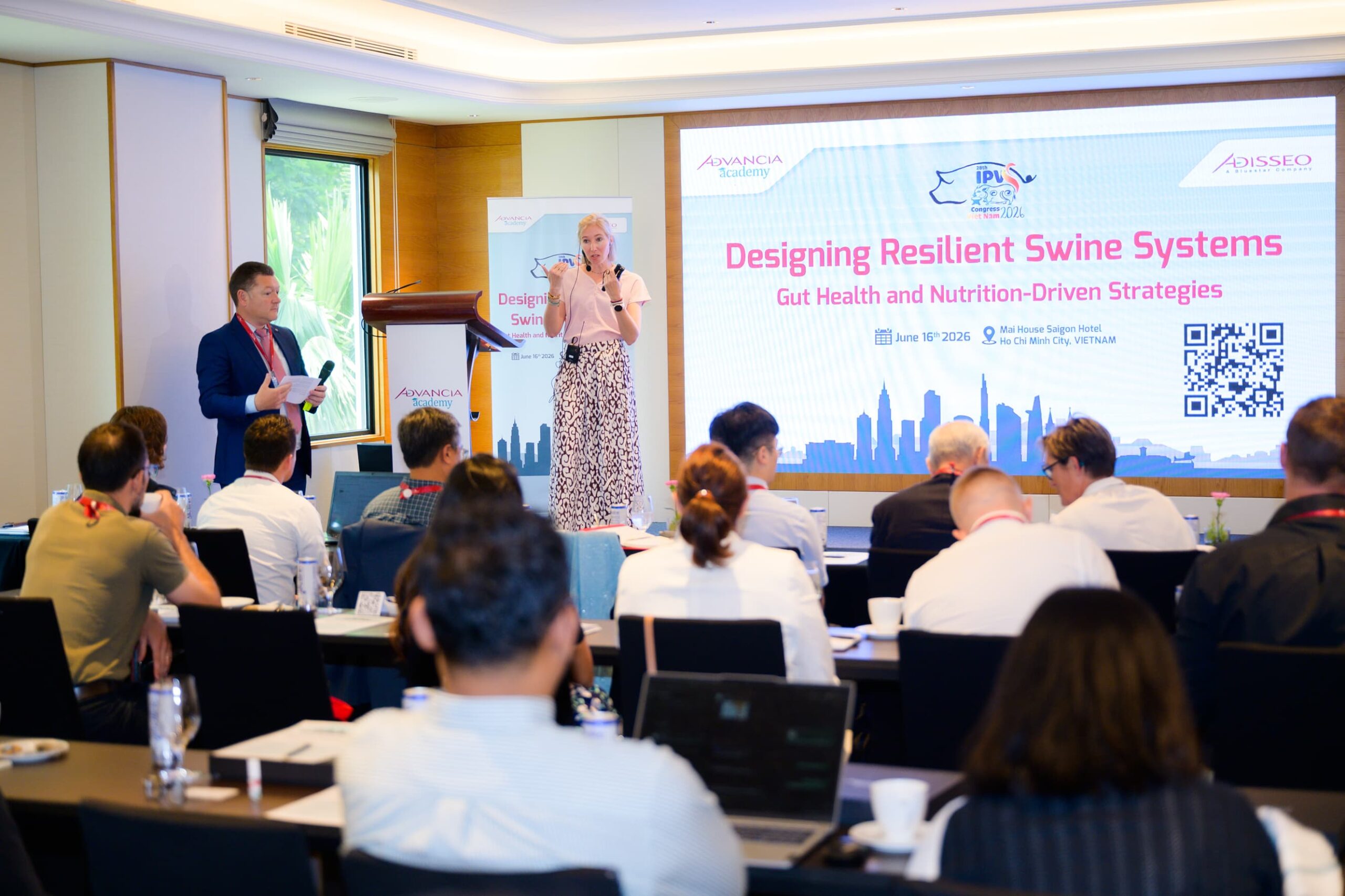
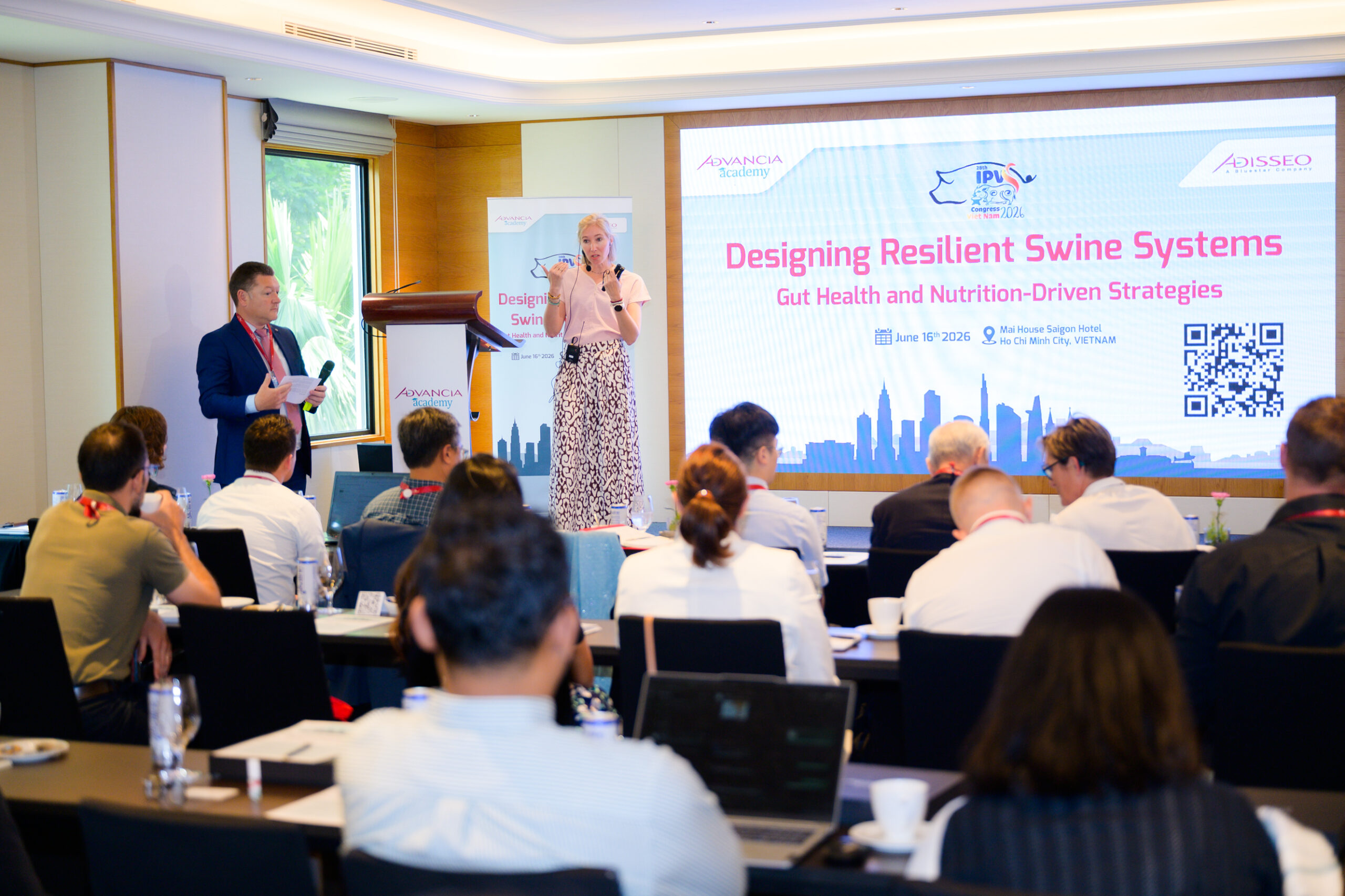
Animal nutrition company Adisseo organised the satellite event with an evocative theme: ‘Designing resilient swine systems: Gut health and nutrition-driven strategies.’ Over 50 swine nutrition and health experts from all over the world heard resilience being defined as “the ability of a pig to recover quickly after a disturbance or stress and return to its original state or function.”
Resilient pigs and an optimal microbiota
Prof Nadia Everaertof KU Leuven, Belgium gave that definition. She was one of the speakers at the satellite event. Her presentation contained the heart of the event’s message: the road to resilient animals also leads through the pigs’ guts. One component of achieving resilience is to make sure the complex of gut bacteria (i.e. the microbiota) is in an optimal condition, she said
Obviously, the main question therefore was: which factors influence the development of the gut microbiota? To that end, she discussed:
- the host’s genetics;
- maternal transmission and milk composition;
- the environment (including hygiene and litter materials);
- weaning interventions (for instance weaning age and creep feeding)
- additives targeting the microbiota, like prebiotics, probiotics or symbiotics; and
- welfare, for instance reduced stress levels.
Pig nutrition and resilience
Prof Dominiek Maes, attached to Ghent University, Belgium, kicked off the event. After giving an overview of pig production figures all over the planet, he delved into the question of which health issues occurred where across the globe. He said that nutrition plays an important role in making animals more resilient, seeing that this is usually 70% of the costs of production. Animal resilience, he said, is likely to get more emphasis as fewer antibiotics are going to be used. He concluded, “The question is not only how efficiently pigs grow under optimal conditions, but how well they cope when things go wrong”,
Biosecurity, vaccination and detection
Not only nutrition ought to receive attention, as obviously the first line of defence for optimal resilience is composed of biosecurity, vaccination and early detection. Associate professor Romeo Sanchez of the University of the Philippines, Los Baños explored that further. He discussed each of the aspects in clear and thorough detail and gave practical, sometimes Asian, examples. He stated that African Swine Fever (ASF) is currently the most important challenge in the region. The best way to deal with it is to eradicate the disease, as there are currently no good treatments available and living with the disease is not affordable in the long term.
Achieving resilience through precision feeding
Prof Defa Liprovided the last presentation of the event. He is attached to the Feed Research Chain of the Chinese Ministry of Agricultural and Rural Affairs Feed Industry Centre (Mafic). The topic of his talk was “Turning science into practice.” According to him, Mafic uses numerous novel precision feeding models to achieve optimal feed efficiency and thus optimal animal resilience. He mentioned dynamic prediction models through a feed database; precision nutrient delivery systems, pre-digestion technologies as well as the use of digestion and fermentation kinetics models. Together, these tools and approaches enable more precise and effective nutritional strategies, strengthening animal health, robustness and resilience.
