


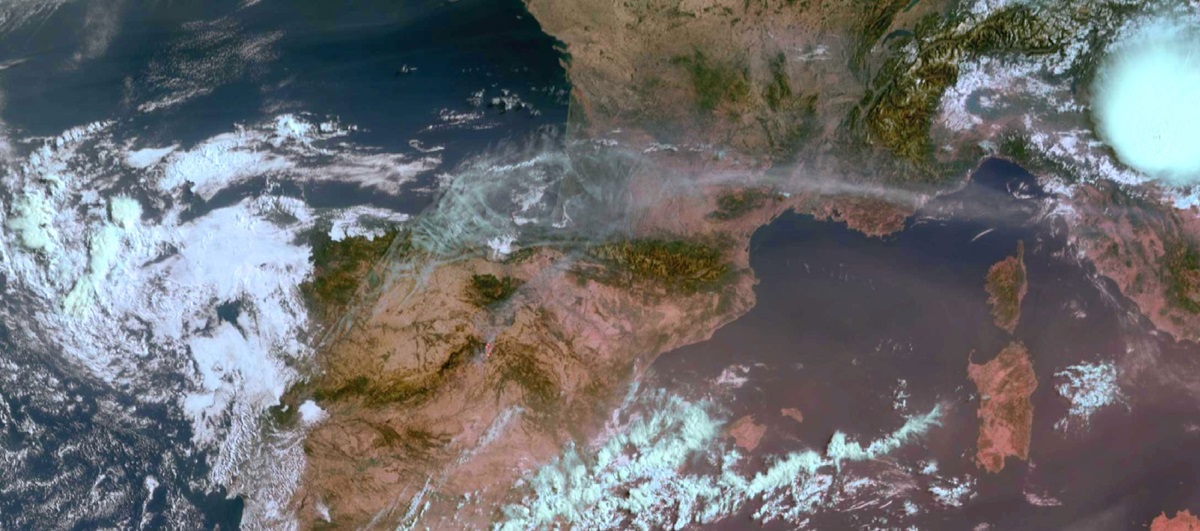
Wildfires are often seen as a danger only for people living close to the flames but wildfire smoke can travel across regions, countries and even continents, worsening the air quality of down-wind communities with both physical and psychological impacts, including for people who live far from the fire itself. In a changing climate, the risk of wildfires is increasing; the huge fires in the WHO European Region and beyond this summer are a reminder that the dangers of wildfires come not only from the flames but also from smoke.
Cars burn in Spain’s Sierra Oeste region, less than an hour from Madrid
Wildfire smoke is a complex mixture of gases and very small particles, released when trees, vegetation, buildings and other materials burn. When wildfires affect urban or industrial areas, the risk of additional noxious content increases. Fine particulate matter (known as PM2.5) is one of the main concerns, as these tiny particles can be breathed deep into the lungs and enter the bloodstream. People who are exposed can experience coughing, eye and throat irritation, headaches, wheezing and shortness of breath.
For those with pre-existing health conditions, such as asthma, chronic lung disease and heart disease, exposure to smoke, even if thee instances, may require hospital admissions and the need for emergency care
Some people are more susceptible than others. The lungs of babies and young children are still developing, and older people may be less able to cope with polluted air. Pregnant women and some people with disabilities are also more at risk. Those that live in homes that are difficult to protect from smoke, or homeless people, may also be more vulnerable. Emergency responders may be more exposed to smoke close to fires, and outdoor workers are affected by smoke and polluted air at different distances.
Konstantinos Tsigkas, who leads a fire service in Greece, confirms the risk. “The health impacts of wildfires extend beyond immediate physical injuries,” he says. “Smoke can lead to respiratory issues, exacerbating existing conditions like asthma.”
Dimitris Tosidis is a Greek photojournalist who has covered the wildfires in his country. “When you are getting close to a fire, the most important thing to understand is that the wind can change; you then get smoke and you can’t breathe.”
Protecting yourself from smoke
Smoke from forest wildfires in Spain’s Sierra Oeste region, less than an hour from Madrid
Although wildfires are often started by the careless use of cigarettes or barbeques, broken glass litter (which can magnify sunlight) and even arson, climate change and changes in how land is managed are increasing the conditions that allow them to spread. Higher temperatures, longer heatwaves, changing precipitation patterns, more frequent droughts and drier vegetation create the conditions for wildfires to take hold and spread. Neither wildfires nor wildfire smoke respect borders. Even when the fire itself is far away, protecting health means staying alert to air quality advisories.
“When wildfires are present in your area, even if some distance away, follow instructions from your local authorities, who will have the most up-to-date, on-the-ground information,” says Dorota Jarosinska, WHO European Centre for Environment, Climate Change and Health. “If you can smell smoke, it’s present in the air you’re breathing, and you should protect yourself by reducing your exposure, especially if you are in an at-risk group. Even if you can’t smell smoke, you may experience symptoms, and wildfires can change direction suddenly if winds shift, so stay alert for updates.”
How to keep yourself safe from wildfire smoke
Consider taking the following steps to keep yourself safe from wildfire smoke:
- Follow official updates and advice from your local authorities, including alerts on air pollution and recommendations on protective measures. Keep abreast of any instructions to relocate or evacuate.
- When wildfires are near or air pollution from smoke is high, stay indoors as much as possible with the doors and windows shut, unless you have been advised to evacuate. This is particularly important for those who are most at risk from the effects of smoke: children and older people, and individuals with chronic conditions.
- Wear a well-fitting mask (an FFP2 or N95 mask) if you need to move outside. In hot conditions, pace any outdoor activity and take breaks, since mask use adds physiological strain during exertion in heat.
- Reduce unnecessary travel. If travel is essential, motor vehicle drivers should use their headlights during the daytime to make their vehicle more conspicuous and improve visibility. Optimize and maintain vehicle filtration/ventilation systems and drive with the windows closed and the air conditioning set to recirculate air.
- Wildfires can occur at the same time as heat waves as distinct but mutually amplifying hazards.
- If wildfire smoke is present during a simultaneous heat wave, only use fans to circulate air already inside the home — not fans that draw in air from outside — and if using air conditioning, set it to recirculation mode and avoid direct ventilation with outside air. Close windows and shutters (if available). Move to the coolest room in the home, especially at night.
- Reduce other sources of indoor air pollution – such as smoking cigarettes, using propane gas or wood-burning stoves, spraying aerosol products and frying or grilling food – to partly compensate for increased particle loading from the outdoor air.
- Pay attention to any health symptoms if you have respiratory or cardiovascular diseases or are pregnant.
- Get medical help if you have any symptoms.
What public health services should be provided to protect people?
Public health services should include:
- early information on wildfire hazards
- information and advice on the health effects of wildfire and protective measures
- information on help lines, and social and medical services
- primary care, outpatient services and local hospital assistance
- facilities for oxygenation and respirators for particularly vulnerable populations
- publicly available and accessible places and locations for clean air and cooling down.
WHO/Europe is working with countries to assess risks and prepare to respond to emergencies. It has also developed a guidance and reotect people from smoke and extreme heat and make health services and facilities more resilient to wildfires and heatwaves.
