



Key Takeaways
- Under-fueling happens when young athletes burn more energy than they take in through food.
- Relative Energy Deficiency in Sport (RED-S) can affect growth, bone health, hormones, athletic performance, and recovery.
- Signs of under-fueling in athletes may include fatigue, frequent injuries, stress fractures, dizziness, and declining performance.
- Regular sports physicals and proper nutrition can help prevent and identify RED-S before serious health problems develop.

Today’s young athletes are training and competing more than ever before. Many participate in multiple sports, attend year-round practices, travel for tournaments, and spend additional time on strength and conditioning programs. But as training demands increase, so do nutritional needs—and this is often overlooked
When athletes consistently burn more energy than they take in through food, they can develop what’s known as Relative Energy Deficiency in Sport (RED-S)
RED-S can affect athletes in any sport and of any gender. Over time, chronic under-fueling can affect multiple systems in the body, including growth, bone health, hormone function, cardiovascular health, immune function, and athletic performance
Why Young Athletes May Not Be Eating Enough
“Puberty is one of the most metabolically active periods of life,” explains Susan Wiener, MD, MPH, assistant professor of Adolescent Medicine at University of Rochester Medicine Golisano Children’s. “Aside from infancy, it is the fastest period of growth and development.”
When intense athletic training is added to the equation, an adolescent athlete’s nutritional needs can increase significantly
Chronic under-fueling associated with RED-S is often unintentional. Growing athletes may simply underestimate how much energy they need to support their daily lives and training. While disordered eating can contribute to under-fueling, many athletes with RED-S are not intentionally restricting food
Certain athletic environments may also increase the risk of under-fueling, including:
- Endurance sports, such as cross-country running and long-distance swimming
- Aesthetic sports, where an emphasis on appearance or body size may sometimes lead to intentional under-eating
- Sports with weight classes, where athletes may feel pressure to reach or maintain a specific weight
Recognizing the Signs of Under-Fueling
The signs of under-fueling in athletes are often subtle at first and may develop gradually
Athletes, parents, and/or coaches may notice:
- Persistent fatigue
- Feeling cold frequently
- Dizziness
- Constipation
- Declining athletic performance
- Reduced strength or endurance
- Slower recovery after practices or competitions
“Over time, under-fueling can also increase the risk of injuries, particularly stress fractures and other bone-stress injuries,” says Dr. Wiener. Athletes with RED-S may seem to get hurt more often or take longer to recover than their teammates
In some cases, growth and development can also be affected. Delayed puberty, slowed growth, or changes in menstrual cycles may signal that the body is not getting enough energy to support normal development. For many female athletes, missed or irregular periods are one of the first clear signs that something is wrong
How RED-S Affects the Body
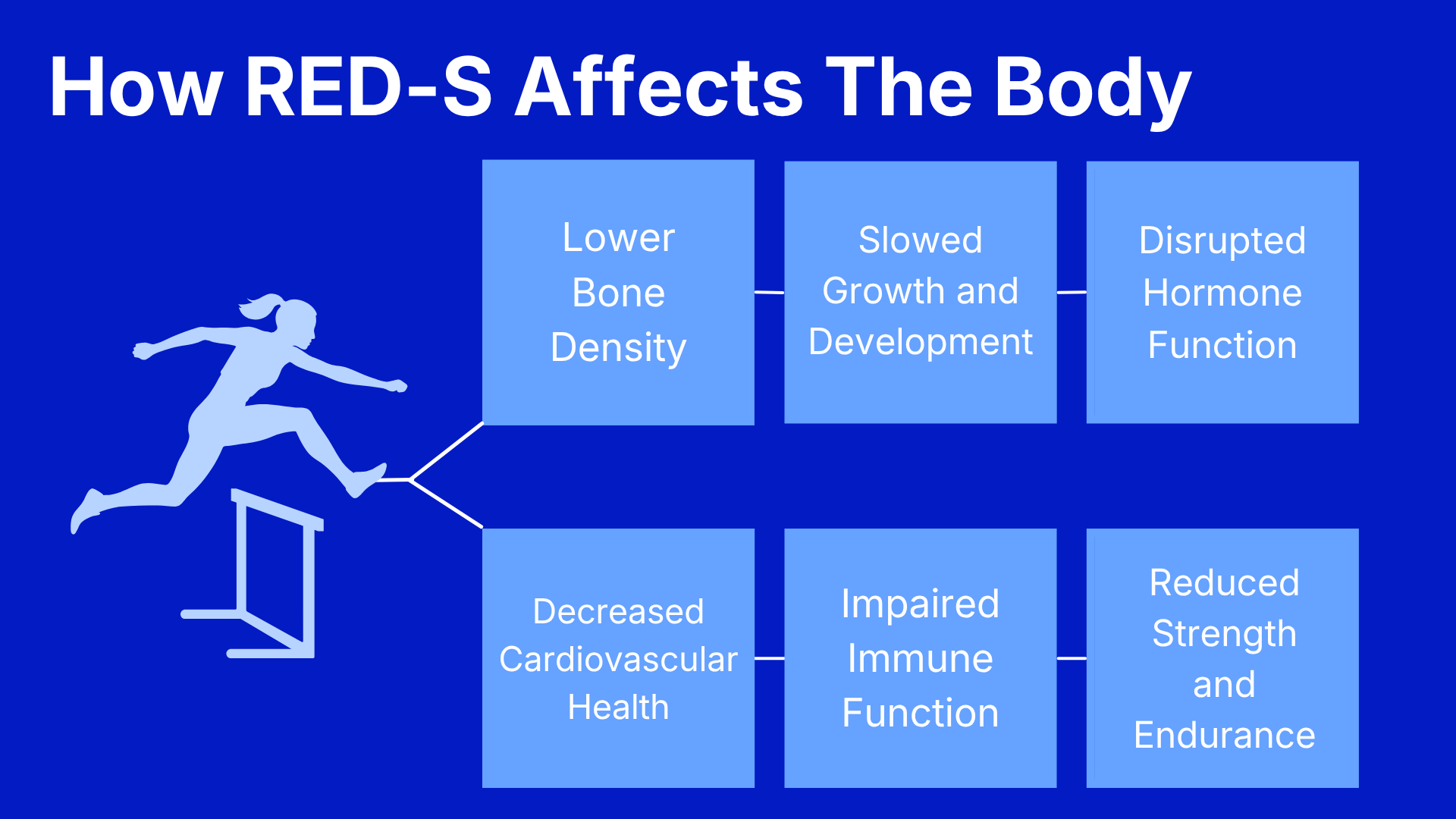
Bone health is a particular concern for young athletes. Adolescence is a critical time for building lifelong bone density, and the effects of chronic under-fueling can extend well beyond an athlete’s sports career
“Later in life, these athletes face an increased risk of developing osteoporosis and undergoing major orthopedic surgeries,” says Dr. Wiener. “If teenagers aren’t getting the fuel they need to support bone health in adolescence, they don’t have the ability to make it up later in adulthood.”
Helping Young Athletes Stay Healthy and Perform Their Best
Proper nutrition is a key part of athletic performance and overall health. Parents can help support young athletes by:
- Encouraging regular meals and snacks throughout the day
- Prioritizing nutrition and hydration after practices, games, and workouts
- Recognizing that active teens may need significantly more calories than their less-active peers
- Scheduling annual sports physicals to monitor growth, development, and overall health
If your child is experiencing unexplained weight loss, persistent fatigue, frequent injuries, missed periods, or declining athletic performance, talk with their pediatrician. Early evaluation and treatment can help young athletes stay healthy, perform at their best, and continue enjoying the sports they love
Fuel Better. Train Better. Perform Better
Our Fitness Science experts combine evidence-based training with education that helps young athletes build strength, reduce injury risk, and support healthy growth.Explore Training Programs
