


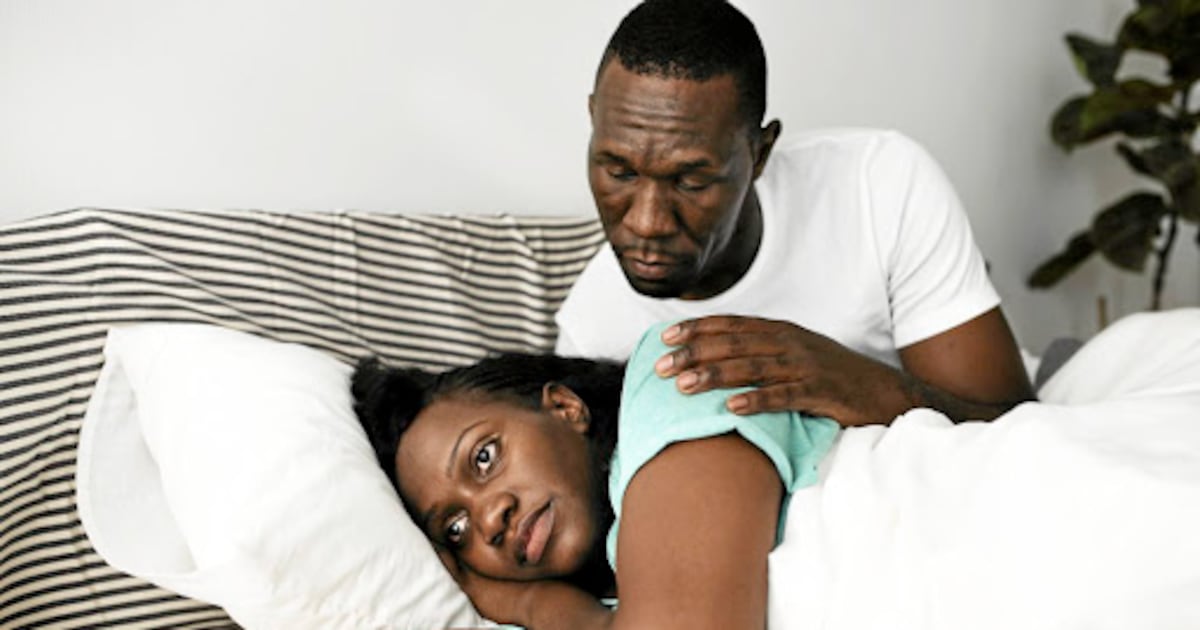
When a woman goes through perimenopause and menopause phases, the shift in hormones can give them more than just hot flushes; it can affect their mental health
You could be experiencing mood swings, insomnia — lack of sleep affects how your body and brain function the next day — or it could be anxiety and depression
General practitioner Dr Louisa Albertyn says, simply put, menopause is when <a href="https://healthylife7.com/is-it-true-that-its-harder-for-women-to-do-pull/” title=”Is it true that … it’s harder for women to do pull”>women no longer have monthly periods
“Each woman is born with a certain amount of eggs, and as you’re in your reproductive years, every month you ovulate, you have your period. Then when your eggs are finished, you will reach menopause,” says Albertyn
“Perimenopause is that transitional phase where it can be anything between four and 10 years before menopause. So already 10 years before going into that, having no period anymore, you can already be in perimenopause. And if you are in your 30s and you reach menopause that early, we call it premature ovarian insufficiency
The decline in progesterone causes, most commonly, insomnia and anxiety
— Dr Louisa Albertyn, General practitioner
Albertyn told viewers during a Q&A session hosted by the SA Depression and Anxiety Group (Sadag) session on Facebook that every menopause symptom — the hot flushes, the anxiety, struggling to sleep, mood changes, weight gain — can already happen in perimenopause
“But there, you still have periods. They change in the sense that they can become irregular. Sometimes before they become irregular, they are just heavier or longer or lighter and shorter

“The biggest symptoms [are] the oestrogen [and] progesterone. The fluctuation and then initial eventual drop of oestrogen is the reason for most of the symptoms — your hot flushes, mood changes — which is a big thing we’ll talk about today — weight gain, brain fog, and night sweats
“Today [we will talk about] not just about ovulation, but the hormones that fluctuate during perimenopause and then in menopause, when your ovaries stop making hormones. During perimenopause, those hormones are all over the place, with oestrogen up and down and progesterone declining, but in menopause, they are just flatlined, and you don’t really have much of them left anymore
“The stuff that you don’t feel but that you later can struggle with is osteoporosis (a medical condition that makes bones weak and fragile). Also, oestrogen is cardio-protective and protects the brain, so oestrogen actually is the big, big hormone, but let’s not forget progesterone. The decline in progesterone causes, most commonly, insomnia and anxiety.”
Albertyn says that women have a little bit of testosterone, and it comes in when there’s sexual dysfunction like hypoactive desire disorder — a condition marked by a low or absent interest in sex
“[It causes] women [to] start struggling with orgasms, with arousal, and let’s not forget vaginal dryness … There are less common [symptoms], like tinnitus, and some women complain of a metal taste in their mouths and itchy skin.”
Albertyn says health practitioners and others must “never forget women have hormones, and we have fluctuating hormones, and later on, no hormones. It’s so easy with men [because] they have testosterone. It can decline as they get older, but it’s a slow and steady thing that happens
“In women, every month is up and down, and then later on, it’s just more all over the place, and later on there’s nothing. So whether we have hormones or not, please remember we are hormonal beings
“And if you work with a woman, listen to her. If she says ‘nothing really happened, but I’m not feeling myself’, hormones are the first thing that should come to mind. There are always hormones involved.”

Albertyn says hormonal treatments are available to help women
“To stabilise hormones, [we prescribe] a low-dose contraceptive pill, or we use hormonal replacement therapy. In other words, we still let you have your period every month. So, we give you two weeks of progesterone, two weeks of no progesterone, until you have that year of no periods …” she says
“[For] hormonal replacement therapy (HTR), there are patches, gels, and tablets. If you’ve had breast cancer, then you can’t have HRT. If you have had a blood clot or you smoke, then we stay away from the oral hormone replacement, so we’d rather do it through the skin, so your gel or your patch
“Then there is off-label stuff. If someone is really depressed or anxious, you can [prescribe] an antidepressant. Some of them have actually been proven to help with hot flushes. With all the data we have about the safety of hormonal replacement therapy, that will always be your first line of treatment because it protects the bones, the brain, and cardiovascular health.”
Albertyn says HTR is not “one size fits all”, adding that some women may have to try different ones before they find one that works for them
She says exercise, eating healthy and having a good support system are important
“[There must be] good communication with your partner or your husband and your children so that there’s understanding. Educate yourself because that empowers you, and educate those around you, especially in the workplace, [and] that there is support at your workplace for menopause.”
If you or someone you know needs mental health support, contact Sadag’s mental health helpline on 0800-212-223
- Click here to join Sowetan’s WhatsApp channeland get the latest news delivered to you on the move.
