


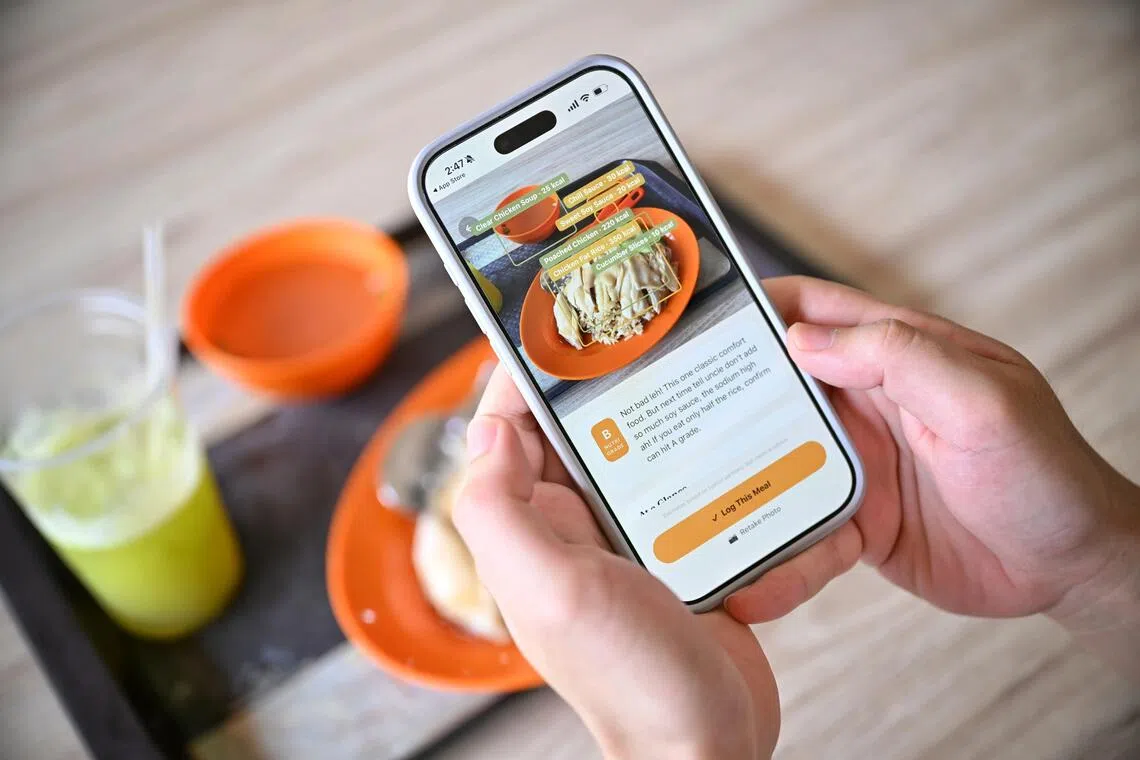
Can home-grown calorie-tracking apps help you lose weight while eating hawker food?
HawkerSense is among the home-grown apps that focus on Singapore dishes and hawker fare that international food trackers are less familiar with
ST PHOTO: ARIFFIN JAMAR

Hedy Khoo
- Home-grown apps like Ventrickle, HawkerSense and LeanerTogether use AI to recognise and estimate calories in local hawker food, helping Singaporeans track meals more accurately than international apps.
- Experts say these apps raise awareness and accountability for healthier eating, but caution that calorie counts are estimates and users should focus on long-term patterns.
- Users like Rycel Wong report successful weight loss and lifestyle improvements using these apps, which offer tailored features, stall-specific data and coaching to support sustainable diet changes.
AI generated
SINGAPORE – Before Rycel Wong takes his first bite of food, he makes sure the camera eats first
It is a longstanding habit of the 38-year-old IT engineer to snap a picture and send his food shots to his family’s WhatsApp group chat. Since February 2025, he has also sent them to Ventrickle, a Singapore-based calorie calculator and AI nutrition app
The food scanner, powered by artificial intelligence, identifies the dish, estimates its calories and nutrients and logs it. He says this “point, shoot and log your food” protocol fits easily into his daily routine.
Home-grown apps with meal tracking capabilities are tapping the habit that many diners already have of photographing their food to post on social media or share with family and friends. These include Ventrickle, HawkerSense and LeanerTogether, all launched in the past two years, which focus on Singapore dishes and hawker fare that international food trackers are less familiar with
They join the Health Promotion Board’s Healthy 365 app, which added a Meal Log feature in May 2023
HawkerSense’s Singaporean founder Wong Qi Han, 35, wanted a tracker that “understands what Singaporeans actually eat, so people can order smarter while continuing to eat the food they love”
Before creating his app, he used a popular international calorie tracker which identified his bowl of ban mian as “noodle soup” and did not account for its lashings of fried ikan bilis and pork lard.
The Singapore apps all take different approaches. HawkerSense, launched as a web tool in January 2026, uses Google’s Gemini AI, guided by prompts written by Wong to recognise local dishes and account for local ingredients and preparation methods
Ventrickle, launched in February 2025 with a second version released in July 2026, combines an AI scanner and chat function with stall-specific nutritional data, while LeanerTogether, set up in June 2026, pairs meal scanning with an AI coach to help users decide what to eat next
Healthy 365 uses AI-powered image recognition to suggest matches from its local food database. The apps can be found on iOS and Android, with LeanerTogether and HawkerSense also available as web apps. They range from free to paid subscriptions costing $19.98 to $95 a year
Do such trackers actually aid weight loss?
Accredited dietitian Wong Hui Xin, 40, who advised on LeanerTogether app’s nutrition features, says such trackers build awareness and accountability, especially if users commit to make sustainable changes
But Wong, founder and principal dietitian of nutrition consultancy Healthier U, cautions that photo-based calorie counts are mere estimates. Portion sizes, cooking methods and unseen ingredients affect the accuracy of readings, especially with hawker food, where the amount of oil, gravy and sauces varies among stalls
Users should therefore view these calorie counts as an indicative guide and focus on longer-term eating and weight trends, instead of fixating on each and every meal. “The goal should not be to achieve perfect precision with every meal, but to use the information as a guide to make better overall choices,” she says
Here are four home-grown calorie tracking apps to try
Ventrickle: Making better dining choices
At 1.65m, IT engineer Rycel Wong weighed 70kg when he started using Ventrickle in February 2025.
The app helped him keep to 1,800 to 1,900 calories daily and pay closer attention to his protein intake. His weight dropped to 65kg by June 2025 and hit a nadir of 63.85kg a month later. The 38-year-old now weighs 68kg – the result of strength training and building more muscle mass
Since using the app, his clothing size went from large to medium, and some smaller T-shirts fit again. His pants size also dropped from 31 to 29 inches. From panting heavily after running 5km, he now clocks the distance comfortably and has stretched his runs up to 10km four times a week.
He credits Ventrickle with tracking his calorie intake and helping him achieve a calorie deficit without extreme dieting
The app appealed to him because its database was heaving with hawker food. A United States-based food tracking app which he tried in 2024 lacked his go-to dishes such as bak chor mee and roast duck rice. He was impressed that Ventrickle’s scanner could even pick out beef rendang and sambal kangkung on a nasi padang platter, he says
He has since renewed his subscription for a second year. Even though he has hit his weight target, he still logs three meals daily, composed of hawker food such as wonton noodles or fish and chips
Ventrickle, available on iOS and Android, costs $95 a year after a seven-day free trial, which works out to 26 cents a day. To date, the AI nutrition app has 10,000 users
Before ordering, users can search its database and ask the app about a dish or photograph a menu or stall. The app displays a food card with calories and nutrients.
After a meal is logged, it updates the remaining calorie allowance and advises the user on how to plan his or her eating for the rest of the day. For dishes not on its database, it provides an estimate. It also analyses nutrition labels, barcodes and food-delivery screenshots
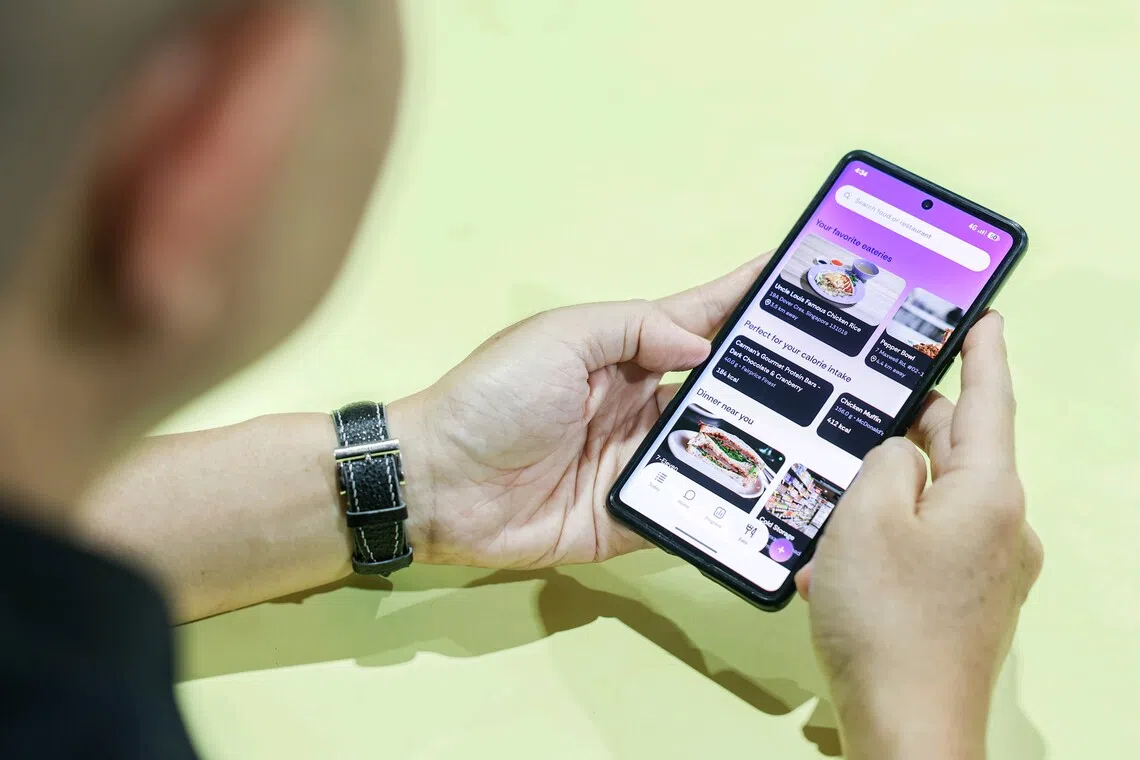
Ventrickle was built by a team of fitness enthusiasts in Singapore. Its co-founder and chief marketing officer Peter Tan, 48, says the app is built for people on the go, who live amid Singapore’s “da bao culture” and “real-life messy scenarios”, and do not have perfectly prepared chicken breast and broccoli waiting for them at home each day
Tan, who has a bachelor of science degree in conservation biology and ecology (zoology) from the National University of Malaysia, assembled a team of four, including an in-house certified nutritionist, an operations and business development executive, and two creative executives who cover videography, photography and social media.
Its database covers more than 500 eateries here, including about 300 hawker stalls and 8,000 menu items. Building the database of hawker stalls and their dishes has come with its own set of challenges, more daunting than the technical challenges of building the app itself, says Tan
Only about two in 10 hawkers out of over 800 approached agreed to participate. Some were too busy, others did not have written recipes or closely guarded their ingredients
So if a recipe is unavailable, the team buys the dishes, goes back and separates and weighs its components, then computes the calories. Just adding one stall can take two to eight weeks of work
For example, to add fish and chips from Wow Wow West Genuine at ABC Brickworks Market & Food Centre, the team separately weighed the fish, batter and fries before and after frying to calculate moisture loss and oil absorption. It also weighed the coleslaw, corn and sauces, checking across several servings for consistency. The dish is listed at 1,144 calories
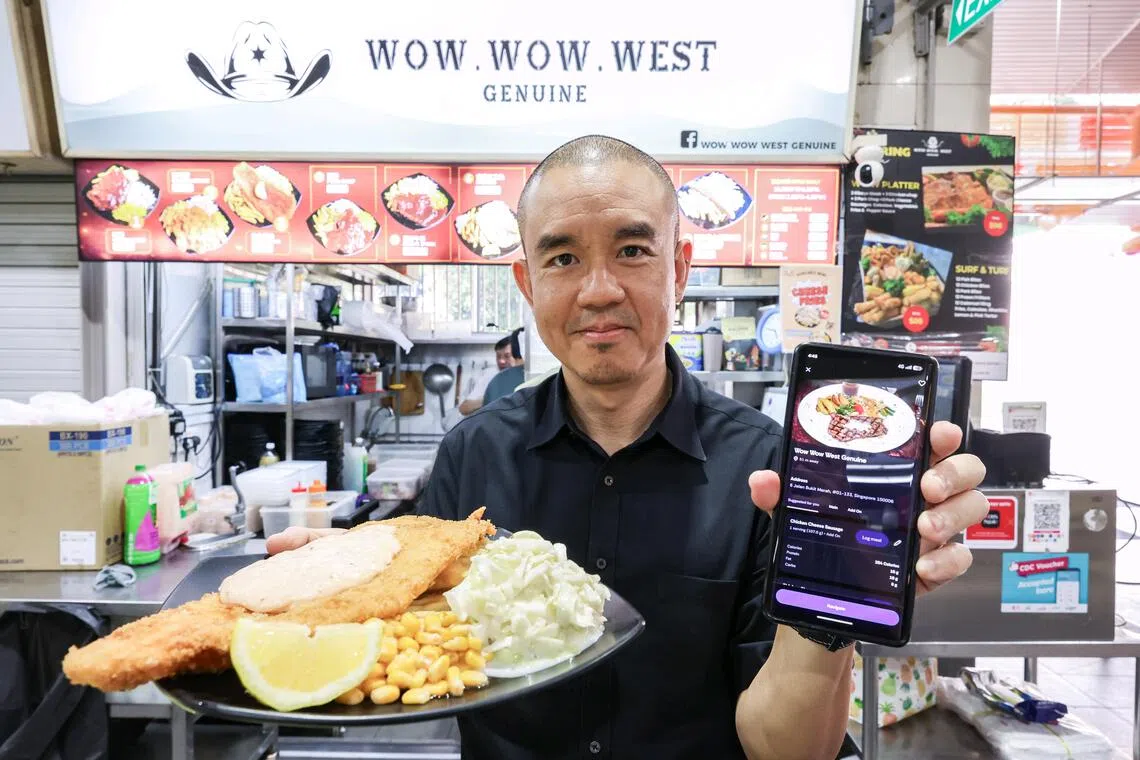
Ventrickle’s in-house nutritionist Tung Yee Nei, 33, developed this painstaking method of computation. She says stall-specific figures reflect the recipe, portion and cooking method better than a generic estimate
She advises users to log their meals diligently for a few weeks to identify their eating patterns, then make small changes they can sustain. “A moderate deficit you can maintain for months not only beats a strict one abandoned after two weeks, but it also helps you build sustainable eating habits,” she says
HawkerSense: Estimated calorie count of local dishes
Marketed as an AI-powered nutrition tracker for hawker food lovers, HawkerSense is the brainchild of Wong Qi Han, who works by day as a product lead at Google. The 35-year-old, an economics graduate from Yale University, makes it clear that the app is a personal project he works on in his free time
He developed it after finding other calorie trackers inadequate for logging hawker fare, especially cai fan, or economy rice, due to “too many overlapping items and too many ambiguous ingredients”
He took it as an engineering challenge. “I wanted a tracker that is relevant to local diners and hawker food is a staple in our dining scene.” But he adds that his app is also able to identify dishes from international cuisines such as sushi, tacos and pizza
The web version launched on Jan 5, 2026, followed by iOS and Android apps on May 18. Users photograph a meal and receive estimated calories, protein, carbohydrates and fat, with notes on possible hidden ingredients
For example, when a user scans a plate of char kway teow, the app alerts the user that the dish contains high saturated fat content from lard and processed Chinese sausages. Users can edit the ingredients and portion size, and the app will update the calorie count, as well as the fat, protein and carbohydrate content
The app uses Google’s Gemini AI, guided by prompts to help it recognise Singapore dishes and their typical ingredients and preparation methods
While the app has no fixed food database, the AI food scanner identifies what is visible in the photograph and estimates unseen ingredients based on how the dish is typically prepared. Clear, top-down, well-lit photos of a full plate give the most consistent results
Distinctive dishes such as chicken rice, wonton noodles and nasi lemak are easier to identify. Submerged ingredients in soupy dishes such as fishcake in laksa or yong tau foo pieces below the surface may not be identified

The app was built to show a user’s dining pattern across many meals, rather than to be precise about one single meal, says Wong. He calls the resultan “agaration”, or estimate, for spotting patterns
HawkerSense is not intended for those on strict regimens who need gram-perfect figures. Instead, the app is targeted at health-conscious Singaporeans who eat hawker food regularly and find Western-trained trackers inadequate for local dishes. It gives them an estimated analysis to nudge them towards healthier choices, he maintains
The app also assigns an A-to-D health score and dispenses jokey, colloquial advice in Singlish, such as: “Wah steady lah! This plate damn healthy sia. Uncle approve!”
As at July 31, 2026, HawkerSense had 1,163 registered mobile-app users, with more than 15,200 meals scanned across its web and mobile versions. It allows three free scans a day. Unlimited use costs $3.98 a month or $19.98 a year on iOS, and one cent more on Android
LeanerTogether: AI health coaching
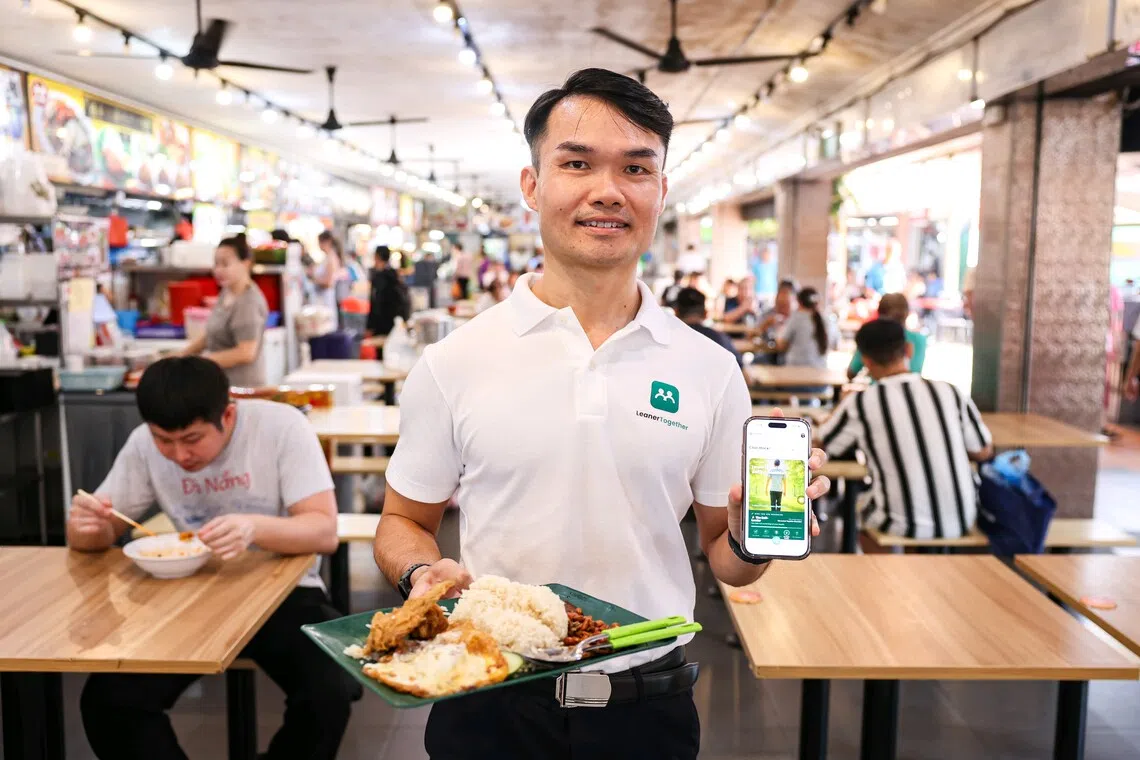
More than just a calorie tracker, LeanerTogether is designed to provide AI-powered health coaching, says the app’s founder Tan Chin Hock
Its web version launched in June 2026, followed by an Android app in July and an iOS app in August. All versions are free for users
To date, it has 141 registered users. During onboarding, users state their personal “why” for weight loss, such as staying healthy for their children or to feel better. Their mission statement appears whenever they open the app
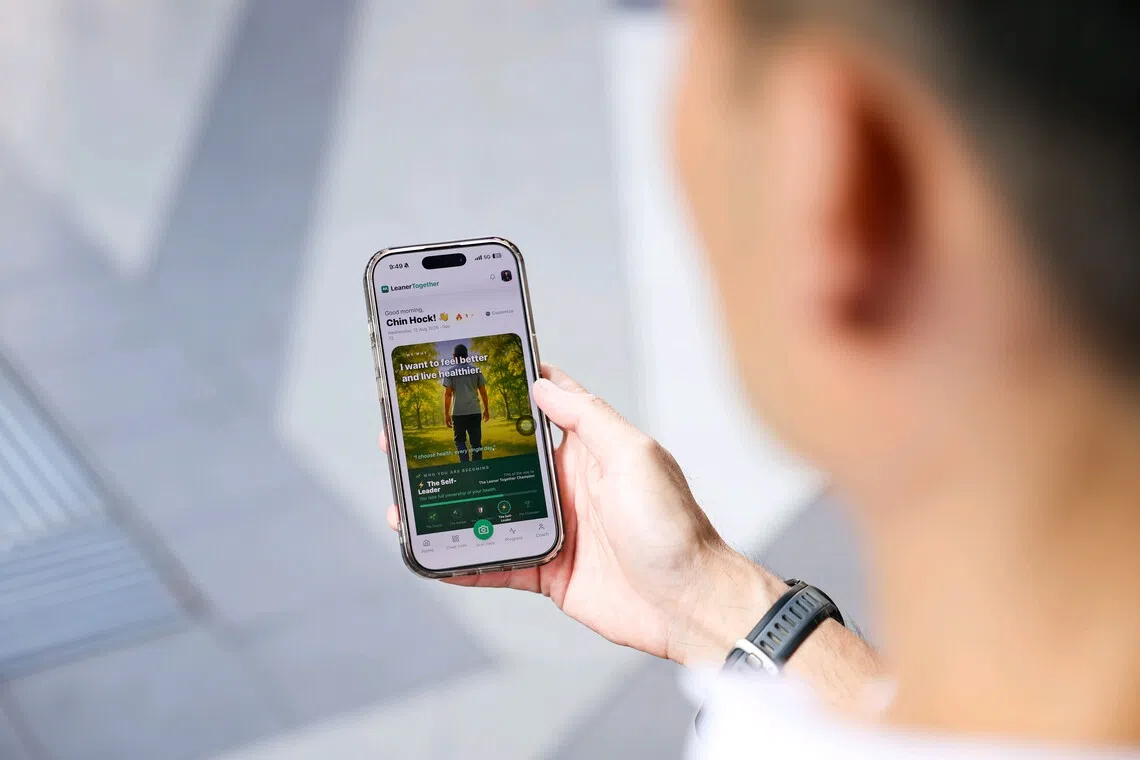
Users can photograph food or menus, search and log dishes, and ask the AI coach what to eat to stay within their daily calorie allowance. If lunch was heavy, for example, the app may suggest fish soup for dinner
The app also tracks protein, water, steps and sleep, and provides short practical lessons on nutrition, exercise, sleep, hydration and weekly reports
Tan says the coach helps users adjust after exceeding their calorie allowance without losing sight of longer-term goals
Its database includes more than 900 cooked dishes, including over 400 local ones such as fried Hokkien mee and satay. Its scanner can also estimate the nutritional content of food in photographs
Accredited dietitian Wong Hui Xin, 40, founder and principal dietitian of nutrition consultancy Healthier U, began advising LeanerTogether in late June 2026. Her role primarily involved testing the app and providing professional feedback on its nutrition features and user experience
She likes its bite-size lessons and weekly summaries, and says that consistency – maintaining an average calorie and protein intake over time – is far more useful than accuracy in sizing up the figures in one meal
Tan, 47, an assistant manager in the healthcare industry by day, who is doing this as his passion project on the side, recommends logging meals faithfully for at least one or two weeks until one’s eating patterns become clear. His aim, he maintains, is not lifelong dependence on the app
“It is to help users become more aware and eventually make better choices on their own,” he says. “It’s like the adage of teaching someone to fish rather than giving them the fish.”
Healthy 365: Enhanced meal logging
Healthy 365 began in 2015 as a step-tracking app. Its Meal Log tool, added in May 2023, lets users search dishes by keyword, photographing a meal or uploading an image. AI-powered image recognition suggests matches from the app’s database. Users then select the closest item description and adjust the portion size to obtain an estimated calorie count
For cai fan or economy rice, they can select a general entry, such as “Economic rice (two vegetables, one meat)”, or log the rice and side dishes separately for a more tailored estimate
In April 2026, the Meal Log feature was enhanced to provide more personalised and practical feedback. Users can compare their food choices with daily recommendations on calories, sugar and sodium, and check nutritional information before or after eating
Healthy 365 currently has close to 900,000 monthly users. About 330,000 have used the Meal Log tool, with around 22,000 using it monthly. Some 720,000 food and drink items are logged each month. The mobile appis free to download from Apple’s App Store for iPhone users and Google Play for Android users
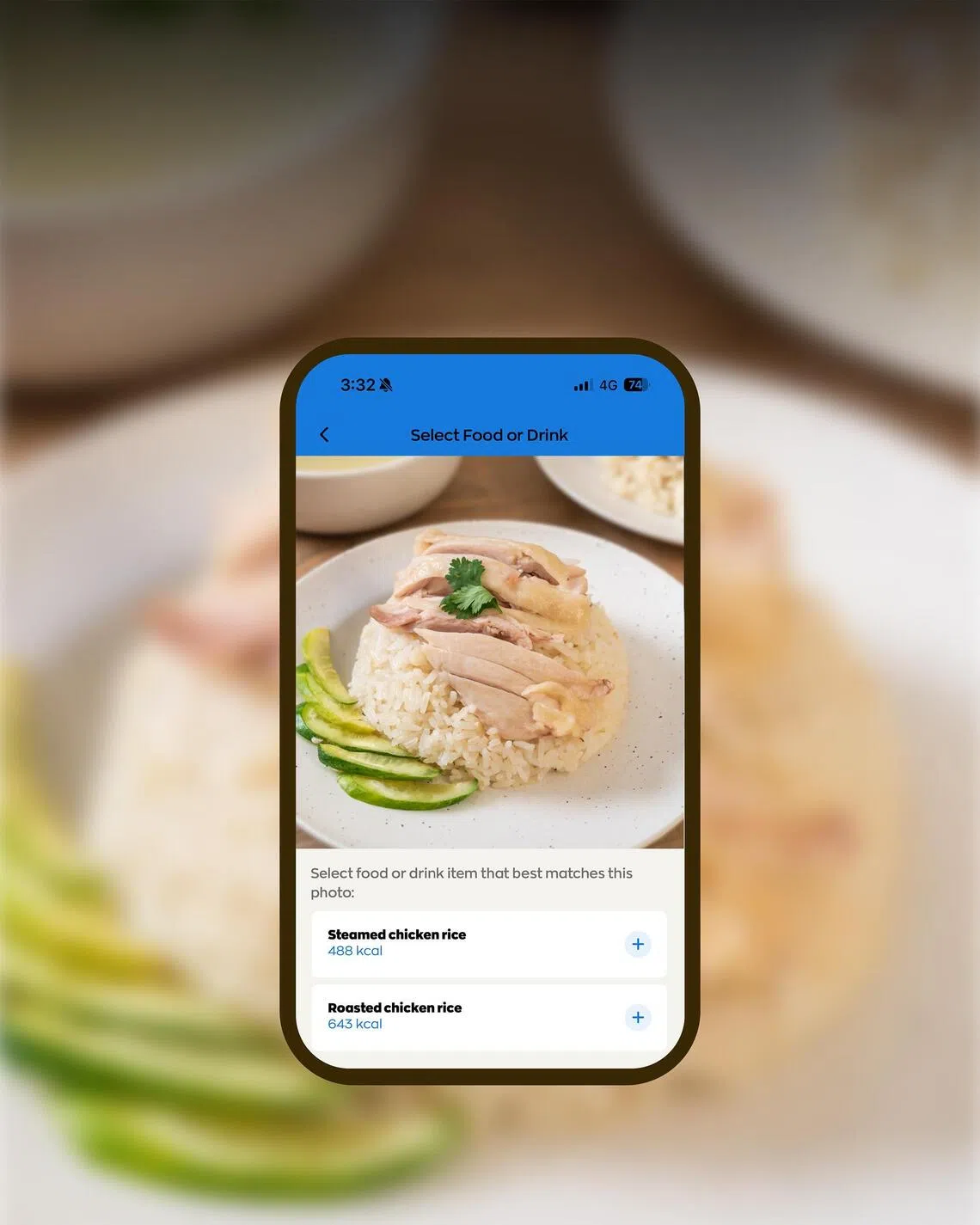
While the Meal Log tool cannot automatically estimate portions or identify every ingredient, Healthy 365’s database contains 1,500 food items and 600 drinks in total. Its nutritional information comes from the Singapore Food Insights Database and is verified by HPB nutritionists
Based on food trends and ground observations, around 50 new food and drink items are added to the database yearly, with priority given to dishes and drinks that Singaporeans most commonly consume.
Recommended calorie intake iscalculated using the user’s height, weight, age, gender, physical activity and weight-management goal. Sugar recommendations are personalised, while the daily sodium limit is fixed at 2,000mg, which is about one teaspoon of salt
Audrey Tong, 53, director of HPB’s integrated solutions and programme planning office, says the Meal Log tool is for those who want to make more informed choices, manage their weight or understand their eating habits
“The aim is not to tell users what they must eat, but to turn nutrition information into simple feedback they can act on,” she says
“Over time, users can notice patterns, such as regularly exceeding their sodium limit or consuming more calories from snacks and drinks than expected, and make small, sustainable adjustments that fit their own routines.”
Hedy Khoo is senior correspondent at The Straits Times. She covers food-related news, from reviews to human interest stories
Nutrition and diet
Hawker food
Health and well-being
Food and drink
Mobile apps
