


Doctors warn against anti-obesity injections being used as ‘bikini body’ quick fixes
Sales of GLP-1 weight-loss drugs jump nearly 157 per cent in a year as endocrinologists highlight the risks of non-medical use

03/08/2026 a las 13:22h.
They are the latest trend in pharmaceuticals: the so-called ‘miracle’ or ‘anti-obesity’ drugs that, through weekly injections, promote weight loss ranging from 15 …per cent in their earliest versions to almost 30 per cent in the latest iterations
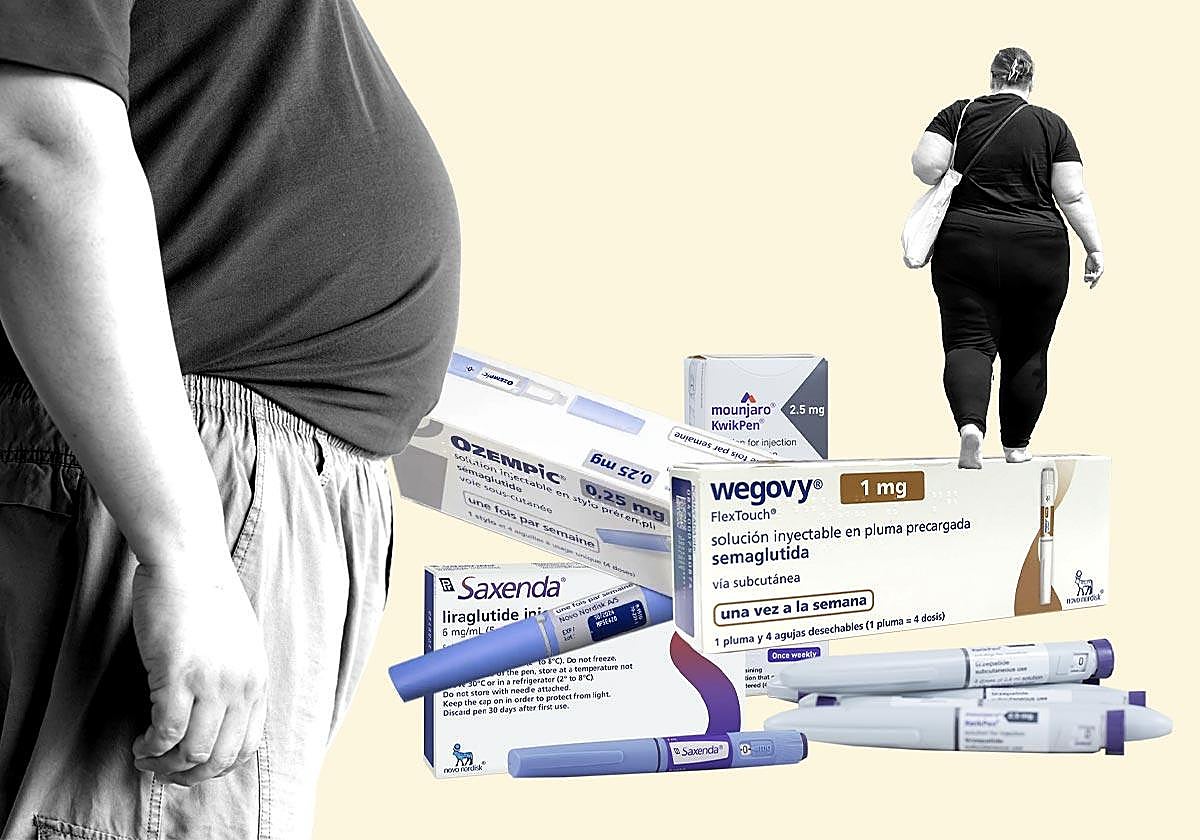
According to data from Bidafarma, a wholesale distribution cooperative specialising in pharmaceuticals, GLP-1 receptor agonists – which include semaglutide, liraglutide and tirzepatide, best known under brand names such as Ozempic, Saxenda, Mounjaro and Wegovy – have revolutionised the market. Sales soared by almost 157 per cent in the first six months of 2026 compared to the same period last year
These medicines require a prescription with a specific medical indication, but they are not always being used that way. In Spain, the National Health Service only subsidises them to treat diabetes. Endocrinologists in Malaga consulted by SUR warn that their use has become ‘trivialised’. They report that people of normal weight are using the injections simply to lose a few kilograms – treating them as a casual ‘summer get-in-shape’ or ‘bikini body’ regime. Specialists warn that the side effects have only been studied in patients with obesity, not in individuals of normal weight taking them for cosmetic reasons.
Revolution
GLP-1 receptor agonists mimic a hormone that regulates appetite, creating a feeling of fullness
“For the first time, we have drugs that are highly effective for weight loss; practically 100 per cent of people with obesity respond with significant weight loss,” says Francisco J. Tinahones, head of Endocrinology and Nutrition at the Virgen de la Victoria Clinical Hospital
“However, they are also being misused by people who do not need them for very short periods, which is not beneficial either.”
Dr Tinahones stresses that the injections are only recommended for people who are obese, or those who are overweight with associated health conditions such as diabetes, high blood pressure, sleep apnoea or liver disease – and never for those of normal weight
“A person who wants to lose four or five kilos is not usually obese or overweight. If they only had three or four kilos to lose, they would be of normal weight. Normally, excess weight in a person with class two overweight equates to a loss of nearly 10 kilos,” Dr Tinahones says. “The safety of these drugs in people of normal weight has not been proven.”

(Migue Fernández)
All clinical trials to date have evaluated their impact solely on patients with obesity. Furthermore, Dr Tinahones points out that these treatments are intended for long-term use, requiring a gradual increase in dosage
The most common side effects reported include nausea, vomiting, diarrhoea, constipation and abdominal pain. However, because safety trials have focused on approved medical conditions, their potential impact on healthy, normal-weight individuals remains unknown
They are only recommended for people who are obese or overweight and have associated conditions such as diabetes, high blood pressure, sleep apnoea or liver problems
The consequences of misuse are unpredictable. Firstly, the likelihood of a rebound effect is high
“We cannot be certain that the doses administered to obese patients won’t cause more severe side effects in people of normal weight, as they have not been tested on them,” Dr Tinahones adds
He also notes that unless the injections are paired with dietary changes and strength training, “care must be taken to prevent the loss of lean body mass. Taking this medicine without a qualified medical prescription is a risk.”
Black market
Dr Tinahones also highlights the growing black market around these treatments
“Even formulations that meet all health and safety standards can be bought online. No one should use this product unless it has been approved by the Spanish Medicines Agency. Patients who are practically at a normal weight come into my clinic asking for the treatment, and I tell them no,” he says
He notes that he has personally been able to purchase GLP-1 analogues online without a prescription. “It’s not safe, and making a cheap copy is difficult, if not impossible.”
In his view, patients must consult an endocrinologist who can oversee a diet and exercise programme and advise on how to manage potential side effects. “Its use is being tri
Gabriel Olveira, head of Endocrinology and Nutrition at Málaga Regional University Hospital, agrees that people are acquiring the medication outside of official channels
“People are using it outside medical settings, particularly in unauthorised clinics where there is no oversight. It is sometimes administered without a clear medical indication, purely for aesthetic reasons,” Dr Olveira says
“You lose weight, but in the long run, if this isn’t accompanied by healthier eating habits and more exercise, you’ll put it back on again”
Gabriel Olveira
Head of the Endocrinology and Nutrition Department at the Málaga Regional University Hospital
“It’s true that you lose weight, but in the long run, if this isn’t accompanied by healthier habits, improved nutrition and exercise, you’ll put the weight back on,” Dr Olveira reflects
“In those cases, it is being used purely for cosmetic reasons outside of medical advice. A typical example is losing a few kilos for the summer – a ‘summer slimming programme’ – among people who aren’t overweight, who have a normal body mass index, and who have no underlying conditions that would benefit from these drugs, such as diabetes or fatty liver.”
Exercise
Exercise
Dr Olveira also emphasises the critical role of physical activity during weight loss
“Muscle loss can lead to functional decline and sarcopenia, but above all it leads to weight regain because muscle tissue consumes the most energy,” he explains, emphasising that obesity and diabetes are serious, chronic medical conditions, rather than cosmetic issues, requiring long-term management
He concludes with a warning regarding mental health: “Studies on non-medical users indicate a degree of underlying psychopathology. Using these drugs in this way could trigger eating disorders or an obsession with weight loss.”
