



ARISE2’s postdoctoral fellowship programme is training STEM experts to build life sciences technologies. Join the 2026 call for three-year contracts, comprehensive training and a career shaping the future of global health research
Society
The future of human and planetary health depends on the continuous evolution of scientific tools. Europe has therefore invested significantly in research infrastructures (RIs), but it also needs qualified experts who can fully exploit their potential.
To address this critical need, the EU-funded ARISE2(opens in new window) project is training tomorrow’s scientists dedicated to developing and improving technologies for life sciences research. The project’s unique postdoctoral fellowship programme is aimed at equipping talented STEM researchers with the specific skills required to operate and innovate within RIs. This will ensure that cutting-edge technologies are effectively translated into services that accelerate scientific discovery for the global community.
Fellowship focus
The ARISE2 fellowship offers a comprehensive three-year contract designed to foster interdisciplinary collaboration and professional growth. Fellows work on self-designed projects to create or optimise technologies, gaining practical insight into user needs through service provision and job shadowing. The programme is built on three core pillars: research training, RI professional competencies, and career development. Supervision is robust, featuring a main supervisor from ARISE2 project coordinator European Molecular Biology Laboratory (EMBL), an external co-supervisor for scientific consultations and an academic mentor.
Fellows benefit from extensive mobility, including long secondments (two to six months) at partner organisations for technical collaboration, short job shadowing visits to understand operational set-ups and interdisciplinary visits at other EMBL facilities. Additionally, a structured curriculum covers essential RI skills, such as data management (FAIR principles), service provision, budgeting, technology transfer and communication, and it includes a dedicated one-week school during the second year.
Calling for research fellows
The 2026 call for applications opens a vital pathway for researchers holding a doctoral degree in STEM domains to pivot into life sciences. The call closes on 30 September 2026. Following a rigorous selection process, shortlisted candidates will be invited for interviews scheduled from 25 to 27 November. Successful fellows are expected to start their 36-month journey on 1 January 2027, or within the following four months.
Future plans include an ARISE2 Partnership Event that will be held at EMBL Heidelberg on 16 October 2026. This event is designed to connect people, technologies and ideas. It will feature technology showcases – from both ARISE fellows and partner organisations – in data and computational sciences, imaging and optical engineering, structural biology and mechanical engineering, as well as biotechnology. The full programme will be made available at this link(opens in new window). Registration is now open via the official event page(opens in new window).
By combining advanced technological development with rigorous professional training, the ARISE2 (Career Accelerator for Research Infrastructure Scientists 2nd generation) fellowship programme ensures that its fellows are prepared to drive the innovations necessary for a healthier, more sustainable future. The project ends in December 2029.
For more information, please see:
ARISE2 project web page(opens in new window)
Keywords
Explore other similar articles
Who do fossils belong to?
12 June 2026
Redefining European research through collaborative innovation
27 April 2026

Robots, smart tech and experience: rethinking work for an ageing Europe
2 April 2026


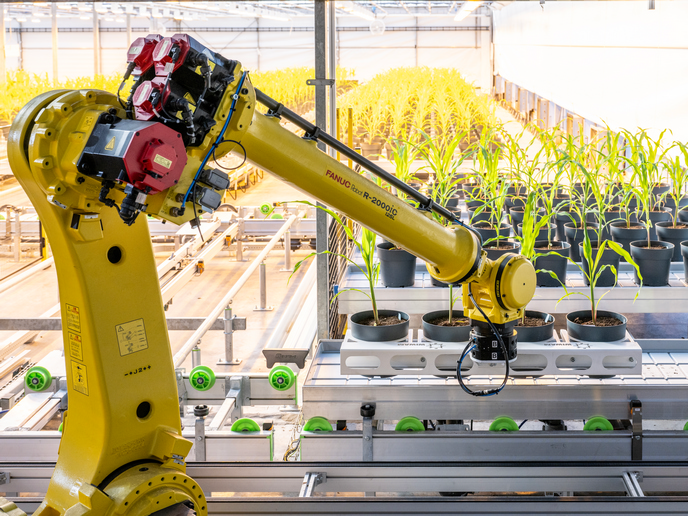
A European phenotyping infrastructure to boost plant science and innovation
13 February 2026


Participatory science drives food legume genetic conservation
13 February 2026
The apocalypse is getting nearer, warn scientists
5 February 2026
EU-funded researcher recognised for social science achievements
30 January 2026

Boosting citizen engagement with security technologies
16 January 2026
Continue on the search page
