


stacker-Nutrition & Diet
By Stacker
PublishedAugust 29, 202611:49 AM
In the world of dietary trends, proteinmaxxing is taking a back seat to the new obsession: ramping up on fiber, Knowable Magazine reports. Since the summer of 2025, Instagram has racked up more than 10,000 posts captioned with #Fibermaxxing and other fiber-forward hashtags — and the flood doesn’t appear to be dissipating
The trend is a nod to our species’ history — and to how much our diet has changed. With the dawn of agriculture about 12,000 years ago, and the advent of modern food processing some 200 years ago, many people have abandoned historic levels of fiber consumption. That’s especially the case in developed countries (studies suggest that 95% of Americans don’t get enough), though it’s happening around the world. And that change has disrupted the microbiome — those myriad microbes that dwell in the digestive system — with concerning consequences for health.
“We disrupt our microbiome and chronic diseases go up,” says Jens Walter, a microbiome scientist at University College Cork in Ireland
Walter is part of a community of microbiologists, nutritionists and other researchers who are exploring fiber’s biological effects on bacteria in the gut and amassing growing evidence that fiber, and the microbes it feeds, protects us against diseases such as inflammatory bowel disease, colorectal cancer and diabetes. This, these experts say, does more than underscore the importance of fiber. It may also lead to novel solutions — perhaps one day even personalized fiber prescriptions
More types of fiber
Dietary fiber molecules are types of carbohydrates derived from plant foods — but unlike starch and sugars, they can’t be digested by the body. They pull their weight in other ways
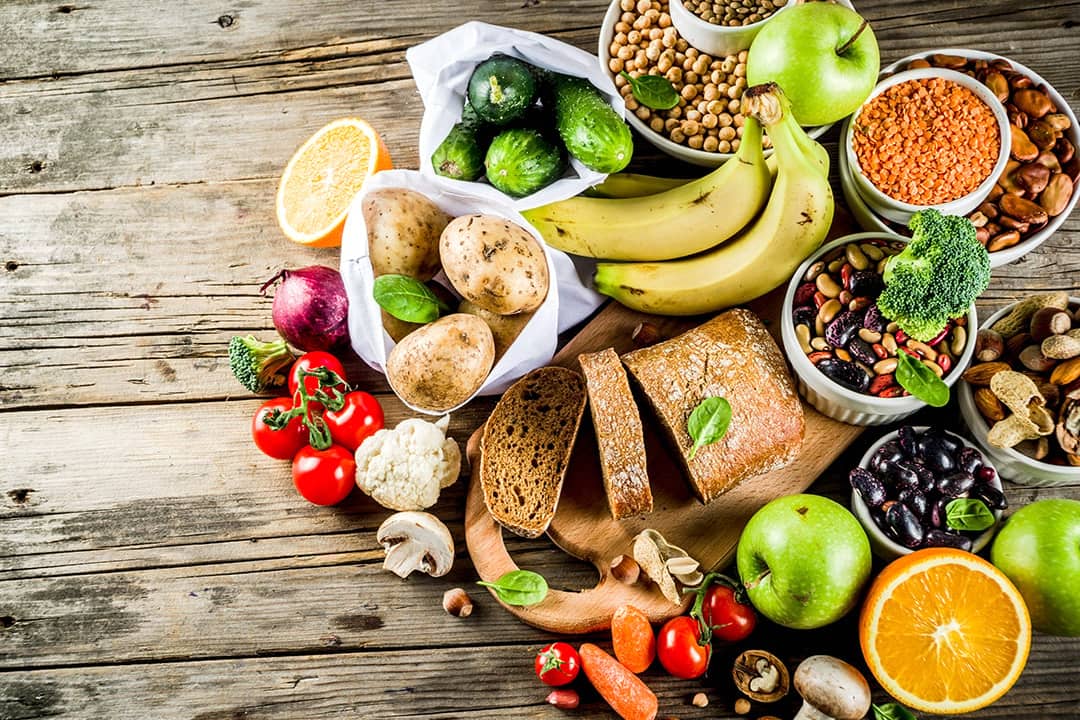
Until recently, nutrition scientists mainly classified fiber as insoluble (such as wheat bran) or soluble (such as pectin in fruit), based on its ability to dissolve in water. Categorization today is more sophisticated, considering properties such as bulking capacity (how well fiber holds on to water, increases feces size and regulates bowel movements); fermentability (how well it is broken down by microbes in the gut); and viscosity (how much it thickens into a gel in the digestive system). Examples of foods high in fiber of various types include beans and legumes, nuts and seeds, fruits, vegetables and grains.
The study of the relationship between fiber and health dates back to at least the 19th century, when a handful of surgeons, physicians and medical researchers took an interest in diet as a determinant of disease. While many weren’t focused on fiber as a factor, they observed patterns of disease among populations partaking of diets low in “residue” or “roughage.” In 1949, two scientists found that rats put on a low-roughage diet began to develop diverticula, pouches in the colon that can become inflamed and infected, and that the introduction of roughage, through psyllium seed husks, prevented this.
In the following decades, researchers closed in on the theory that people, too, were being sickened by the growing absence of fiber in their meals as they shifted to diets richer in refined grains and processed foods, especially in the wake of the industrial revolution. Two surgeons from the United Kingdom, Neil Painter and Denis Burkitt, published a paper in 1971 labeling diverticular disease of the colon a “deficiency disease of Western civilization” after finding low rates of the condition in parts of Africa where people maintained a high-fiber diet.
Burkitt, Painter and a colleague went on to publish a study comparing stool sizes and how long stool took to pass through the intestines of subjects in the U.K., South Africa, Uganda and India. They found that people in rural parts of Uganda and South Africa — who had the least-processed, highest-fiber diets — passed heavier, softer feces more rapidly than their urban and European counterparts. And their examination of records from more than 200 hospitals in more than 20 countries revealed that appendicitis, colon cancer and diverticular disease were uncommon in developing, non-Western countries, whereas the rates had been growing in places like England since the 1870s. Burkitt, who later became known as “the fiber man,” hypothesized that impeded bowel movements were to blame: The fiber hypothesis was born.
Burkitt and his contemporaries had speculated about the impact of fiber on flora in the gut. In 1977, researchers from Virginia Tech in Blacksburg published a survey of several bacteria species in the colon that broke down dietary fibers by fermenting them, a process that supplied the bacteria with the carbon and energy to live. Researchers also found that this digestion of fiber produces molecules called short-chain fatty acids that go on to enter the bloodstream. So even though people don’t digest fiber ourselves, they get something from it, courtesy of the microbes.
Today, researchers know a great deal more about the relationship of fiber and health. They know that fiber provides bulk to stool, helping it to pass through the digestive system and making people feel more satisfied after eating. The viscous kind, especially, binds bile acids, lowering cholesterol, slows absorption of nutrients, and improves the blood levels of sugar and lipids
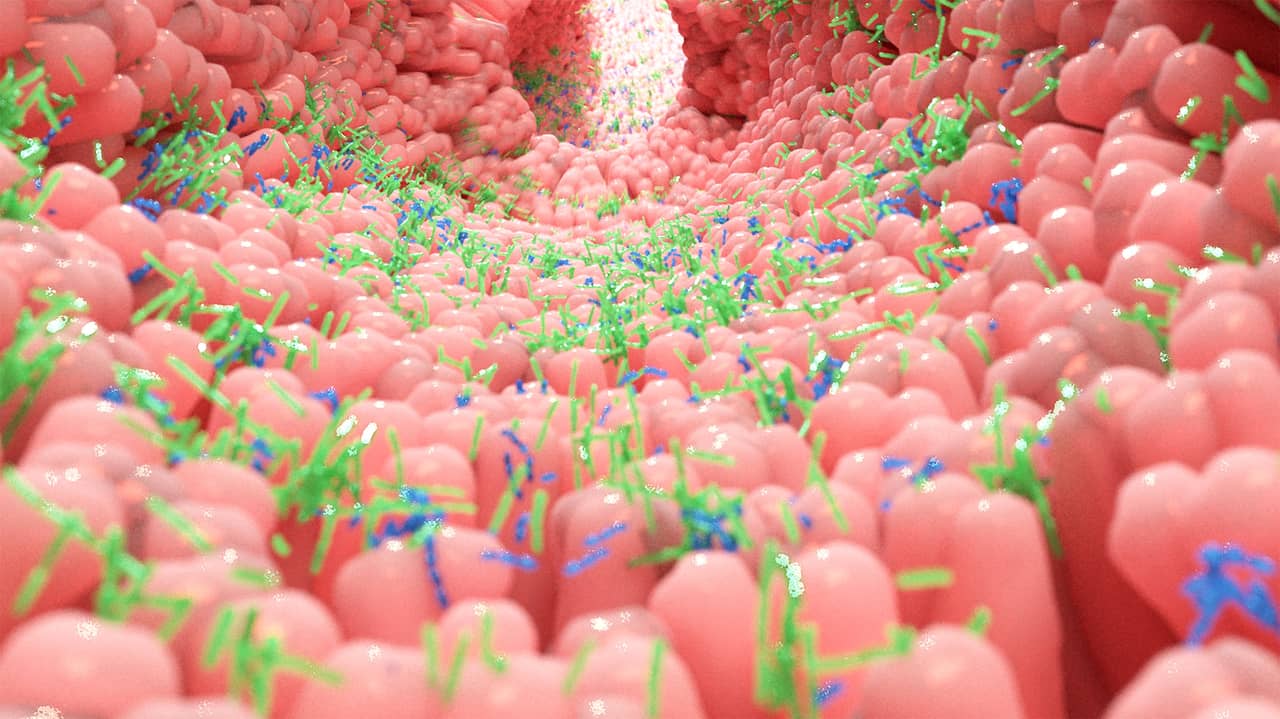
And then there are fiber’s effects on gut microbes, which digest that fiber for food. Fiber “is actually one of the ingredients in our diet which has perhaps the biggest impact on the microbiota,” says Mahesh Desai, a microbiologist at the Luxembourg Institute of Health
Research, in turn, has started to explain how those gut microbes influence our health. A key effect is what those microbes do to affect inflammation, which is a known contributor to diseases such as colon cancer, heart disease and diabetes
Clues in the microbiome
One approach in such studies is to take records of people’s diets and analyze their microbiomes and health parameters. In a 2021 study, for example, epidemiologist Wenjie Ma of Massachusetts General Hospital and her colleagues collected stool samples from more than 300 men whose diet had been tracked long-term
The team analyzed the DNA in these samples, which told them what microbes were present, as well as the RNA those microbes were making, which told them what metabolic activity was going on. They also looked at subjects’ blood levels of a substance called C-reactive protein, which is closely associated with chronic inflammation
The researchers found that more fiber, especially fruit fiber, seemed to ramp up fiber-digestion capabilities of the gut microbiome and changed its composition to species associated with anti-inflammatory effects. Fiber consumption, for many, was also associated with lower blood levels of C-reactive protein
However, fiber’s beneficial effects on C-reactive protein were absent in subjects whose guts contained one particular microbe, for unclear reasons. That example, says Ma, suggests that not all guts react the same way and that nutrition advice could one day be fine-tuned for individuals
If microbes interact with fiber to reduce inflammation, how do they do it? Part of the effect seems to be through the short-chain fatty acids — such as acetate, butyrate and propionate — that result from fiber digestion. These short-chain fatty acids attach to immune cells in our gut; they reduce the production of inflammation-promoting molecules and facilitate the production of others that alleviate it. A 2020 study in mice, for example, found that butyrate fosters the production of a protein made by immune cells, called IL-22, that combats inflammation in the intestines.
In line with this relationship, numerous studies have found low counts of the key short-chain fatty acids produced by the microbiome in people with septic shock, arthritis, multiple sclerosis and colorectal cancer, all conditions that involve inflammation
A lot of the effects of these fatty acids seem to have to do with protecting the lining of the gut — a robust mucosal barrier that shields the intestinal walls from abrasion and prevents disease-causing microbial intruders from breaking through
Desai saw the effects of fiber on this barrier in an experiment he designed with groups of mice. The animals’ guts were replaced with lab-concocted human microbiomes and the mice were fed fiber-rich or fiber-deficient diets. With their primaryfeasting on the mucus lining the colon, weakening the organ’s resistance to invaders
The scientists then infected these mice with a rodent bacterial pathogen. “It created a lot of issues for the host,” he says — the animals developed serious and sometimes lethal cases of colitis, a highly inflamed colon. In other experiments, Desai found that fiber-deficient mice were more susceptible to inflammatory bowel disease and food allergies than those fed sufficient fiber
Effects on weight and health
Nathalie Delzenne, a pharmaceutical scientist at the Catholic University of Louvain in Belgium, is interested in yet another potential effect of fiber intake: maintaining a healthy weight. There’s strong evidence that some gut microbiome compositions are linked to metabolic problems such as obesity and prediabetes, possibly because they result in lower production of butyrate. Certain fibers, such as inulin, which is found in foods like asparagus, bananas, chicory root, wheat, garlic and onions, appear to increase the levels of gut bacteria that make butyrate and, in both rodents and people, produce an “Ozempic-like” effect when eaten; they cause increased production of the satiety hormone GLP-1, lowering hunger and aiding weight loss, Delzenne says.
In other beneficial effects of inulin, a 2025 study found that mice fed both high-fructose corn syrup and an inulin-rich diet had higher concentrations of gut bacteria that break down fructose. And when mice fed corn syrup were later fed inulin, the fructose was cleared from their digestive systems and reversed the fatty liver disease the mice had developed from their syrupy diet
Despite the growing evidence of relationships between fiber, the microbiome and health, Ma says it would still be “too absolute” to say yet that fiber’s effects on the microbiome are causal in protecting against disease. That type of certainty, she says, requires multidecade human studies. Still, nutrition scientists agree that people around the world are not getting enough fiber. The standing guidance is that women should be eating about 25 grams and men should be eating as much as 38 grams of plant fiber every day. (Here are some tips.)
But thethe 2026 Annual Review of Food Science and Technology on ways to optimize fiber intake. The review compared fiberfoods, processed foods with added plant ingredients (such as a sweet treat baked with almond flour), fiber-fortified foods, and fiber supplements such as those available as powders and pills
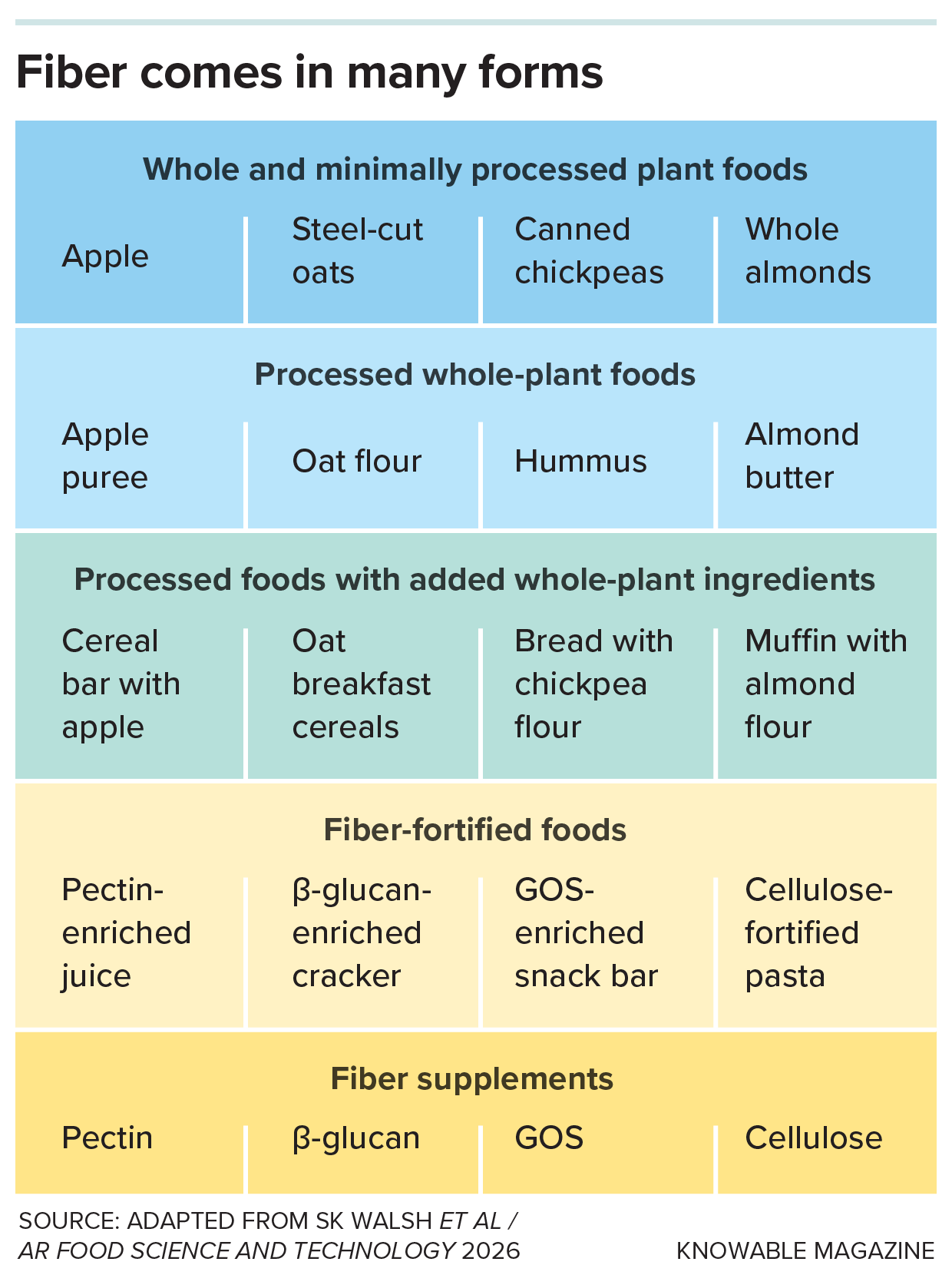
Fiber supplements like cellulose, which contain fiber molecules extracted from plantity, Walter says. When you isolate the cellulose from the full cellular structure of a whole food, such as a piece of apple flesh, you’re detaching it from its original cellular context and interaction with surrounding chemicals, which may reduce the beneficial impact it can have on the gut
Supplements are better than nothing, Walter says, but “the first thing is to think about, How can I do this with whole foods?”
Down the road, researchers hope for more sophisticated and targeted approaches. A large study exploring diet and microbiomes in more than 1,000 U.K. individuals made clear, among other things, how diverse microbial populations are from one person to the next — based more on their habitual diet than on genes. And some of these differences seem to affect people’s responses to meals they were given, for example, changes in blood levels of chemicals linked with inflammation and fats linked to cardiovascular disease.
Perhaps, some scientists think, such personal differences might lead to pairing a person’s individual microbiome with the right type of fiber. Research has found that the production of the short-chain fatty acid butyrate in response to diet varies from person to person, for example
And researchers observed in a 10-week study comparing diets high in fiber or fermented foods that people with diverse microbiomes at the start of the study responded to the high-fiber diet with reduced inflammation. Those with low-diversity microbiomes did not
More recently, Walter coauthored a 2025 study, still unpublished, that found, among other things, that specific fibers had different effects based on a person’s microbiome and its metabolic activity. For example, some people in the six-week trial experienced regulated blood pressure when they ate the fiber acacia gum — but only if the makeup of the microbiome enabled them to digest that specific fiber. Importantly, machine learning models could predict various effects observed in the study
Wide-scale deployment of fiber strategies based on people’s microbiomes will take much more research, however. “This is still, I would say, very far away from reality,” Walter says. “But there is some rationality.”
This storywas produced byKnowable Magazineand reviewed and distributed byStacker
Article Topic Follows:stacker-Nutrition & Diet
Jump to comments ↓
