


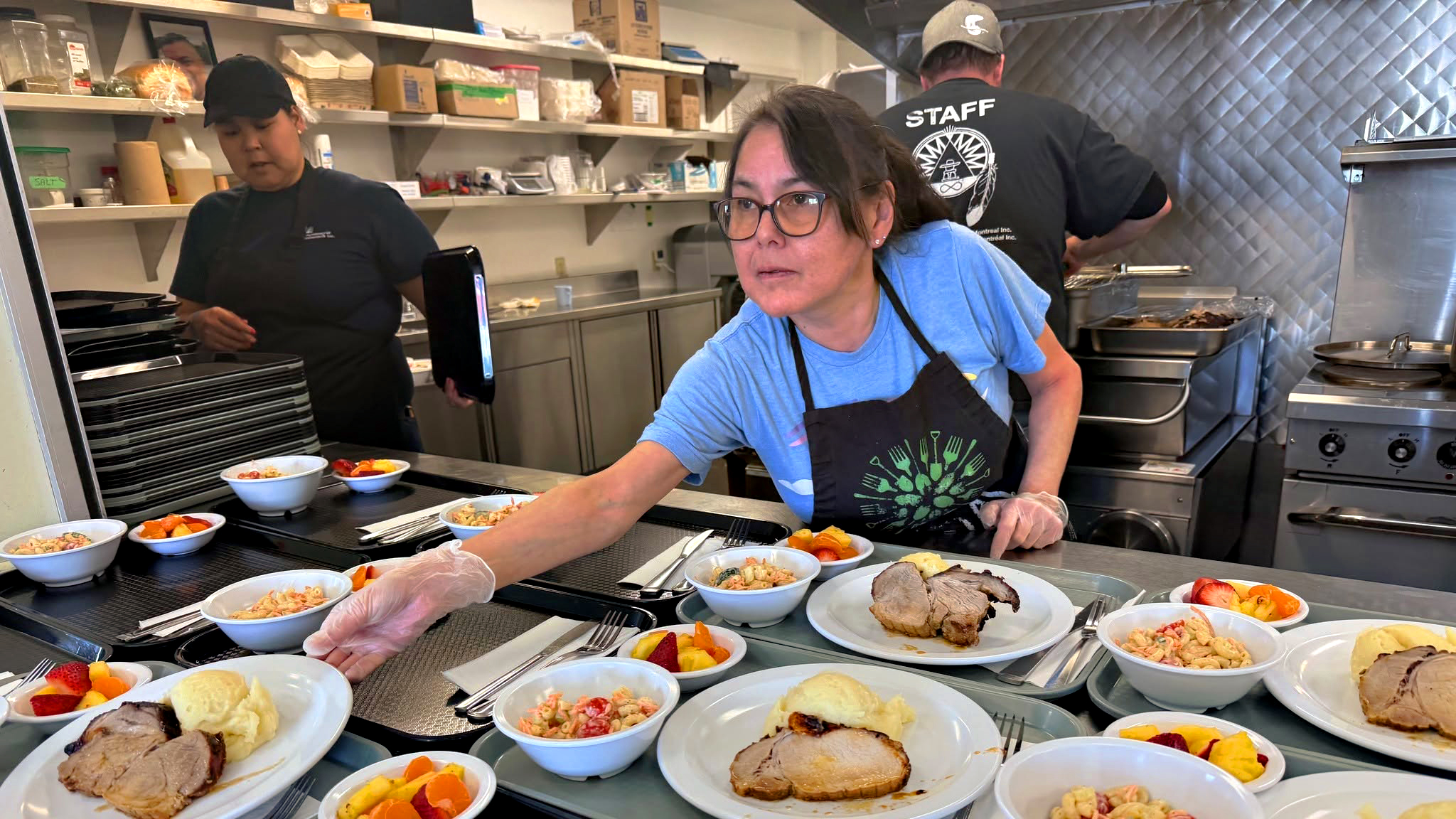
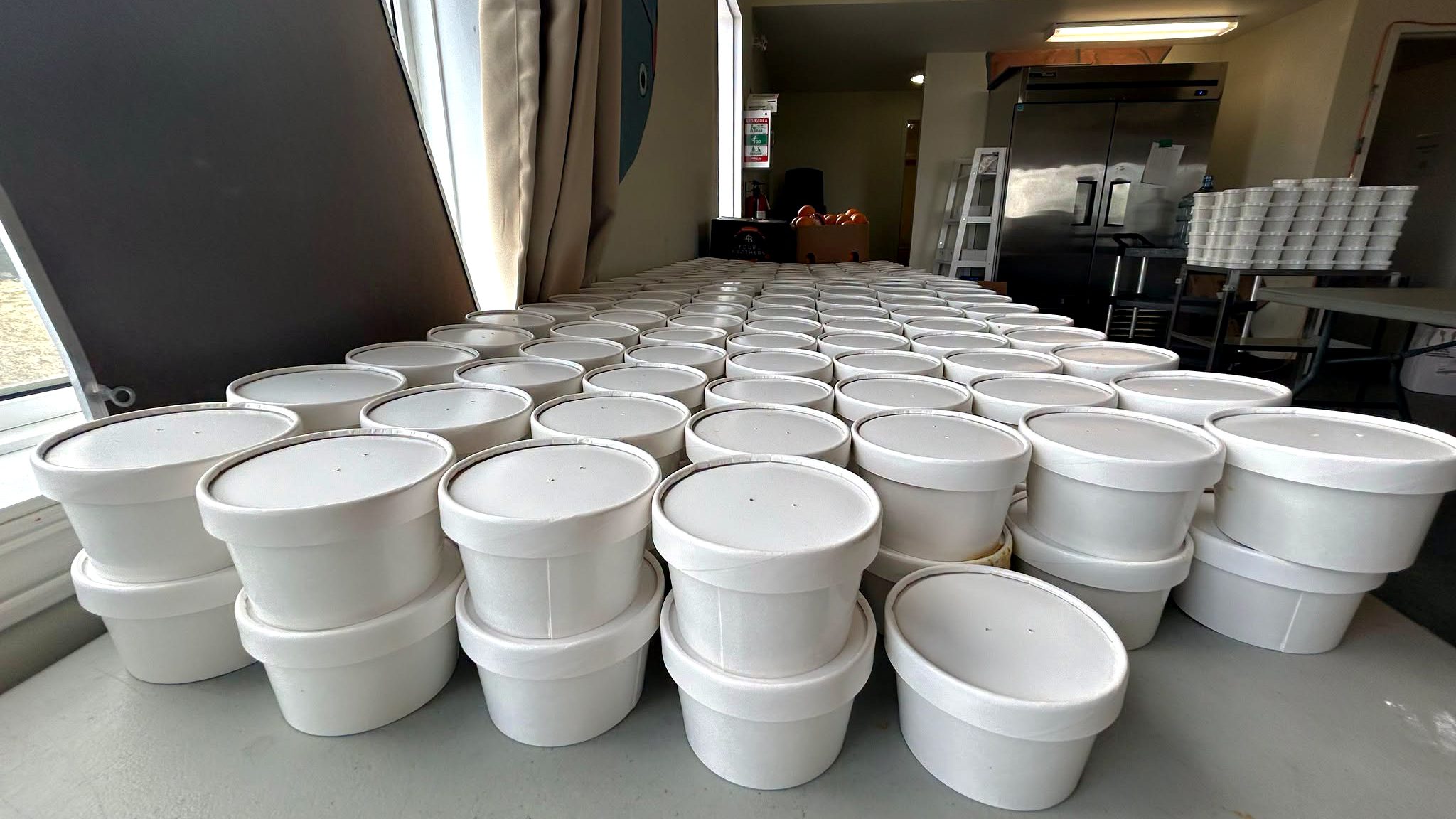
Every weekday in Iqaluit, between 11:30 a.m. and 1 p.m., the Qajuqturvik Community Food Centre (QCFC) offers a food service to hungry people.
The food is served cafeteria-style, with diners encouraged to take what they like and leave what they don’t. The menu rotates constantly based on what foods are available.
A team of chefs prepares different meals daily, aiming to delight diners, who are welcome to stay for seconds if they’re still hungry. Leftovers are put into community fridges from which those who missed the service can come by and bring food home
Victoria Perron, Qajuqturvik’s deputy-executive director, told APTN News that when she readAluki Kotierk’s external report on the Nutrition North Canada program, she saw the reflection of many of her and Qajuqturvik’s values
“The report highlights this disconnect between Indigenous people and the joy of food, and how it’s being taken away,” Perron said. “Food isn’t just nutrition, but it’s also something that we do three times a day. In [Kotierk’s] opening statement, where she’s imagining this moment of [cooking] seal, that was something that resonated. The reconnecting the food with the people and making it a really positive experience.”
Kotierk was named to a four-year term as chair of the Inuit Circumpolar Council on July 25, and is also chair of the United Nations Permanent Forum on Indigenous Issues, as well as the former president of Nunavut Tunngavik Inc
In March, 2025, she was appointed Minister’s Special Representative to report directly to the minister of Crown-Indigenous Relations and Northern Affairs with her opinion of the Nutrition North Program. Her final report was published by the government of Canada on June 26, nearly three months past its due date
Unlike most government reports, it is written in a distinctive first-person tone, beginning with Kotierk’s recollections of the joy of eating during her childhood in Igloolik. She describes the way joyful eating fostered connection and community, along with teaching children traditional practices, such as cooking bearded seal intestines with fat from the animal
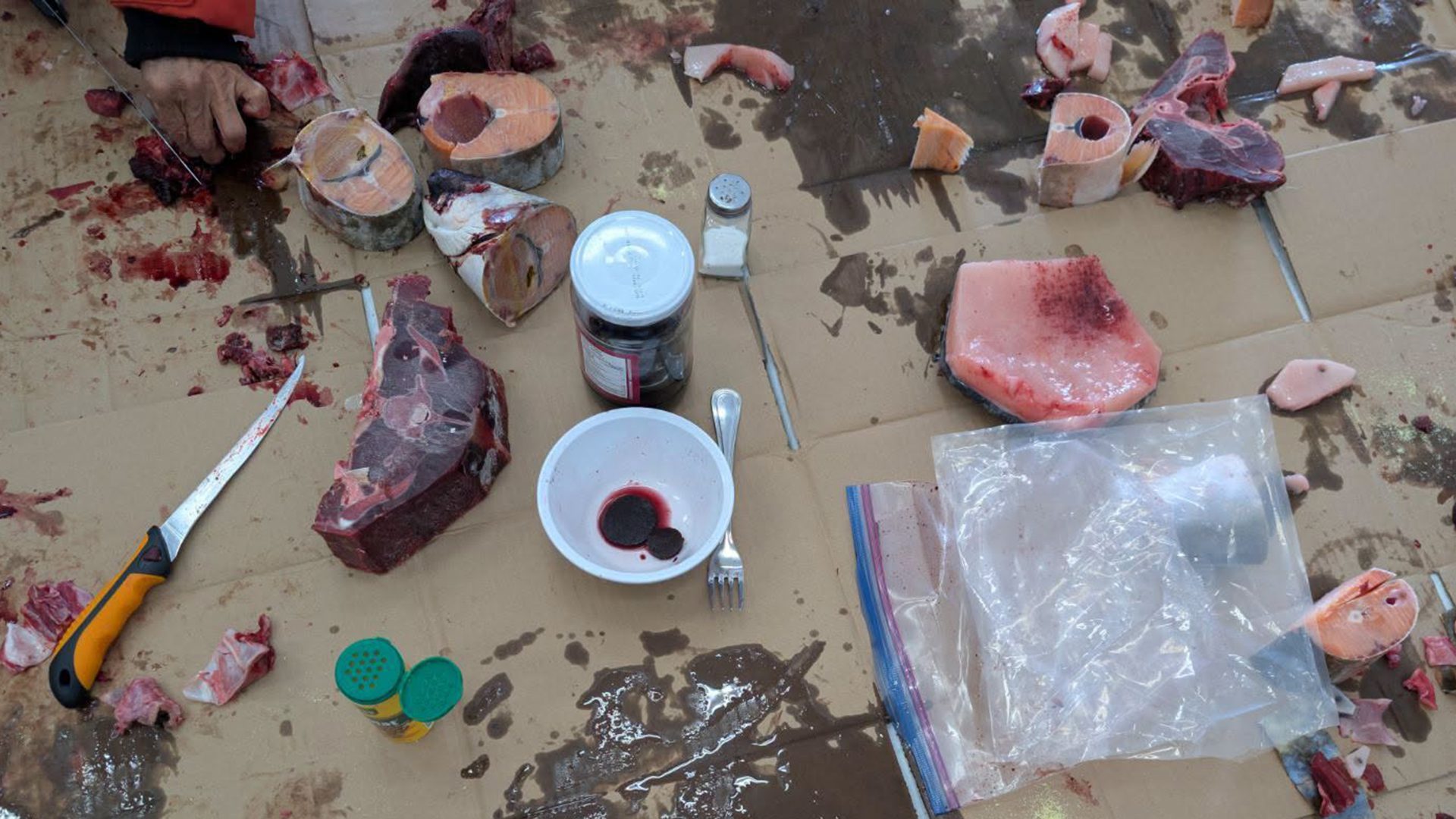
“When I think of the communities across the Arctic, I have a great longing to replicate the joy of food,” Kotierk writes. “I look forward to a day where food is no longer atitude. I look forward to a day in which northerners live with dignity and have the choice to determine their preferred food whether it is country food or market food.”
For Perron, this focus on the joy of food was critical
“We are trying to reconnect to that joy of food. But then the other thing I think that’s really highlighted in this report is that income inequality. The disparity between the cost of living and how much people have.”
Reading the report, Perron said she noted an argument that stuck out for her, which was that the Nutrition North Program alone can’t address Arctic food insecurity, and that in order for food to become secure in the North, there would need to be a comprehensive program to address poverty
“What that program is, I don’t know,” she admitted, “because what I do is, like, we make food. But there is a definite poverty in Nunavut, and there’s food insecurity. And we work to it. So we need to address that.”
Nutrition North Canada (NNC) was introduced by former prime minister Stephen Harper’s Conservative government in 2011, and aims to reduce the cost of food in the circumpolar North by subsidizing retailers so they can lower their prices
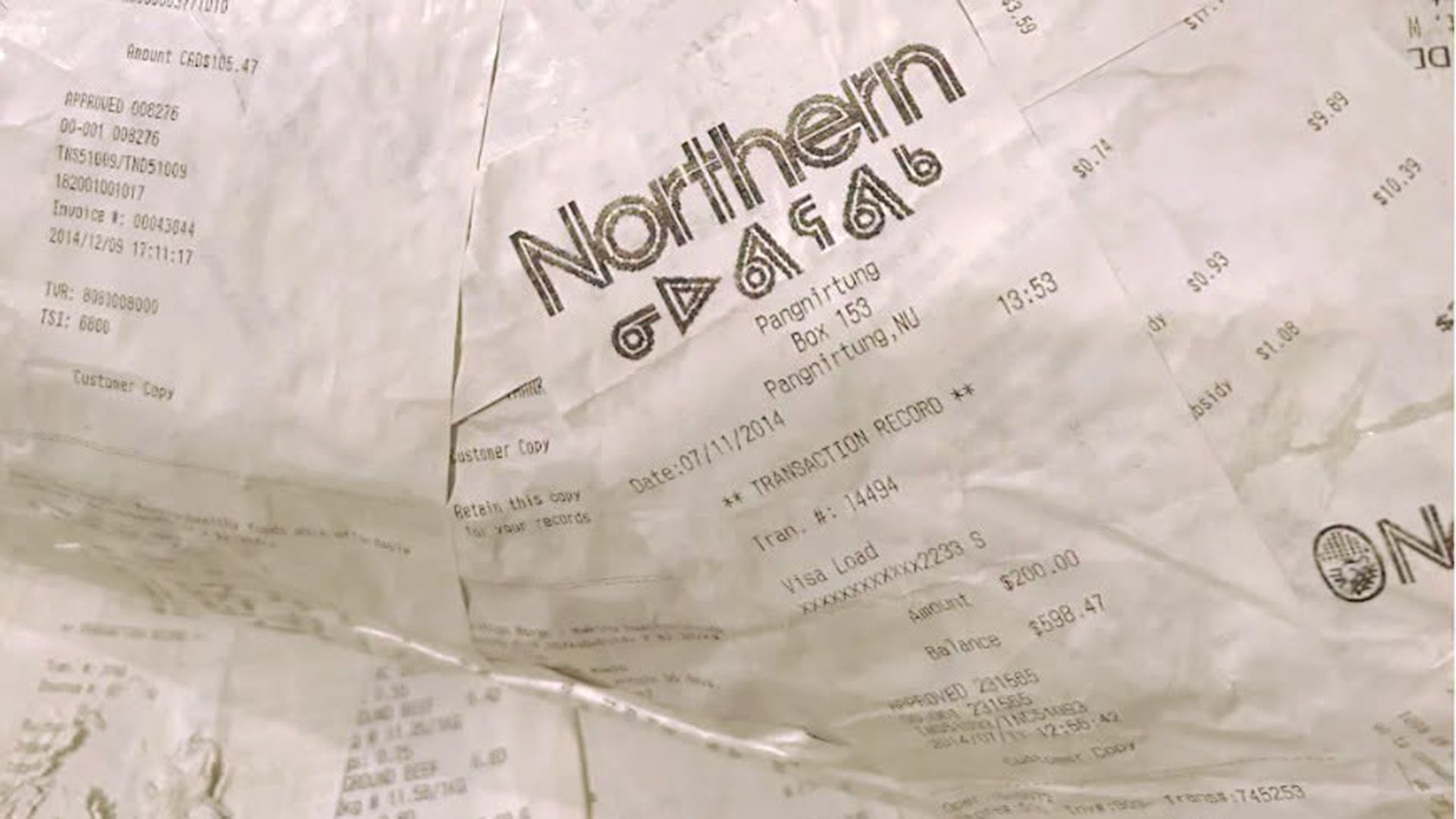
Retailers print the amount of NNC funding on receipts, so northerners buying groceries can see the difference the subsidy makes
Part of the role of Nutrition North, Toronto Metropolitan University economics professor Nicholas Li said, was to be as visible as possible. Li has focused his research on northern retail [including the Nutrition North program] for several years, publishing five papers on the subject
“People didn’t really know, as shoppers, that they’re basically being given some kind of government subsidy to receive this good,” he told APTN. “Government wants recognition for the things they’re doing, so this thing is going to show up every time you get a receipt. But the flip side is now that the government has publicized that it’s subsidizing these foods, now that prices have gone up by 40 per cent in the last two years, [they’re] going to own that too.”
NNC has provoked various controversies for years, and there have been frequent calls to reform it. Kotierk was drafted to meet with Indigenous organizations big and small, stores, freight handlers, government organizations and other experts to determine how effectively the NNC was operating and offer recommendations for change
Kotierk’s calls for change
Though Kotierk did not suggest revamping NNC to give funds directly to consumers, she instead called for the federal government to provide a guaranteed livable income for people in the north.
Kotierk also criticized tiered subsidies and pointed to absurdities such as different subsidy rates for different shapes of pasta, suggesting all food items should be subsidized equally.
Li was one of those Kotierk interviewed, in December of last year, as she assembled data for the report. Overall, he said, he thinks the report did a good job of walking a fine line between setting a positive aspirational vision and laying down concrete suggestions. However, he said he didn’t agree with all of her recommendations.
“That report is sort of saying, ‘We need more of everything,’” Li said. “‘We need more support for harvesters and community freezers and maybe we need a basic income and a freight subsidy delivered through freight carriers, and maybe the retail subsidy also needs to be higher—and it needs to be higher for products that are not currently being subsidized.’”
Ottawa could solve all problems related to hunger in the north, Li said, if it became willing to devote unlimited renot in line with the amount of money the government is willing to spend. Rather, he noted, last year Ottawa cancelled the Hamlet Food Voucher Program under the Inuit Child First Initiative (the Inuit version of Jordan’s Principle), shrinking their economic commitment to hunger in Nunavut by about $90 million.
“I imagine there will be some increase in funding for NNC forthcoming,” he said, “but the idea that there’s this firehose of money that Ottawa’s going to bring on these communities, where we could do all of the above — I wish that were the case, but it’s not.”
He noted Canada has a set amount it adds to pay for federal civil servants working in the north, which essentially means Ottawa has determined what level of income is required to maintain a basic Canadian standard of living in that region.
“Even if they’d maintained this ICFI Hamlet Food Voucher Program,” he said, “which was pretty generous — maybe close to $2,400 per person, so almost $10,000 for a family of four — that’s still not enough. That’s maybe a third or a quarter of the amount that RCMP officers get to go work in one of these communities for a few years — on top of their base salaries — to compensate them for how much more it costs to live up there.
“The political calculus is just never going to be on the side of serious funding for Indigenous communities at the federal level, which I think is a problem.”
Kotierk addressed the Liberal government’s decision to end the Food Voucher Program head-on in her report, writing, “The cruelty of being able to provide food one day and then not being able to provide food the next day leaves a trauma imprint on many children who do not understand why their parents are no longer able to provide food. It also leaves a heavy burden of guilt for the parents who not unlike other parents strive to be good parents.”
The colonial history and the challenge of the present
Li said Kotierk’s report is especially strong in emphasizing issues of choices, dignity and food sovereignty, noting that NNC is “a continuation of a kind of colonial structure that goes back a long time.” Beginning in the 1950s, Li said, the Canadian government gave family allowances to Indigenous people, but the money came with restrictions. People could not buy hunting equipment, for example, and were funnelled toward buying things like canned peas and milk.
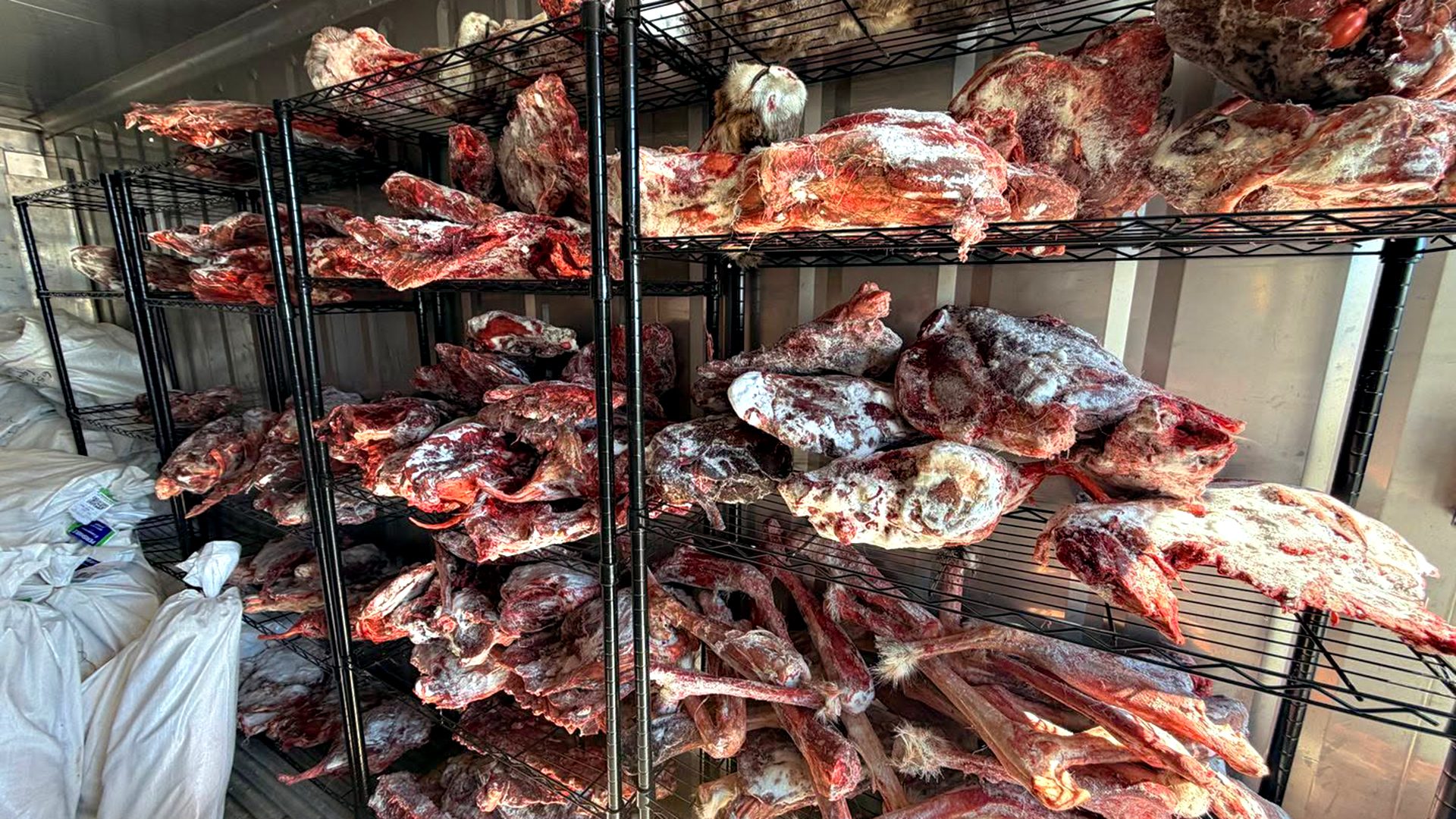
“The history of the government telling Indigenous people what they could eat or not is pretty long,” Li said, “and there’s a whole horrible history of the federal government simultaneously making it harder for Indigenous people to hunt on their historic hunting grounds. Indigenous people for a hundred years or longer have not been allowed to make their own choices and exercise their own sovereignty. Not just as people or nations, but just even as consumers.”
He also noted that the rationales for which foods are subsidized and which are not are often unclear, and differences between subsidies are mysterious
“Where do the differences in the subsidies come from?” he wondered. “They’re not driven by any sort of scholarship that I know. There’s just some bureaucrat sitting somewhere.”
Read more:
With no end to hunger crisis in Nunavut, community orgs work hard to keep residents fed
Inuit-hunger advocates say Ottawa’s grocery rebate falls short
Li doesn’t believe across-the-board subsidies are a good thing. He said, for example, that most communities would reject subsidies for alcoholic beverages, the same way consumers in the south accept heavy taxes on cigarettes, since most see cigarettes and alcohol as having a net-negative effect on both health and communities
“There’s no getting around paternalism when it comes to food and what you put in your body,” Li said. “The government has an interest in it and has forever made decisions that impact the relative prices of the things that we put in our body through taxes of various kinds. Nutrition North is a subsidy, not a tax, but it does seem like there would be clear pushback from many sectors to have a blanket freight subsidy that would also include junk food.”
Li said Kotierk was right to criticize different subsidy tiers with no clear explanation for their divisions, and the complex and nonsensical program rules
“I generally agree that some combination of both income support combined with some kind of subsidies is probably the way to go. My research suggests trade-offs and consumption-based subsidies tend to benefit people who have money to consume, so there’s always some limitations on that, even if we increase the subsidy a little bit on products that lower-income people are more likely to eat.”
Li’s own wish-list for improving NNC begins with transparency, particularly when it comes to data about prices and food security in general
“You have retailers and freight carriers who are sitting on this data but don’t want to reveal it all because they fear they’ll come in for criticism. If we could just be totally clear about what’s on the books here we could, at least, have this discussion in a more open way where people had information.”
A consumer sees a price in a store, he said, and currently has no idea which factors — freight, retailer margin, wholesale cost — determine the final price. That doesn’t mean one couldn’t be able to access that data
“That requires work, but in some sense, it shouldn’t be that hard,” Li said. “I think the most useful thing you could do in the short term, which would get to these issues of accountability and trust, would just be to put a bit more into collection and disclosure of price data and freight costs.”
Human first
An aspect of Kotierk’s report that resonated with Perron was its focus on the connection between food and human dignity, which Perron said spoke to the need for human-first approaches to policies involving the arctic
“All government, public policies and programs and initiatives should consider how they are impacting food security or insecurity,” she explained, “and would have that in the forefront of the minds of the policymakers when they’re putting together programs such as Nutrition North.”
Though they have anodyne government names, policies like Nutrition North are about living, breathing human beings, Perron stressed
“We’re not policymakers and we don’t build these programs, we just experience them,” she said. “We’re addressing the income inequality, not through any policies, because we don’t make policies, but we make food. We’re trying to feed people a really good-quality meal, so that they know that even though maybe there’s food insecurity in the north, there is no food insecurity in Iqaluit from 11:30 to 1pm, Monday through Friday.”
Perron said Nutrition North and similar programs need to be designed to address food insecurity at various levels, including government and legislative, in order to create stable, long-term outcomes
“We do what we can on the ground level, we strive to be consistent and stable, but changes are always reflected down,” she said. “So from government policy, we get an echo. We want any programs like Nutrition North to really think about how they’re going to affect income disparities and how they’re going to address the causes of poverty and food insecurity. And then that echo can come down to us.”
Northern Affairs Minister Rebecca Chartrand toldNunatsiaq Newson July 29 that the federal government will begin announcing changes to Nutrition North sometime this fall, and will aim to reinforce a northern food economy.
She has previously said that Kotierk’s external review will be one of a number of reports that Ottawa will consider as the federal government decides on how to overhaul the system
Tags: aluki kotierk, Hamlet Food Voucher Program, Hunger, ICFI, Inuit, Iqaluit, Nicholas Li, Nutrition North, Ottawa, Qajuqturvik Community Food Centre.
4 hours ago
By Charlotte Morritt-Jacobs
24 hours ago
By APTN National News

24 hours ago
By Jesse Staniforth

24 hours ago
By Mark Blackburn

1 day ago
By Leanne Sanders
1 day ago
By Local Journalism Initiative
