



Blog Article
Kindness Ripple
In response to the growing global youth mental health crisis, students in the Spring 2026 Junior Academy Innovation Challenge developed Kindness Ripple, an app that uses anonymous messages of encouragement to reduce isolation and inspire a ripple effect of kindness and connection
By Nicole Pope

Winner of the Junior Academy Challenge – Spring 2026
“Marine Biodiversity”
Sponsored by Stevens Initiative
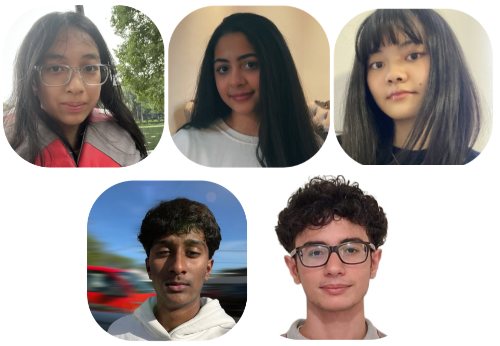
Team Members: Charish (Cherry) C. (Team Lead) (New Jersey, United States), Sarara S. (New York, United States), Biying L. (New York, United States), Taleen F. (Jordan), Rayan Z. (Lebanon)
Mentor: Daniel Lindegger (Switzerland)
The growing prevalence of mental health issues, particularly among young people, is making headlines around the world. One in seven adolescents aged between 10 and 19 years old now experience mental health conditions such as depression and anxiety, which can have a lasting impact and affect their future unless they are properly addressed. Teams participating in this Spring 2026 Junior Academy Innovation Challenge were asked to come up with an innovative approach to tackle this global problem
Some members of the winning team, who devised an online community platform available on cellphones called, Kindness Ripple, were already aware of the widespread problem. “I had friends and family members struggling with mental health for reasons ranging from health to relationship losses,” says Team Lead Charish C. “Seeing these close to me, the topic felt really connected.” Others were taken aback by the magnitude and severity of the global mental health crisis. “To be honest, I used to think that some of the mental health struggles talked about on social media might be a bit exaggerated,” says team member Rayan Z. “But after diving deeper and hearing other points of view, I realized that these issues were really serious. It was an eye-opener for me.”
The winning students, from the United States, Lebanon and Jordan, felt moved to confront the isolation and anxiety that many of their peers face. In the US, according to the Center for Disease Control and Prevention (CDC), nearly 44% of students report persistent feelings of sadness or hopelessness. “I learned that about one fifth of kids globally suffer from mental health disorders, which surprised me a lot,” explains team member Biying L. “I think this is because many places are under-resourced and don’t have access to treatment.”
Before selecting and combining the various elements of their solution, the students contacted numerous teenagers to get their perspectives. They wanted to include youth voices in their design process to ensure that the solution they were producing would meet these young people’s needs. They worked hard to incorporate these perspectives as well as the different approaches suggested by the team members. Overall, awareness of mental health issues has increased, but the students found that many teens still feel deeply uncomfortable with formal therapy systems. In many places, mental health services are also underfunded and access to support remains limited.
As they researched the topic further, the students learned that, as a result, approximately a third of teens turn to online resources for help with their mental health, but they tend to stop using these after a short period. Digging into the reasons for this lack of long-term engagement, the team concluded that existing online tools tended to be designed for adults, rather than teens. They also focus on journaling or mood tracking, and require a level of motivation that young people cannot muster when they’re struggling.
Building an online application, aimed specifically at adolescents and providing a sense of community appeared a good solution since most teens tend to spend time on their smartphone. However, the team wanted to design a platform that fostered kindness and connection. “We had some different perspectives for his project, but we were able to sort it out through talking,” says team member Sarara S. “We combined and rejected ideas as a team, ultimately allowing us to come up with a very good idea.” In the end, their teamwork produced Kindness Ripple, an app that provides support to those in need, and motivates users to create a ripple effect by passing on acts of kindness to others along the chain.
Through Kindness Ripple, users can send anonymous letters of support to break down the walls of isolation. The team felt that anonymity was crucial, as many adolescents who experience mental difficulties feel socially vulnerable. All messages are moderated by the board and AI to ensure a safe, protected environment. The students created the features in their online resource in response to studies showing that performing acts of kindness produces measurable increases in well-being; building social connection and strong peer relationships are among the most powerful coping strategies against adolescent anxiety and depression; and behavioral science shows that gamification can significantly boost engagement and foster habits. To promote engagement with Kindness Rippleover long periods, the team turned participation into a game. Users get points for sending letters and for acts of kindness, which they can then use to hatch, feed, and customize a Virtual Pet. In a test conducted with 22 young people, 86% expressed a strong interest in the pet feature.
The team hopes that their winning project will help teens struggling with mental health issues feel less alone. “My mindset has shifted from seeing mental health as a purely clinical issue to a community-based one,” concludes team member Taleen F. “For example, learning that school connectedness and peer support are major protective factors made me realize our app shouldn’t just be a solo tool, but a way to foster connection.”
Author

Contributing Author
