


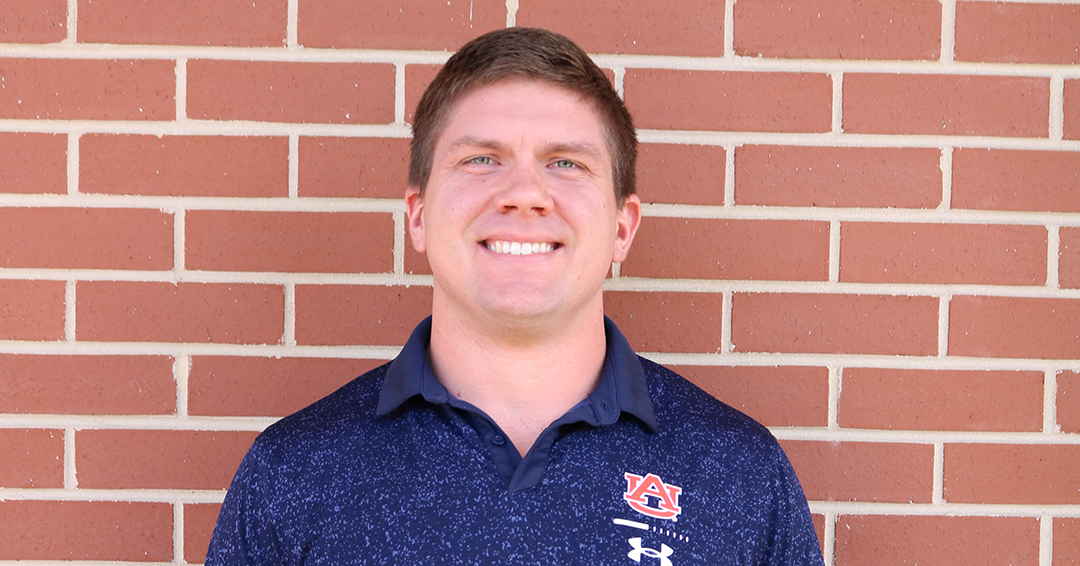
Kinesiology doctoral student reflects on National Institutes of Health training fellowship
Skip to Resources NavigationSkip to Primary NavigationSkip to Main Content
AuburnUniversity
Apply
Visit
Giveto AUWire
AU Access
Toggle search and resources panel
Kinesiology doctoral student reflects on National Institutes of Health training fellowship
Miranda Nobles | School of Kinesiology
July 28, 2026
A

Auburn Today
Font Size
content body
Kenny Harrison, a doctoral student in the College of Education’s School of Kinesiology at Auburn University, is wrapping up a two-year immersive research training fellowship that connected him with researchers and faculty who prepared him for a career in academia by exposing him to new perspectives in translational science and clinical public health research
The Predoctoral Clinical/Translational Research (T32) Program, administered through the University of Alabama at Birmingham’s Center for Clinical and Translational Science, is a National Institutes of Health (NIH) mentored, immersive research experience that provides trainees protected time to develop projects focused on reducing diseases that disproportionately affect the Deep South
Harrison’s T32 project focused on how neighborhood disadvantage affects mobility in older adults
“We found that people living in more socioeconomically disadvantaged communities had significantly worse sit to stand performance, an important measure of lower body strength and fall risk,” Harrison said. “The findings highlight that healthy aging is shaped not only by individual health, but also by the communities where people live. I hope this work helps inform more equitable approaches to screening and preventing mobility decline in older adults.”
Harrison said that while the study didn’t isolate a single cause as to why those in disadvantaged communities had worse performance on the test, the potential mechanisms responsible were a mix of neighborhood factors that tend to wear lower body strength over time. These include fewer safe places to walk or exercise, less access to nutritious food, higher chronic stress, and harder access to care for conditions like arthritis or diabetes
“In other words, it’s less about one missing service and more about an environment that makes it harder to build and keep the leg strength that healthy mobility depends on,” he explained
Harrison completed his fellowship while conducting research in the Locomotor and Movement Control Lab, directed by Associate Professor Jaimie Roper
“NIH is the gold standard for biomedical and health research funding in the United States,” Roper said. “The NIH T32 is one of the most competitive training fellowships in the country, and winning it as a predoctoral student, like Kenny did, is genuinely prestigious. Completing one is a marker that the training worked, and Kenny produced at every level along the way.”
Over the course of his doctoral training, Harrison conducted mobility assessments for more than 300 community members at health fairs across Alabama, many from medically underserved communities with limited access to healthcare. Additionally, since winning the T32, he has authored or co-authored 15 peer-reviewed publications (five as first author) and has presented at an average of three conferences per year throughout his PhD
“The T32 expanded my academic experience beyond my dissertation research,” Harrison said. “It was almost like doing a post-doc concurrent to my PhD program. It connected me with trainees and faculty from a variety of disciplines, creating opportunities for collaboration and professional development that I would not have otherwise experienced. The program helped me think about aging research from multiple perspectives and strengthened my ability to communicate and work across disciplines.”
He said those experiences have been incredibly valuable as he transitions into his next role: a tenure-track assistant professor position in the Department of Kinesiology at California State University, East Bay. In that role, he will teach courses in biomechanics and functional anatomy while developing his own research program. He plans to continue studying mobility and healthy aging, with a particular interest in understanding factors that contribute to functional decline and fall risk in older adults.
“My goal is to conduct research that can improve quality of life and help all people maintain independence as they age,” Harrison said. “Being selected for the T32 was one of the highlights of my doctoral training. Beyond the honor of being chosen for such a competitive program, it gave me opportunities to collaborate with researchers from different disciplines, receive mentorship from outstanding faculty and broaden the scope of my research. The experience helped prepare me for a career in academia by exposing me to new perspectives in translational science and clinical public health research.”
More information on the T32 training program is available on UAB’s Center for Clinical and Translational Science website
