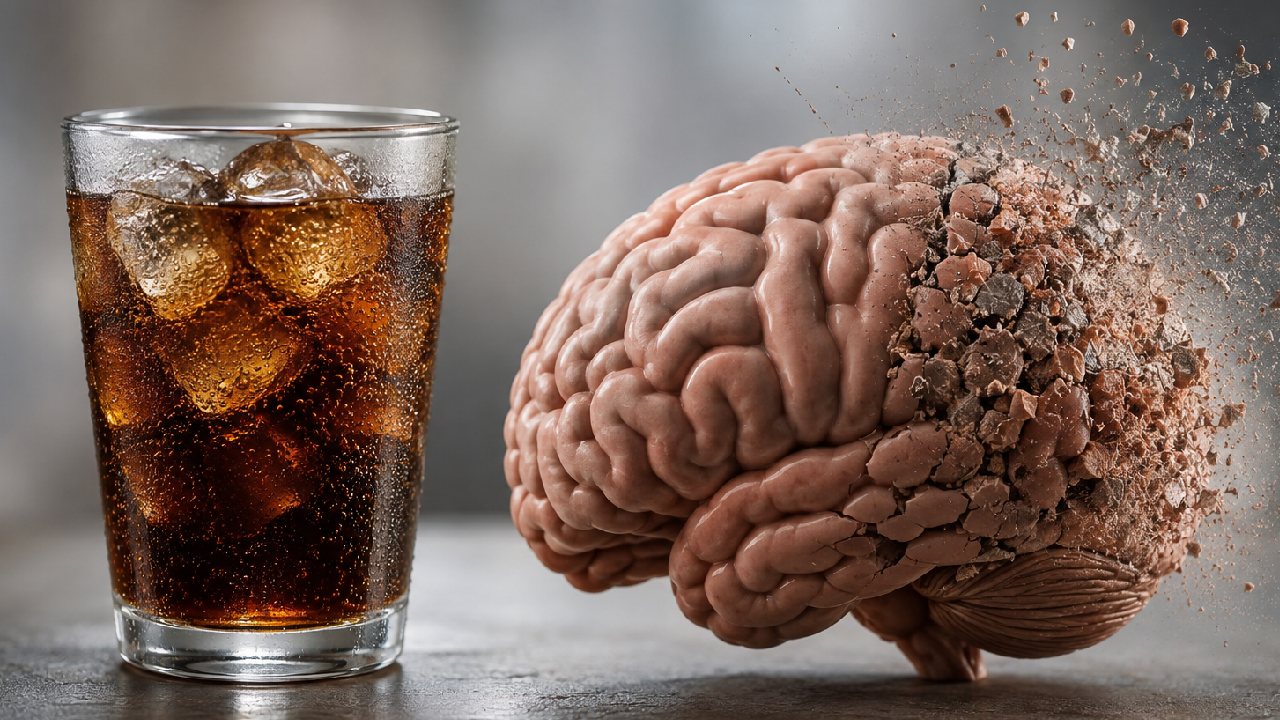
For years, diet sodas have enjoyed a pretty good reputation. They offered the sweetness without the sugar, the fizz without the guilt, and for many people, they became an easy replacement for regular soft drinks. It is not hard to see why. Whether it is an afternoon craving, something to sip with lunch, or a way to satisfy a craving without reaching for sugar, diet drinks have quietly become part of many people’s daily routine. However, a major new study is making people look at those drinks a little differently. Researchers have found that people who regularly consumed higher amounts of artificial sweeteners showed faster declines in memory and thinking skills over time. It does not mean your occasional Diet Coke is suddenly a problem. But if you cannot remember the last day you went without one, the findings are definitely worth knowing.What Researchers FoundThe study followed 12,772 adults in Brazil over eight years, with the average age of participants being 52. It is the largest and longest study so far looking at how artificial sweeteners may be linked to brain health. Researchers examined seven commonly used low- and no-calorie sweeteners found in ultra-processed products like sodas, flavoured water, sugar-free yoghurt and low-calorie desserts. These included:AspartameSaccharinAcesulfame-KErythritolXylitolSorbitolTagatoseThroughout the study, participants completed tests that measured memory, verbal fluency, and processing speed. After taking other health factors into account, researchers noticed a clear pattern. People who consumed the highest amounts of artificial sweeteners experienced cognitive decline 62% faster than those who consumed the least. According to the researchers, that difference was roughly equal to 1.6 years of additional brain ageing.Even people in the middle consumption group showed a 35% faster decline, equivalent to about 1.3 years of brain ageing. Out of the seven sweeteners studied, six showed an association with faster cognitive decline. The only one that did not was the Tagatose.The Results Were Strongest In Younger AdultsOne finding stood out more than the rest. Most people tend to think of memory problems as something that only becomes a concern later in life. This study suggested that may not be the full picture. The link between artificial sweeteners and cognitive decline was strongest in adults under the age of 60. Researchers believe this could mean that the habits people build during midlife play a much bigger role in long-term brain health. The association was also stronger among people with diabetes, who are often more likely to choose artificially sweetened foods and drinks instead of sugary ones. Among all the areas tested, memory appeared to take the biggest hit.Before You Throw Away Your Diet Coke, Read ThisThis is where the conversation becomes important. “Our findings do not suggest that drinking an occasional diet soda is harmful,” Claudia Kimie Suemoto of the University of São Paulo said. “Rather, they raise questions about the potential consequences of frequent, long-term consumption of artificial sweeteners.”The study was observational, which means it identified the link, but it cannot say for sure that the sweeteners themselves caused the decline. That is a big difference. Lead researcher Claudia Kimie Suemoto from the University of São Paulo said: “Based on our study alone, I would not tell someone to stop drinking diet soda because of concerns about cognitive impairment”. The findings also support earlier research. A 2017 study from the Framingham Heart Study reported a similar association between artificially sweetened beverages and a higher risk of stroke and dementia. Scientists say the evidence is growing, but there is still more to understand before firm conclusions can be made.Read Also: UK Woman Dies After Sudden Abdominal Pain Following Increase In Her Mounjaro DoseSo What Should You Do?The answer is probably not to swear off diet soda forever. Instead, experts suggest taking a closer look at how often you are reaching for it. If one can has quietly turned into several every day, it may be worth cutting back little by little. Whenever you want a Diet Coke, go for plain water, sparkling water, unsweetened tea, or black coffee. This can help reduce your overall intake without making the change feel overwhelming. The goal is not perfection; it is balance.There is no reason to panic over a single can. But if sugar-free drinks have become something you rely on every day without really thinking about it, this study is a good reminder that even habits that seem harmless deserve an occasional second look. Sometimes the healthiest changes start with asking a simple question: “Do I really need another one?”
Trending
- Italian Study Says Espresso and Moka Pot May Reduce This Liver Disease
- Beyond the scale: where you carry your fat matters
- Study finds three midlife health factors that could delay dementia for 13 years
- Thinking about becoming a personal trainer? Here’s where to start
- Medicare expands GLP-1 weight loss drug coverage, Grand Strand clinics see patient surge
- Martha Stewart speaks out on Duchess Meghan’s lifestyle business
- Galibra Neuroscience Receives FDA Orphan Drug and Rare Pediatric Disease Designations for SSADH Deficiency Gene Therapy
- Team’s AI agent to speed Alzheimer’s treatment
Thursday, August 6
Love Diet Coke? A Major New Study Has Some Concerning News For Your Brain
 By healthylife7