


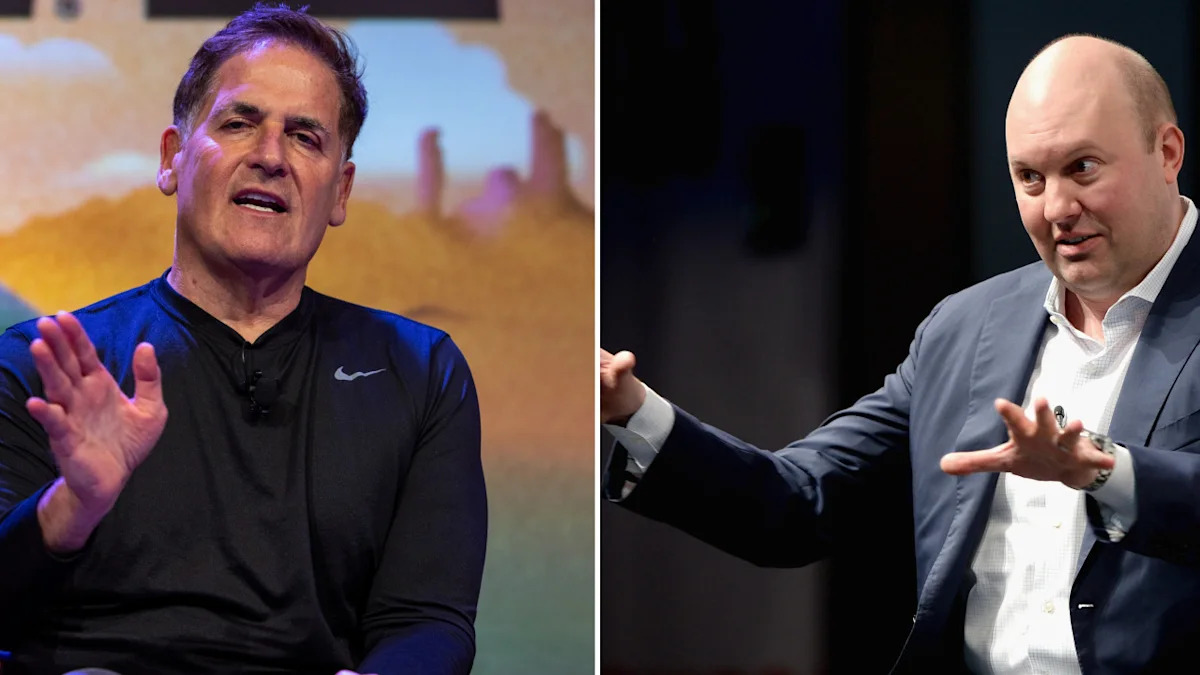
Mark Cuban warns AI healthcare will just help insurers ‘delay and deny’ — firing back at Andreessen’s AI doctor claim
Godwin Oluponmile
Sat, 18 July 2026 at 6:00 pm GMT+5:30
7 min read
Mark Cuban read a post on X claiming artificial intelligence had already become a better doctor than almost every physician in the country
He replied to the X post with a flat rejection: “It’s not”
Must Read
Jeff Bezos backs a platform that lets anyone invest in rental homes for as little as $100 — 6 ways to build wealth like a landlord without actually being one
Dave Ramsey warns nearly 50% of Americans are making 1 big Social Security mistake — here’s what it is and 3 simple steps to fix it ASAP
Millionaires under 43 hold only 25% of their wealth in stocks. Here’s where their money is actually going
Then he went straight for the businesses sitting between patients and their doctors, which, he warned, are building AI agents designed to “delay and deny (1).”
On July 12, Marc Andreessen, a venture capitalist, was celebrating an AI model that scored better than real doctors on a blind test, with a post quoting Sam Altman’s similar assertion
Cuban’s rejection wasn’t against the score itself, but was aimed at what the two were celebrating, because of what happens after a good diagnosis reaches an insurance company, where the same industry is already using AI to slow claims down rather than pay them out
“25 pct or more of a doctor’s time is spent dealing with conglomerates that do all they can to make the doctor’s care more difficult and expensive, for both the doctor and patient,” Cuban replied in a quote on (1)X (1)
What sparked the public disagreement
On July 10, Karan Singhal, who leads OpenAI’s health research team, (2)posted results from the company’s newest model family, GPT-5.6. In blinded reviews, physicians rated GPT-5.6’s answers to a set of patient-facing and clinician-facing health tasks
And these were cases picked specifically because they had stumped earlier OpenAI models. The AI came out ahead by a wide margin: Physicians rated its answers as flawless between 19.8% and 23.9% of the time, depending on the variant, compared with just 10.4% for the physician-written responses (2)
OpenAI CEO Sam Altman (3)reposted (3) the findings on July 11. Andreessen (4)amplified it (4) the day after with a one-line verdict: “AI is already a better doctor than 99.99% of human doctors.”
This led Cuban to reply with skepticism the same day. His perspective reflects a massive gap between tech industry hype and actual patient reality. A West Health-Gallup Center on Healthcare in America survey (5)released April 15 found that one in four U.S. adults has turned to AI at some point with a health question (5)
