


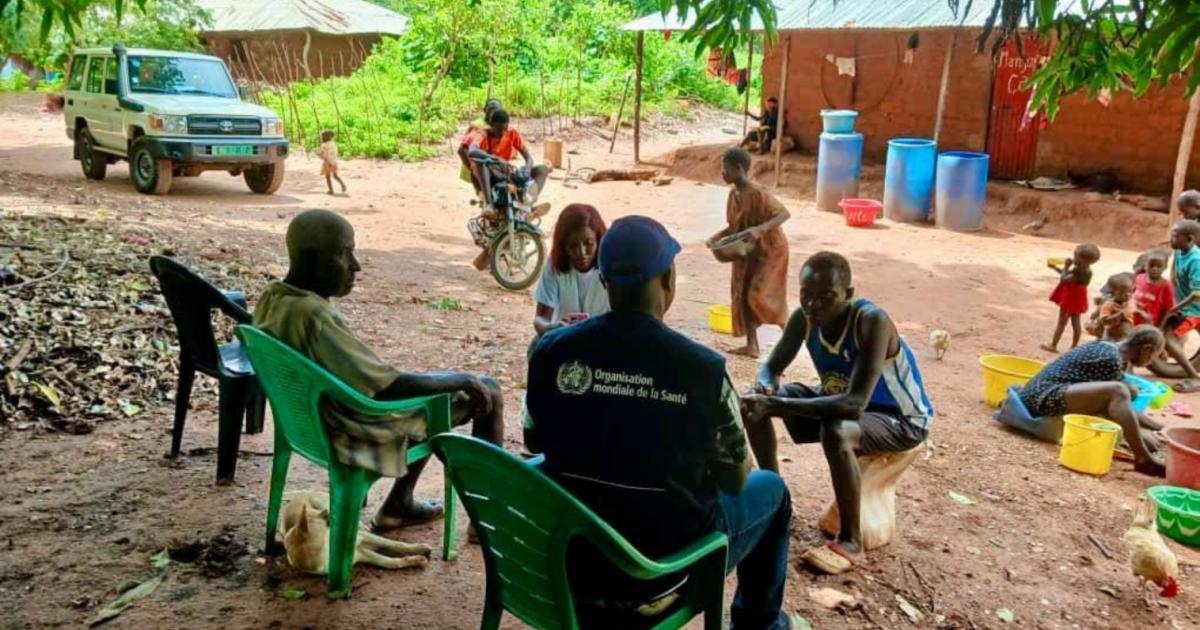
Bissau—Two months after the first case was confirmed, the country has recorded 10 confirmed cases and no deaths. Health teams are intensifying active case finding and contact monitoring, with technical support from the World Health Organization
The first mpox case in Guinea-Bissau was notified on 26 June 2026. The diagnosis was confirmed by the national public health laboratory and a private university laboratory, and the result was corroborated by a regional reference laboratory
As of 23 August 2026, at the end of epidemiological week 34, the country had recorded 58 suspected cases, 10 of which tested positive, with no deaths. Three new cases were confirmed during that week. The epidemic curve shows a fluctuating pattern, with a peak of 11 suspected cases in epidemiological week 29 followed by a decline in recent weeks
However, this decline should not be interpreted in isolation as evidence that transmission has stopped. It may reflect gaps in community-based surveillance or contact tracing, while the most recently confirmed cases, with symptom onset during the second half of August, indicate that the virus continues to circulate
Bissau accounts for most cases
The geographical distribution remains highly concentrated: the Autonomous Sector of Bissau accounts for approximately 90% of confirmed cases, followed by the Biombo health region, with one case. Suspected cases have also been notified in Oio, Gabú, Tombali, Cacheu and Bijagós, with no evidence to date of sustained community transmission beyond Bissau
All confirmed cases have occurred among adults, with the highest concentration in the 30–34 age group. Six cases (60%) are male and four (40%) are female — a profile that reinforces the need for comprehensive surveillance attentive to different forms and contexts of exposure
Children were also notified among the suspected cases, particularly during the first weeks of the outbreak, but all had negative laboratory results. This pattern should be interpreted in light of the high sensitivity of the suspected case definition, which covers a broad spectrum of skin manifestations that are common during childhood, supporting early investigation and reducing the risk of undetected cases
What the genetic analysis shows
Genomic sequencing results indicate that all samples analysed belong to clade IIb and are genetically related to viruses circulating in Sierra Leone, Guinea and Nigeria. These findings reinforce the importance of surveillance at points of entry, information-sharing and cross-border coordination
The absence of deaths is a favourable indicator but should be interpreted with caution: the severity of mpox varies according to immune status, the presence of other health conditions, age and timely access to health care
The ongoing response
The outbreak response is conducted through the Incident Management System, which brings together national health authorities, WHO, other United Nations agencies and development partners for weekly coordination meetings and the harmonisation of epidemiological data
The work is organised around several pillars. Surveillance activities include the notification and investigation of suspected cases, contact monitoring and the response to alerts. Laboratory activities include sample collection, transportation and processing, molecular diagnosis by PCR and genomic sequencing conducted in the country. Case management comprises isolation, clinical follow-up and supportive treatment. Additional pillars include infection prevention and control in health facilities, risk communication and community mobilisation, and surveillance at points of entry, with information shared with neighbouring countries.
WHO provides technical support across all these pillars, has monitored the outbreak since the first case was confirmed and participates in coordinating the response. This support covers all areas of work: guidance to surveillance teams on case investigation and contact monitoring; support for laboratory diagnostic and sequencing capacity; guidance to clinical teams on isolation, follow-up and infection prevention and control measures; and risk communication and community engagement work with affected populations.
The Organization participates in data consolidation and leads the weekly analysis of epidemiological data, contributing to the interpretation of the epidemic curve, the early identification of changes in transmission patterns and the definition of response measures. Together with national health authorities, WHO also conducts the technical analysis of vaccine availability and the criteria for the possible preventive vaccination of priority and higher-risk groups. This analytical work informs, among other products, the preparation of the weekly situation report.
Performance indicators show solid results during the initial stage of the response: 98% of suspected cases were investigated within 48 hours, exceeding the 90% target, and 87% of laboratory results were made available within 72 hours
Under WHO’s emergency management system, mpox is classified as a protracted Grade 2 event. This is an operational classification used to guide the mobilisation and coordination of the response; it is not a measure of the clinical severity of the disease
Challenges: contact monitoring and active case finding
Of the 214 contacts identified since the beginning of the outbreak, 127 (59.3%) have completed the monitoring period and 87 remain under active monitoring. No contact has developed into a confirmed case. However, completion of contact monitoring remains below the 100% target and is currently the main critical point in the response
In addition, the confirmed cases do not have clear epidemiological links with one another. This pattern suggests the possibility of undetected chains of transmission in the community and reinforces the need to intensify — rather than reduce — active case finding, contact tracing and community-based surveillance
How people can protect themselves
Mpox is transmitted mainly through close contact with a person who is infected: skin-to-skin contact, particularly with lesions; prolonged face-to-face contact; mouth-to-skin contact; and sexual contact. The virus may also remain for some time on clothing, towels, bedding and objects used by someone who is ill
Recommended protective measures include:
- avoiding close contact, particularly skin-to-skin contact, with people who have sores or skin rashes;
- not sharing clothing, towels, bedding or personal items with people who are ill;
- washing hands frequently with soap and water;
- seeking care at a health facility in the event of fever, body aches, swollen lymph nodes or skin lesions, while avoiding close contact with others until assessment;
- avoiding unprotected contact with sick or dead wild animals and thoroughly cooking foods of animal origin.
The most common symptoms include skin rashes resembling blisters or sores, which may last for two to four weeks and may be accompanied or preceded by fever, headache, muscle aches, back pain, tiredness and swollen lymph nodes. Most people recover within a few weeks with supportive care
Infants, children, pregnant women and people with weakened immune systems are at greater risk of developing severe disease
Stigma is an obstacle to the response
Stigma and discrimination associated with mpox are unacceptable and directly undermine outbreak control. When people fear being judged, excluded from work or exposed within their communities, they may delay seeking care, fail to report symptoms and allow chains of transmission to remain invisible
Surveillance and community participation
In the coming weeks, the response will continue to prioritise strengthened active surveillance, completion of contact monitoring and investigation of cases without known epidemiological links. None of these areas can succeed without communities: transmission chains that have not yet been identified become visible only when people recognise the signs, seek care promptly and are welcomed when they do so
