


July 16, 2026
ByMaureen Salamon,
Executive Editor, Harvard Women’s Health Watch
- Reviewed byRobert H. Shmerling, MD,
Senior Faculty Editor, Harvard Health Publishing; Editorial Advisory Board Member, Harvard Health Publishing
Share
Print This Page
We’ve long known that aerobic exercise might help us live longer, and now strength training is being credited with the same effect. People who do up to two hours of strength training each week, over several decades, may reduce their risk of dying earlier from several serious conditions, including heart disease and neurological diseases, according to a Harvard-led study published June 12, 2026, in the British Journal of Sports Medicine
Researchers analyzed three major studies involving 147,374 adults (79% women) who were middle-aged or older at the study’s start and tracked for up to 30 years. Participants reported how frequently and vigorously they exercised, including resistance training (which can include weight lifting and body-weight movements) and aerobic activity (such as brisk walking, cycling, and running). Deaths from all causes were also recorded
Participants who logged between 90 and 119 minutes of resistance training each week were 13% less likely to die during the study period from any cause compared with those who did no strength training. They also had a 19% lower risk of dying from cardiovascular disease and a 27% lower risk of dying from neurological diseases such as dementia. Aerobic exercise remained a strong, independent predictor of living longer, but the greatest benefit was observed when resistance training was combined with it. Participants who regularly did both had up to a 45% lower risk of dying during the study period than those who did little aerobic activity and no resistance training.
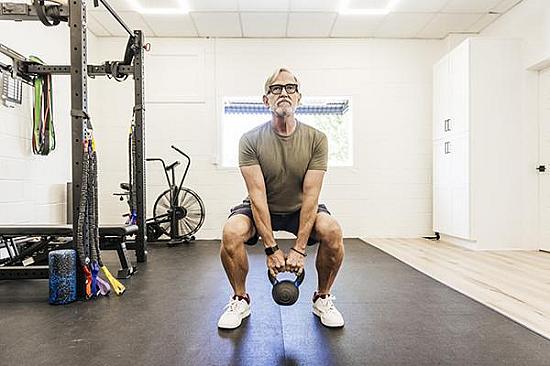
If you don’t already engage in strength training, it may be wise to start. Begin with body-weight exercises such as squats, push-ups, or step-ups on a low stair. Add resistance bands or light dumbbells to increase the benefits. Consider enlisting the guidance of a physical therapist or personal trainer, and aim for consistency over time
Image: © The Good Brigade/Getty Images
About the Author
Maureen Salamon,
Executive Editor, Harvard Women’s Health Watch
Maureen Salamon is the executive editor of Harvard Women’s Health Watch. She also writes for the Harvard Health Letter, Harvard Heart Letter, and Harvard Men’s Health Watch, as well as for Harvard Health Publishing’s flagship website. …
See Full Bio
View all posts by Maureen Salamon
About the Reviewer
Robert H. Shmerling, MD,
Senior Faculty Editor, Harvard Health Publishing; Editorial Advisory Board Member, Harvard Health Publishing
Dr. Robert H. Shmerling is the former clinical chief of the division of rheumatology at Beth Israel Deaconess Medical Center (BIDMC), and is a current member of the corresponding faculty in medicine at Harvard Medical School. …
See Full Bio
View all posts by Robert H. Shmerling, MD
Share
Print This Page
Disclaimer:
As a service to our readers, Harvard Health Publishing provides access to our library of archived content. Please note the date of last review or update on all articles
No content on this site, regardless of date, should ever be used as a substitute for direct medical advice from your doctor or other qualified clinician
