


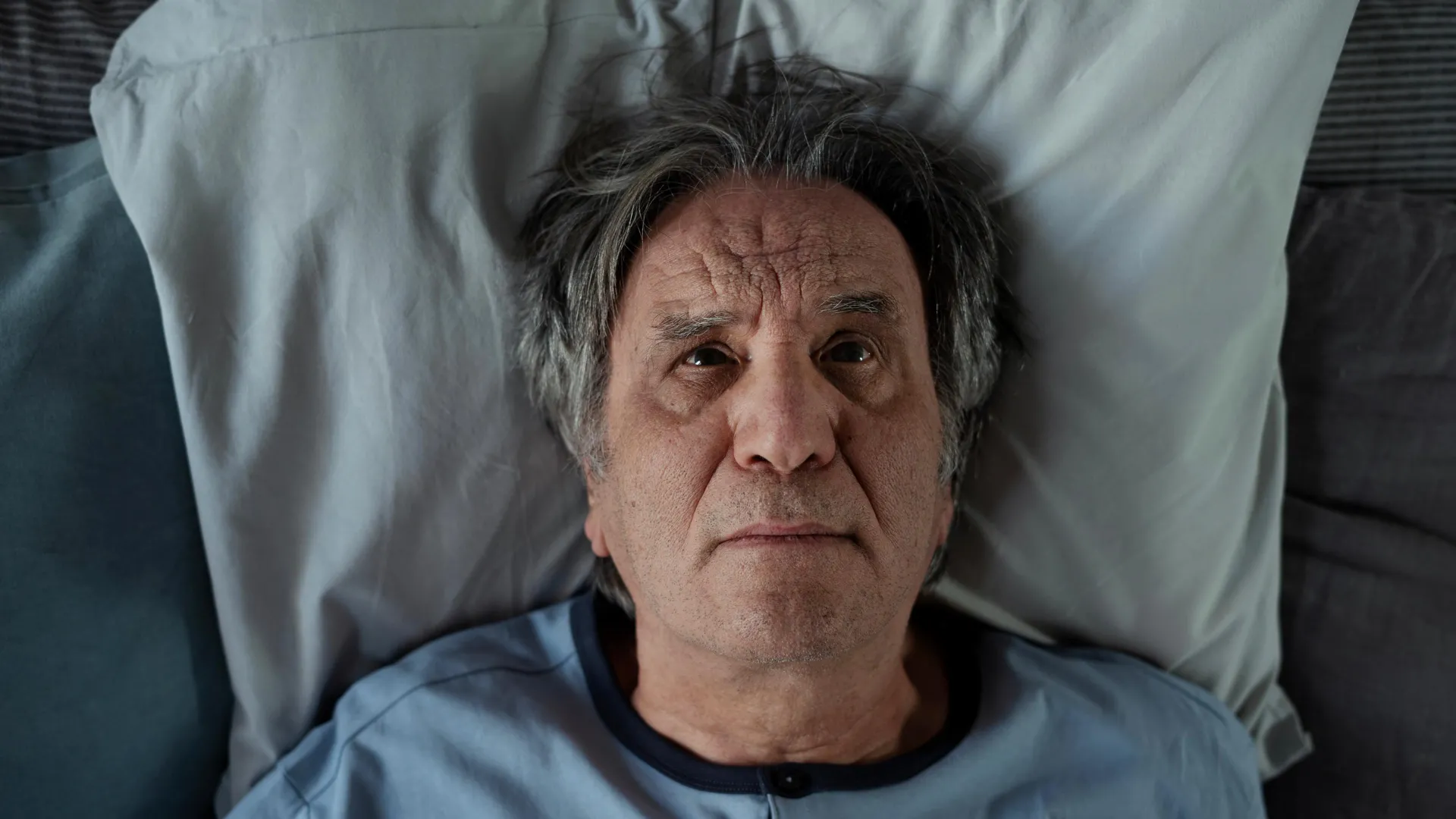
Too much or too little sleep may make your body age faster
Date:
August 24, 2026
Source:
Columbia University Irving Medical Center
Summary:
Both too little and too much sleep may be linked to faster aging throughout the body. Researchers analyzing 23 biological aging clocks found the lowest aging levels among people sleeping about 6.4 to 7.8 hours per day. Short or long sleep was also associated with numerous conditions affecting the brain, heart, lungs, metabolism, and digestive system.
Share:
FULL STORY
A new analysis of biological aging across the human body suggests that both sleeping too little and sleeping too much are associated with faster aging in the brain, heart, lungs, immune system, and other organs. These sleep patterns were also linked to a broad range of diseases
“Previous studies have found that sleep is largely linked to aging and the pathological burden of the brain. Our study goes further and shows that too little and too much sleep are associated with faster aging in nearly every organ, supporting the idea that sleep is important in maintaining organ health within a coordinated brain-body network, including metabolic balance and a healthy immune system,” says study leader Junhao Wen, assistant professor of radiology at Columbia University Vagelos College of Physicians and Surgeons.
The research was published in Nature
Biological Clocks Reveal How Organs Age
Scientists are increasingly using aging clocks to estimate whether a person is aging biologically faster or slower than their chronological age. These tools rely on machine learning and biological information (e.g., proteins from a minimally invasive blood test) to calculate patterns associated with aging
Many aging clocks provide a single measure for the entire body. However, different organs can age at different speeds. One familiar example is the decline in ovarian function that contributes to the biological clock associated with female fertility
Wen and his colleagues have been developing aging clocks that focus on individual organs. The goal is to provide more detailed and potentially more personalized information about a person’s health
“Everyone is excited by these aging clocks and their ability to predict disease and mortality risk,” Wen says. “But to me, the more exciting question is, can we link aging clocks to a lifestyle factor that can be modified in time to slow aging?”
Sleep offered researchers an ideal way to explore that question because mounting evidence suggests that sleep plays an important role in health. Wen also had a personal interest in the issue
“I’m also a light sleeper and was getting worried about the effects on myself,” says Wen
To create the aging clocks, Wen used information from about half a million participants in the UK Biobank. Machine learning was applied to identify biological signatures associated with aging in different organs
The researchers built clocks using several types of information, including structural measurements from medical imaging, proteins associated with specific organs, and molecules detected in the blood
“In the liver, for example, we have an aging clock built with protein data, an aging clock of metabolic data, and an aging clock of imaging data,” Wen says. “This allows us to see whether sleep is distinctively associated with aging clocks derived from multiple omics and molecular layers.”
The team then compared sleep duration (as reported by each Biobank participant) with biological age estimates from 23 aging clocks covering 17 organ systems
Too Little and Too Much Sleep Linked to Faster Aging
A clear U-shaped pattern appeared across the body. People reporting short sleep (fewer than 6 hours) and long sleep (greater than 8 hours) tended to show faster biological aging
The lowest levels of aging were seen among people who reported sleeping between 6.4 and 7.8 hours each day
Importantly, the findings do not show that sleep duration by itself causes organs to age faster or slower. Instead, they suggest that sleeping either too little or too much could be a sign of poorer health throughout the body
Sleep Duration Tied to Diseases Across the Body
The results also point to a broad connection between sleep, the brain, and the rest of the body
Short sleep was significantly associated with depressive episodes and anxiety disorders, consistent with earlier research connecting insufficient sleep with mental health problems
It was also associated with obesity, type 2 diabetes, hypertension, ischemic heart disease, and heart arrhythmias
Both short and long sleep were linked to chronic obstructive pulmonary disease and asthma. They were also associated with several digestive disorders, including gastritis and gastroesophageal reflux disease
Wen says, “The broad brain-body pattern is important because it tells us that sleep duration is a deeply embedded part of our entire physiology, with far-reaching implications across the body.”
Sleep, Aging, and Late Life Depression
The organ-specific aging clocks may also help scientists understand how sleep is connected to individual diseases. Wen and his colleagues explored this possibility by examining late life depression
The researchers could not establish whether differences in sleep duration caused late life depression or whether depression itself changed how long people slept
To investigate further, the team used “mediation analysis” to examine whether biological aging might help explain the relationship between short or long sleep and late life depression
The results suggested that short sleep may be more directly connected with the burden of late-life depression. Long sleep, in contrast, may influence depression through pathways reflected in aging clocks for the brain and adipose tissue
“This has a strong implication for future sleep management and future therapeutics,” Wen says. “Our study suggests there may be different biological pathways between long and short sleepers that lead to the same outcome, late-life depression, and we shouldn’t treat them the same way.”
Story Source:
Materials provided by Columbia University Irving Medical Center. Note: Content may be edited for style and length
Journal Reference:
- Cliodhna Kate O’Toole, Zhiyuan Song, Filippos Anagnostakis, Zhijian Yang, Ye Ella Tian, Michael R. Duggan, Chunrui Zou, Yue Leng, Yi Cai, Wenjia Bai, Cynthia H. Y. Fu, Michael S. Rafii, Paul Aisen, Gao Wang, Philip L. De Jager, Jian Zeng, Hamilton Se-Hwee Oh, Xia Zhou, Keenan A. Walker, Daniel W. Belsky, Andrew Zalesky, Eleanor M. Simonsick, Susan M. Resnick, Luigi Ferrucci, Christos Davatzikos, Junhao Wen. Sleep chart of biological ageing clocks in middle and late life. Nature, 2026; DOI: 10.1038/s41586-026-10524-5
Cite This Page:
Columbia University Irving Medical Center. “Too much or too little sleep may make your body age faster.” ScienceDaily. ScienceDaily, 24 August 2026. <www.sciencedaily.com/releases/2026/08/260823094156.htm>.
Columbia University Irving Medical Center. (2026, August 24). Too much or too little sleep may make your body age faster. ScienceDaily. Retrieved August 24, 2026 from www.sciencedaily.com/releases/2026/08/260823094156.htm
Columbia University Irving Medical Center. “Too much or too little sleep may make your body age faster.” ScienceDaily. www.sciencedaily.com/releases/2026/08/260823094156.htm (accessed August 24, 2026).
RELATED STORIES
