


August 29, 2026
Waist size reveals health risks that BMI can miss
A new study suggests waist size and fat distribution may reveal heart and mortality risks that BMI alone can easily miss
ByEric Ralls
Founder
At a checkup, a doctor turns a person’s height and weight into a single number and may treat it as a verdict on body fat. Yet two people with the same number can carry their fat in completely different places
In a new study, adults with a normal or overweight BMI who carried extra fat around the middle had a 15% to 50% higher risk across most of nine health outcomes
The outcomes ranged from heart attacks to death from any cause. The researchers classified people using measurements taken around their waists and hips
They then compared them with normal-weight adults who had low measurements
A normal weight, on its own, didn’t necessarily mean a low risk
Some adults with obesity and smaller waist measurements showed the opposite pattern. Their risk for several outcomes was similar to that of the comparison group
Zeina Dardari led the analysis with senior author Michael Blaha. Both are affiliated with the Johns Hopkins Ciccarone Center for the Prevention of Cardiovascular Disease
Their team pooled data from 260,959 adults across 15 long-running health studies. None had a history of heart disease when they enrolled, and researchers followed them for a median of 20 years
Deep belly fat behaves differently
Fat collects in two main places, and the body treats each type differently. Some fat is stored just under the skin. The rest accumulates around the liver and other organs, and this deeper fat is more chemically active
Deep abdominal fat releases signaling proteins into the bloodstream. Those proteins can make cells less responsive to insulin and activate systems that raise blood pressure
Doctors call fat carried around the middle central adiposity. Studies have independently linked it to type 2 diabetes and plaque buildup in the arteries
Doctors use two measurements as rough indicators of central adiposity
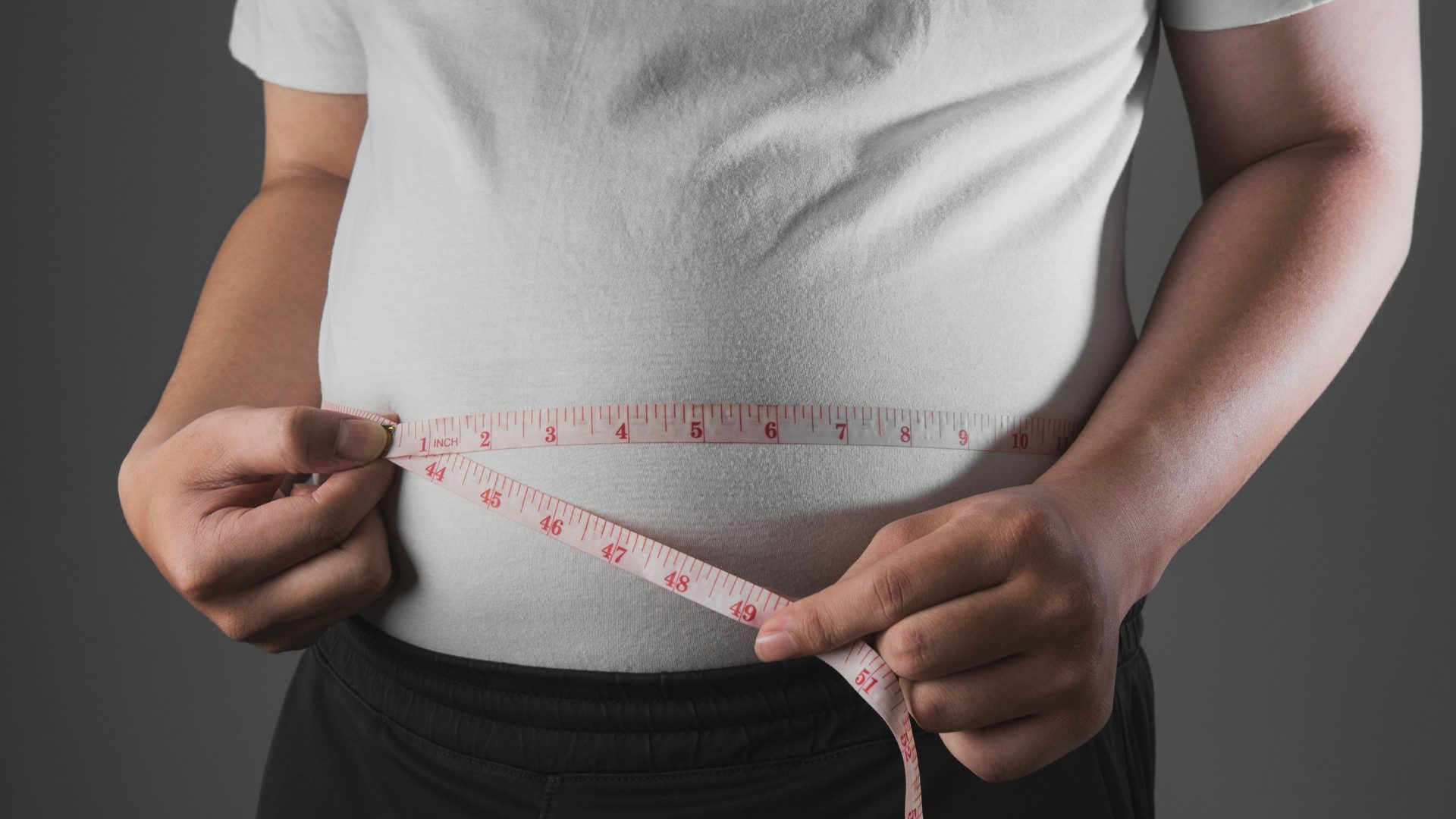
The first is waist circumference. The National Heart, Lung, and Blood Institute considers measurements above about 35 inches (88 cm) for women and 40 inches (102 cm) for men to be high
The second is the waist-to-hip ratio, which is considered high above 0.85 for women and 0.90 for men
Normal BMI can hide risks
Among adults whose BMI read normal, 5 percent had a wide waist and 18 percent had a high waist-to-hip ratio. In the overweight range the mismatch was far bigger: 39 percent had a wide waist and 40 percent a high ratio
A 2015 analysis of 15,184 US adults compared the same combinations. Men with a normal BMI and central obesity had about twice the risk of dying as participants who were overweight or had obesity
Dardari’s center works in prevention: finding risk before symptoms show up
“We encourage clinicians to consider central adiposity distribution across the entire BMI spectrum when evaluating cardiovascular risk in primary prevention settings,” Dardari said
Narrow waists came with lower risks
Among adults with obesity, 9 percent had a waist circumference below the high threshold, and 45 percent had a waist-to-hip ratio below the high threshold
The two measures did not identify the same people, and the average BMIs help explain why
Adults with obesity and a low waist circumference had an average BMI of 32.6, compared with 35.4 among those above the threshold
In this group, a narrower waist marked a milder form of obesity. When researchers divided participants by waist-to-hip ratio instead, the average BMIs were 34.9 and 35.0
Women with obesity and a low ratio still faced a higher risk of every outcome than normal-weight women with a low ratio. However, their risk was lower than that of women with a high ratio
Men with obesity and a low ratio generally had risks similar to those of normal-weight men with a low ratio. Atrial fibrillation, an irregular heartbeat, was the exception, with men in the obesity group facing a higher risk
The authors did not interpret the lower death rate among people with obesity and smaller waists as evidence that extra weight is beneficial
Physical fitness and the balance between muscle and fat can both affect the risk of dying, but the study measured neither
Waist size revealed major heart risks
The team also examined how many events within each BMI group occurred among people with wide waists
Among adults with obesity, a high waist circumference accounted for an estimated 49 percent of heart failure cases and 46 percent of atrial fibrillation cases. It also accounted for more than one-third of deaths from coronary heart disease
In the overweight group, researchers attributed 24 percent of heart failure cases and 22 percent of heart attacks to a high waist-to-hip ratio. Among normal-weight adults, the corresponding shares were much smaller
They reached no more than 2.4 percent for waist circumference and 10.5 percent for the waist-to-hip ratio
Wide waists are more common among people with a high BMI and rarer among those with a normal BMI
This helps explain why they accounted for more events in the higher-BMI groups. The authors did not claim that abdominal fat caused these events, only that the two were associated
One measurement cannot capture everything
Researchers measured each participant’s waist and hips only once, at the beginning of the study. Waist size can change considerably over 20 years, but the researchers did not take a second measurement
The data did not include physical activity, diet, or inherited susceptibility to obesity. Researchers enrolled the participants decades ago, before obesity became as prevalent as it is today. Young adults now may face different risks
Most of the participants were women, which the authors considered a strength because earlier research on central fat focused largely on men. Of the 15 studies, 14 were conducted in the United States and one in Brazil
New guidelines look beyond BMI
An international working group on visceral obesity concluded in 2017 that BMI alone cannot adequately assess the health risks associated with excess fat. Its members called for waist measurements to become standard practice
A 2025 Lancet commission later established obesity criteria that call for a direct measurement of body fat or at least one waist-based measurement alongside BMI
Harlan Krumholz, editor of the journal that published the new study, wants this approach to become part of routine medical practice
“It is time to abandon a sole focus on body mass index,” he said
Researchers still do not know how changes in waist size affect these risks over time. Age presents another unanswered question
Women tend to store more fat around the abdomen after menopause, while men often accumulate deep abdominal fat earlier in life. As a result, the same measurement may not carry the same meaning at every age
Answering both questions will require researchers to measure the same people repeatedly at different ages
The full study was published in the Journal of the American College of Cardiology
Like what you read? Subscribe to our newsletter for engaging articles, exclusive content, and the latest updates
Check us out on EarthSnap, a free app brought to you by Eric Ralls and Earth.com
—–
