


Functional Food
The Better Way To Build An Anti-Inflammatory Diet? Add This One Food
<img src="https://healthylife7.com/wp-content/uploads/2026/09/1776196351294_glmzzlntj8l.jpg” alt=”Zhané Slambee”>Author:Zhané SlambeeSeptember 01, 2026
mindbodygreen editor
By Zhané Slambee
Image by Nataša Mandić / Stocksy
September 01, 2026
Trying to eat for lower inflammation can feel like a game of subtraction. Less sugar, less ultra-processed food, less saturated fat
Before long, even a healthy diet can start to feel like a list of things you shouldn’t eat
But there may be another way to approach it: add something. A recent 2-year randomized trial1 looked at what happened when older adults added one food to their daily routine while otherwise sticking with their usual diets
The food in question? Walnuts
About the study
The research came from the Walnuts and Healthy Aging (WAHA) trial and included 319 healthy adults with an average age of 69; 66% were women
Participants were randomly assigned to one of two groups
One ate 1 to 2 ounces of walnuts daily, about 15% of their calories, while the other avoided walnuts and limited other nuts to fewer than two servings a week. Both groups otherwise continued their usual diets for two years
Researchers collected five 24-hour food recalls throughout the trial and used them to calculate each participant’s Dietary Inflammatory Index (DII)
The DII estimates whether an overall diet tends to be more pro- or anti-inflammatory based on the foods and nutrients it contains
omega-3 potency+
★ ★ ★ ★ ★
★ ★ ★ ★ ★
A daily handful shifted the diet’s inflammatory profile
After two years, the walnut group had a more anti-inflammatory DII score than the control group. The overall nutritional makeup of their diets had shifted in a more favorable direction
Researchers also found that higher intakes of omega-3 fats, magnesium, fiber, carbohydrates, and protein were associated with more anti-inflammatory scores
Higher total fat and saturated fat intake were associated with scores in the opposite direction
Walnuts contain several of the nutrients associated with more favorable scores, including fiber, magnesium, plant-based omega-3 fats, and plant protein
That may help explain why the walnut group’s overall dietary score shifted
RELATED READ:The 15 Best (And Expert-Vetted) Omega-3 Supplements
What the DII can & can’t tell us
There’s an important distinction here. The DII does not measure inflammation in the body. Instead, it estimates the inflammatory potential of a person’s diet based on its nutritional makeup
So, this trial doesn’t show that walnuts lowered inflammation in participants’ blood or reduced their risk of an inflammation-related disease
It also can’t tell us exactly what the walnuts replaced, since participants weren’t instructed to swap them for a particular food
What the study does show is that adding a nutrient-rich food can change the overall nutritional profile of a diet, even when the rest of the diet stays largely the same
How to put walnuts on your plate
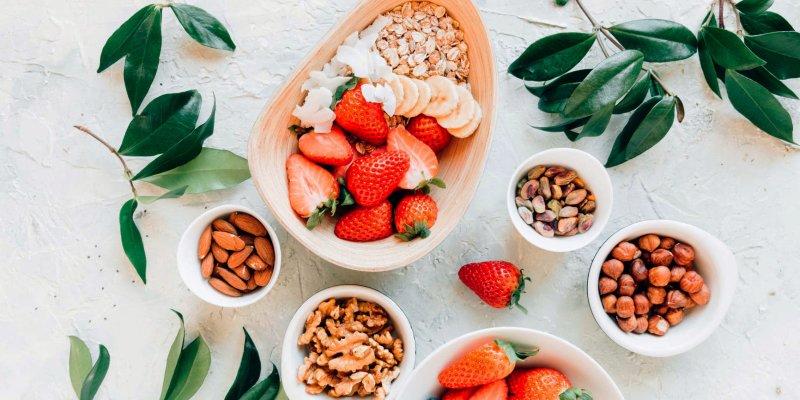
If you want to try the approach used in the trial, aim for 1 to 2 ounces of walnuts a day, or roughly a small handful. Add them to foods you already eat, such as oatmeal, yogurt, smoothies, or salads, or keep them on hand for a snack
You can also build on the same nutritional pattern with other whole foods
Vegetables, beans, whole grains, chia seeds, ground flaxseed, and fatty fish provide dietary fiber, healthy fats, and other nutrients associated with a more favorable dietary pattern
And while saturated fat intake was associated with less favorable DII scores in this analysis, you don’t need to eliminate it entirely. The bigger picture is the quality and balance of your overall diet
The takeaway
This trial doesn’t prove that walnuts reduce inflammation, but it suggests they can help shift the overall nutritional makeup of your diet
A small daily handful is an easy way to add more fiber, omega-3 fats, magnesium, and plant protein
